Are you planning to study abroad, or do you hope to someday? If so, this article is for you. Three weeks in Italy—my first time ever leaving the United States—taught me many things: don’t wear flip-flops on a pilgrimage, always carry a sweatshirt on long flights, and never underestimate the power of a good sandwich after walking sixteen miles.
More importantly, it taught me that the best parts of a trip rarely make it onto postcards, and the most joy is in the journey. If you’re planning a visit to Rome or simply dreaming of studying abroad, here are the lessons, stories, and practical advice I wish someone had shared with me before I boarded the plane.
The joy is in the journey (airplane edition)
If you live in the normal world—at least the one I’ve been living in for the past twenty years—you’ve probably heard something like this. In my case, it often came to mind when I was shoved into the back of a fifteen-passenger van with my ten younger siblings while my parents pointed out all the beautiful sights we were passing. All I wanted was to get out of the car. I’d think the phrase, “The joy is in the journey,” ironically, wondering how anyone could actually believe it.

However, after many years of traveling in all sorts of ways, nothing prepared me for the twelve-hour flight from the United States to Istanbul, our first stop on the way to Rome.
Advice for long plane flights
I’ve spent plenty of hours in the car before, but that’s a completely different experience. Let me describe air travel to you.
You board the plane, find your seat, and are handed a tiny pillow and a thin blanket. The pillow is just big enough for the head of a child—or one corner of an adult’s head if you’re lucky. If you manage to sleep sitting up, I have nothing but respect for you. My attempt ended with me getting bonked on the head by a flight attendant’s cart.
The blanket doesn’t do much, so pack a hoodie or sweatshirt. You’ll thank yourself when the cabin feels more like a refrigerator than an airplane, but you’ll want to keep your shirt light enough to stay cool when it becomes a sauna.
Most international flights have screens with movies, games, and music, but after several hours, even those lose their appeal. Before long, you’re checking the flight map every few minutes only to discover you’re still over the same country. That’s usually when all the joy gets sucked out of the journey.

My advice? Bring a book, a notebook, or anything that gives your brain a break from the screen. And don’t be afraid to talk to the people around you. A conversation can make the hours pass much faster, and if it turns out to be awkward… you’ll probably never see them again.
Roll with the blows
An air strike over Italy interrupted my beautifully long and super enjoyable total of sixteen hours of flying, leaving me stranded in Istanbul. Lovely. Just lovely.
However, I’ll tell you something surprising: it ended up being one of the best parts of the trip.
Travel has a funny way of teaching you to roll with the blows life gives you.
I’m a very Type-A person. I like things to be on schedule and go according to plan—especially if it’s my plan, because, if I’m honest, I don’t always trust everyone else’s.
So, after hearing I was going to be stuck in Istanbul for twelve hours before arriving in Italy, I was more than a little irritated. I was tired, anxious, and all I wanted was a bed. But I was traveling with a large group of other college students, and it wasn’t all about me. I couldn’t exactly get off the plane and sleep for twelve hours.
So I did my best to keep a positive attitude as I climbed into the back of a tour van in Istanbul… and it ended up being one of the strangest and funniest experiences of my life.
Our Istanbul tour guide
For our unexpected time in Istanbul, we traveled around the city with a twenty-four-year-old tour guide who joked with us, taught us words in Turkish, and showed us places I never imagined I’d visit.
If it hadn’t been for him, I never would have seen the Hagia Sophia or so many other beautiful places around the city. I also would have missed an ice-cream magic show, the old stables carved into the rocky hillsides, and a delicious Turkish meal eaten the traditional way.
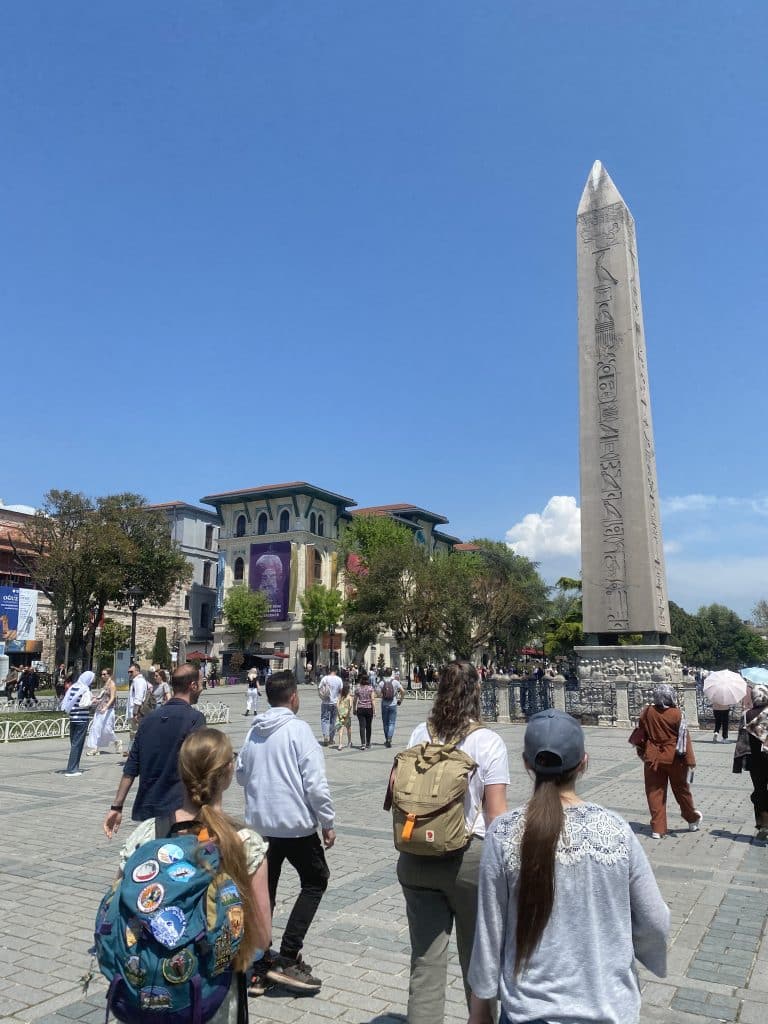
Yes, I may have been falling asleep in the back of the van, but choosing to embrace the unexpected gave me an experience that had never been on the itinerary.
So here’s my advice: embrace the opportunities that come your way, even if they look about as appealing as a porcupine covered in quills. You never know what you might learn or experience.
And if everything goes horribly wrong…
Well, at least you’ll come home with a good story.
(More on horrible things leading to good stories later.)
Walking across Italy
No, I didn’t walk completely across Italy. Just the last seventy-five-ish miles to Rome, and we did it over a week. Don’t go crazy—I’m not one of the people from The Canterbury Tales (which is probably a good thing). But anyway, the first week of my May Term study abroad involved walking the final stretch of the Via Francigena, and if you’ve never heard of it, let me tell you a few things.
The path through Italy
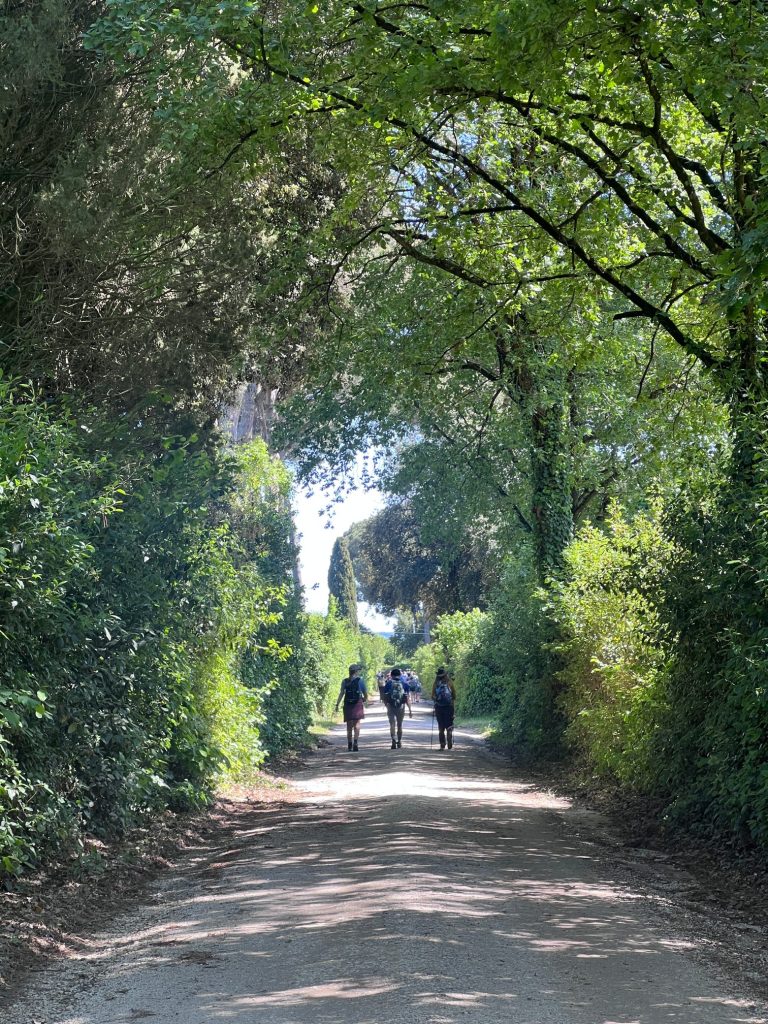
First of all, it is a beautiful path that gives you the opportunity to see all different parts of Italy. It passes through smaller towns such as Viterbo and Vetralla and weaves through orchards, fields, woods, alongside highways, and basically every type of walking you can think of. With a large group of college students for company, I wandered through these beautiful hills, past many main-character-esque fields—you know, the kind where movie couples frolic through wildflowers or lie in the grass while their fingertips barely brush. You know the ones.
Pilgrim passport
Second, as you walk the trail, you collect stamps in a pilgrim passport—a folded booklet with spaces for stamps from each stop along the route.
Why collect stamps?
Well, if you walk enough of the pilgrimage and collect enough stamps, you’re allowed to enter St. Peter’s Basilica as a pilgrim and skip the enormous lines. That’s a pretty good incentive. But honestly, after a while it just becomes an obsession. You’re creating your own collector’s item.
You’re probably wondering where the stamps come from. Along the trail, official stopping points offer stamps for each town, but coffee shops, gelato stores, restaurants, and art shops hand them out too. Honestly, if a building had four walls and a roof, someone inside was likely able to stamp pilgrim passports.

Looking back through your passport becomes like looking through a map of your own journey. You need three stamps for each day you walk, but that isn’t difficult when every café seems determined to contribute to your collection.
Collecting stamps became a bit of an obsession, and my group of fellow college students turned it into a mission. Whenever someone spotted a stamp, we’d all pull out our passports, chanting, “Timbro! Timbro! Timbro!”—the Italian word for “stamp.” We looked a little like a zombie mob. A very enthusiastic zombie mob.
Community
Third, traveling together builds incredible community. You’re moving slowly across beautiful countryside, which gives you plenty of time to think and plenty of time to talk with the people around you. Even though I was traveling with twenty-five other students, I got to know each one of them. We also had a few adults with us, including a bestselling author, and there was no shortage of wisdom being shared along the trail.
Tourist or pilgrim?
Finally, and perhaps most importantly, a pilgrim is different from a tourist.
Tourists come to see, take pictures, and leave. Pilgrims come to experience the reality of a place—to slow down, integrate into the countryside, and participate, however briefly, in the life that’s already there. As pilgrims, we were welcomed, not simply tolerated or catered to.
When we finally arrived in Rome after our weeklong pilgrimage, the mood of our group shifted. We had gone from welcomed pilgrims to people simply passing through a city with a list of places to see. Rome was incredible, but there was something uniquely beautiful about the journey that got us there.
Expectations: Good and Bad
When I traveled to Rome, I arrived with a head full of ideas about what it would be like—ideas that had been shaped by my many years of life and knowledge. That was pure sarcasm. I’m young and don’t have much knowledge. In fact, every day I seem to learn just how little I actually know.
Anyway, everyone travels with expectations. It’s just part of being human. We picture places before we’ve ever seen them, and those expectations often shape the experiences we end up having. (Sorry, that was the sociology major in me coming out. Back to the trip.)
Before I set out on my adventure, I didn’t know much about Rome itself. I had studied a bit, but most of my preparation focused on the Via Francigena rather than the city waiting at the end of it. Of course, I knew the basics: the Colosseum, ancient churches, incredible history, and good food. As the pilgrimage went on, those expectations only grew, so by the time I finally reached Rome, I was more than ready to see the city I’d just walked seventy-five miles to visit.
St. Peter’s Basilica
The first thing I thought when entering St. Peter’s Basilica was, “This is not worth a seventy-five-mile walk.”
To be fair, I’d just finished the last leg of the pilgrimage. My feet were hurting from miles of cobblestones, I was covered in sweat, and all I wanted was a shower and a nap.
Thankfully, my opinion improved.
The Basilica is breathtaking. Even before stepping inside, I found myself admiring the statues surrounding the courtyard and the incredible architecture. After making it through security, the one entering is met with towering statues, elaborate decorations, and magnificent artwork. Everything is so large and ornate that, for a moment, you hardly know where to look.
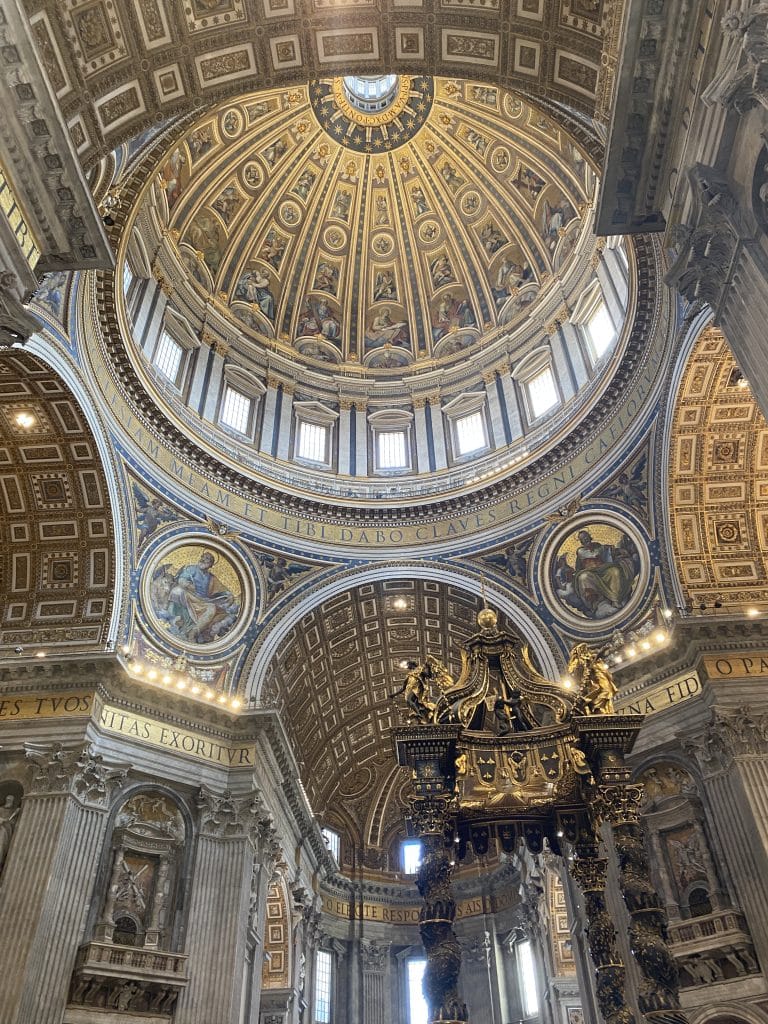
Then reality sets in.
Someone elbows you while taking a picture. You’re reminded to keep a hand on your wallet because of pickpockets. Your view is blocked by raised phones, selfie sticks, and the backs of other tourists’ heads. Unfortunately, the crowds can make one of the world’s most beautiful churches feel more like a tourist attraction than a place of worship.
That doesn’t mean it isn’t worth visiting—it absolutely is. Just be prepared to weave around tour groups and wait for someone to finish taking the perfect Instagram photo.
One place I especially recommend is the papal tombs beneath the Basilica. They’re quieter, less crowded, and filled with beautifully decorated graves and memorials. Most of the inscriptions are in Latin, so unless you’ve been studying it recently (I see you, classically educated homeschoolers), you probably won’t understand much—but they’re still fascinating to explore.
One final tip: don’t be afraid to move around. Changing your angle often reveals details you would have missed otherwise.
The Colosseum, Trevi Fountain, Spanish Steps, and more!
While I was in Rome, I visited all of the famous landmarks—and many more. If you haven’t been living under a rock, you’ve probably heard of at least one of them.
The Colosseum is one of those places that’s been dramatized so much it almost feels mythical. It’s where gladiators fought, emperors entertained crowds, and, according to tradition, Christians were martyred. In reality, it’s a massive ring of ancient stone that’s nearly two thousand years old.
Our tour guide explained that much of its original decoration had been removed or destroyed over the centuries because later generations didn’t appreciate what it represented. It reminded me how often people try to erase ideas they don’t agree with. History has a funny way of repeating itself.
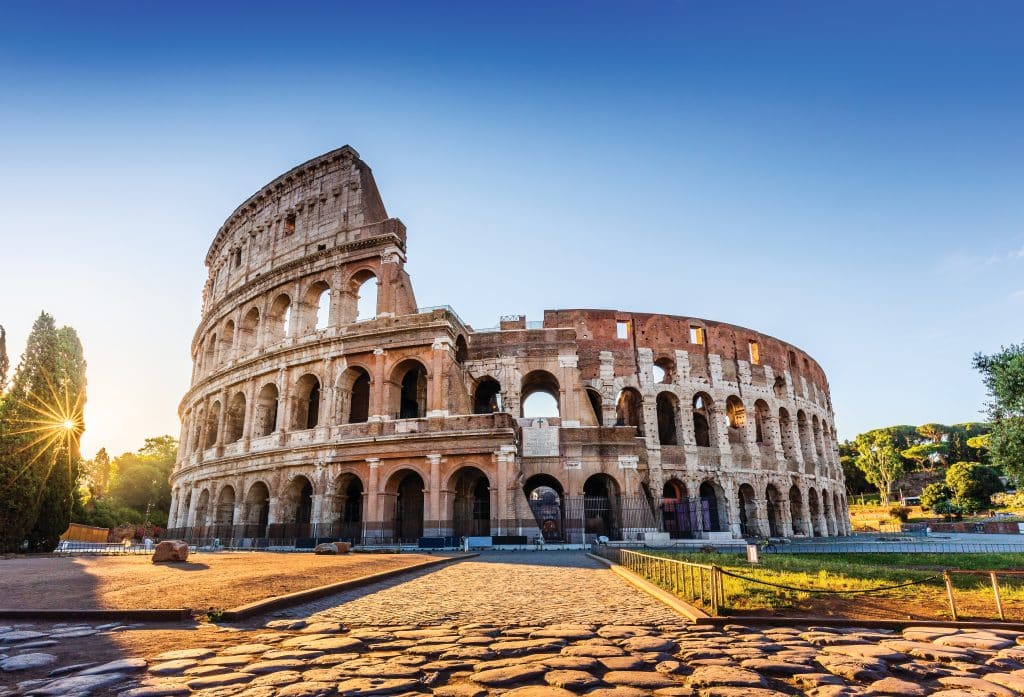
It was certainly an incredible sight, but much like St. Peter’s Basilica, it was surrounded by eager tourists. I took a few pictures, admired the architecture, and moved on.
To be honest, I had similar reactions to many of Rome’s famous attractions. They were beautiful, architecturally amazing, and as covered in tourists as a cookie left on the sidewalk is covered in ants. They’re definitely worth visiting, but I wouldn’t build an entire trip around checking landmarks off a list.
One piece of advice: buy a week-long metro pass. Rome is much bigger than it first appears, and unlimited rides on the metro and buses make exploring the city much easier.
A few friends and I even used ours to visit Ostia, whose beautiful beaches ended up being one of my favorite parts of the trip—and one that many tourists never think to experience.
The unexpected adventures
Speaking of things many tourists don’t experience…
I mentioned earlier that the unexpected and seemingly horrible moments often become the best stories. So it’s time to tell you about a few of mine.
Hailstorm
What happens when you’re walking a pilgrim trail, you’re nine miles from your destination, and it suddenly starts pouring?
Well, first you huddle beneath a tree with twenty-five other pilgrims while trying to figure out why the air suddenly smells like cilantro. (I’m still not sure where that came from.)
The tree did a surprisingly good job of keeping the rain off us—for about five minutes. After that, it became obvious we’d need a better plan.
Thankfully, the pilgrims ahead of us had reached a nearby house, where a kind couple welcomed all twenty-six soaking-wet strangers onto their porch and eventually into their living room.
They had absolutely no reason to let us in.
Yet they offered us tea, coffee, fresh cherries, and even a hairdryer so we could dry off the best we could.

That small act of kindness has stayed with me far longer than many of the famous sights in Rome.
Stuck at a coffee shop
Not every unexpected adventure involves dramatic weather.
Sometimes the trail that’s supposed to lead you to your hotel leads you to a coffee shop instead… one that’s nowhere near a taxi or bus stop.
So there we were, stranded for several hours while our professors worked out a plan.
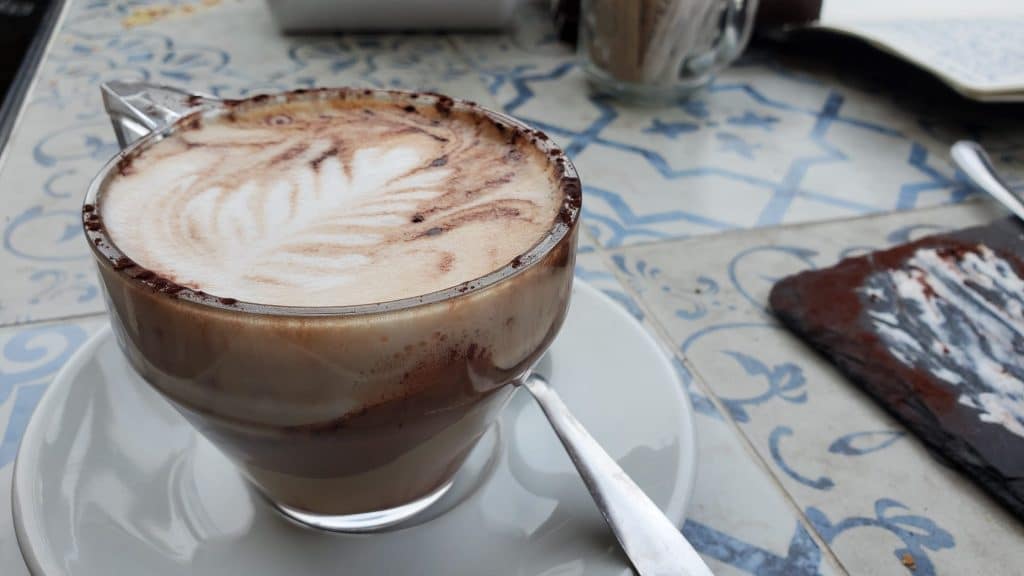
Oddly enough, those few hours produced some of the best conversations of the entire trip. Looking back, I don’t remember being frustrated nearly as much as I remember laughing.
Tip: Take every opportunity to get to know those around you.
Walking is… exciting?
Yes, yes, I know.
You’re probably thinking, “Sure. You had a life-changing spiritual pilgrimage, and now you’re going to tell me I should go walk across Italy too.”
Actually, that’s not where I’m going with this.
(Stop trying to predict the article. Let life surprise you.)
What I am going to tell you is that walking has a strange way of making ordinary things extraordinary.
A sandwich made of fresh Italian bread, cheese, and eggplant (sorry—I don’t eat meat, so I can’t report on that part of the menu) stops being just lunch after you’ve walked six miles to earn it.
Conversations become deeper after you’ve trudged through rainstorms together.
Every hill you climb and every mile you finish feels like an accomplishment instead of just another number on a map.
Pilgrimage itself—which sounded like a fairly ridiculous idea when I first heard about it—became one of the most meaningful parts of my trip.
I started the week as a reluctant college student walking sixteen miles a day and completing writing assignments because I needed the credit.
I finished it as an eager adventurer, excited (and, admittedly, still a little anxious) to discover what the next day would bring.
So… takeaways?
Since you’re probably reading this because you’re planning a trip to Rome, I won’t leave you hanging. Here are a few practical tips I wish someone had shared with me before I left.
Put your phone down. Your picture of the Colosseum probably won’t beat the thousands already online. Take a few photos, then look with your own eyes. You might notice something your camera never could.
Focus more on the people than the presentation. Don’t spend your trip trying to prove to everyone back home that you’re having the perfect vacation. Be present. You’ll have plenty of time to tell the stories later.
Pack lightweight clothes that cover your knees and shoulders. Most churches require both to be covered, and trust me—you’ll want to visit them. My favorite outfit was a wrap skirt over athletic shorts and a linen button-up.
Don’t wear flip-flops. One of the guys on our pilgrimage only brought flip-flops and couldn’t finish the walk. Even if you aren’t hiking seventy-five miles, Rome is a city best explored on foot.
Visit more than the famous churches. St. Peter’s is incredible, but many of the smaller churches are just as beautiful and far less crowded.
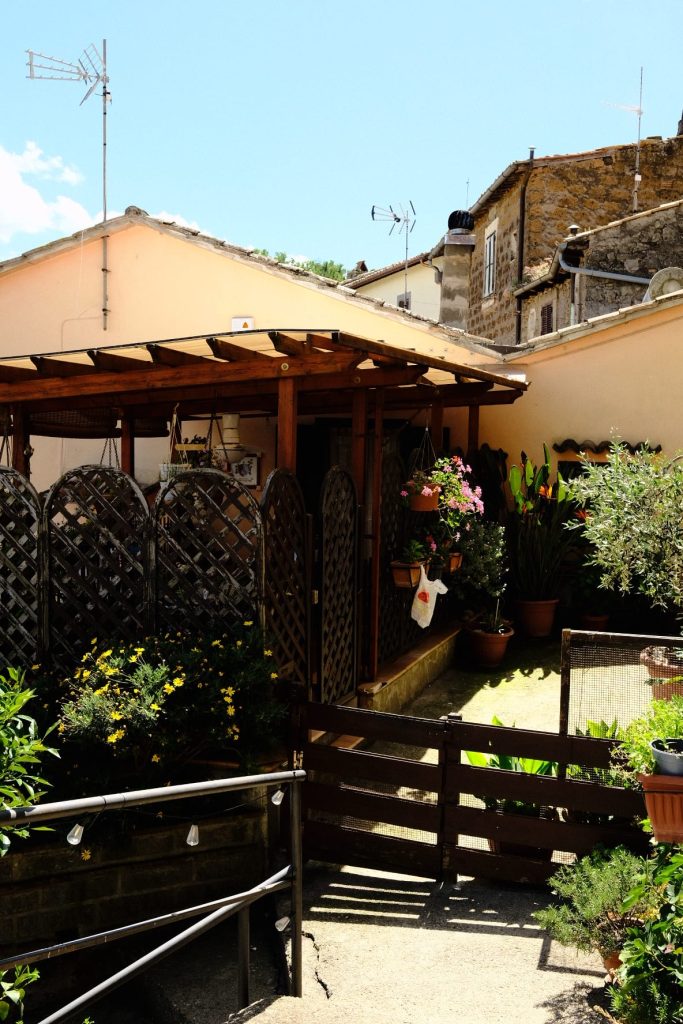
Enjoy the little moments. Don’t spend your entire trip waiting for the next famous landmark. Some of my favorite memories came from the ordinary moments between destinations.
Keep a journal. I don’t normally journal, but it ended up becoming my favorite souvenir. Pictures remind you what a place looked like; journals remind you what it felt like.
I’m sure I could keep going, but I know—and you know—that we both have things to do. So I’ll leave it there.
So… was it worth it?
Yes.
Yes, it was.
…
Oh. You’re expecting more than that? Okay, here we go.
I went into this trip as an ultra-organized college student who was curious about Rome and excited—though admittedly a little skeptical—about travel. The trip taught me a lot, including just how much I appreciate my own hometown. But more than anything, it taught me that the things worthy of postcards and souvenir magnets aren’t necessarily the things that make a trip memorable.
When I left home, I thought the plane flights, pilgrimage, and train rides were simply a means to an end—a way of getting to the true highlight of the trip: Rome.
Rome was definitely an experience, and I’m grateful I had it. I can’t say I’m eager to throw myself back into the city’s chaos anytime soon, but I’m glad I went.
Now that I’m home, though, the things I find myself thinking about, writing about, and telling people about aren’t the famous landmarks. They’re the unexpected detours, the hailstorm, being trapped beneath an overpass in the rain, the conversations on buses and trains, and the simple joy of eating good food after a long day of walking.
None of those moments are extraordinary on their own.
Together, they became the trip.
It turns out the saying I’ve rolled my eyes at for most of my life was true after all.
The joy really is in the journey.