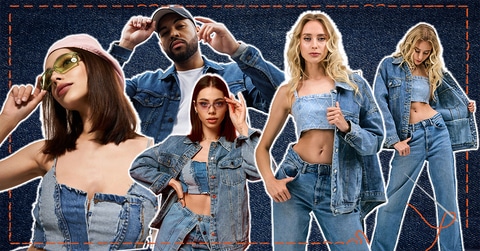
Few fabrics have shaped American style quite like denim. As temperatures rise and festival season takes over, denim begins reclaiming its place at the center of fashion. Sidewalks, concert grounds, and social media feeds fill with oversized jean jackets, vintage Levi’s, distressed cutoffs, and perhaps most notably, the return of the Canadian tuxedo: denim on denim on denim.
At first glance, denim seems like one of fashion’s simplest staples. Most people own at least one pair of jeans, and many have a favorite pair they’ve worn for years. Yet denim’s lasting power is anything but simple. Few garments have managed to remain culturally relevant for more than 150 years while evolving to reflect each generation’s changing tastes and values. From Gold Rush workwear to luxury runway statements, denim has evolved alongside American culture itself.
More than a wardrobe staple, denim has served as a canvas onto which generations project ideas about status, individuality, rebellion, authenticity, and self-expression. And as double-denim outfits once again dominate social media feeds and festival grounds, a more compelling question emerges: what is it about denim that keeps every generation claiming it as its own?
From Gold Rush to Runways
Before denim became fashionable, it was practical.
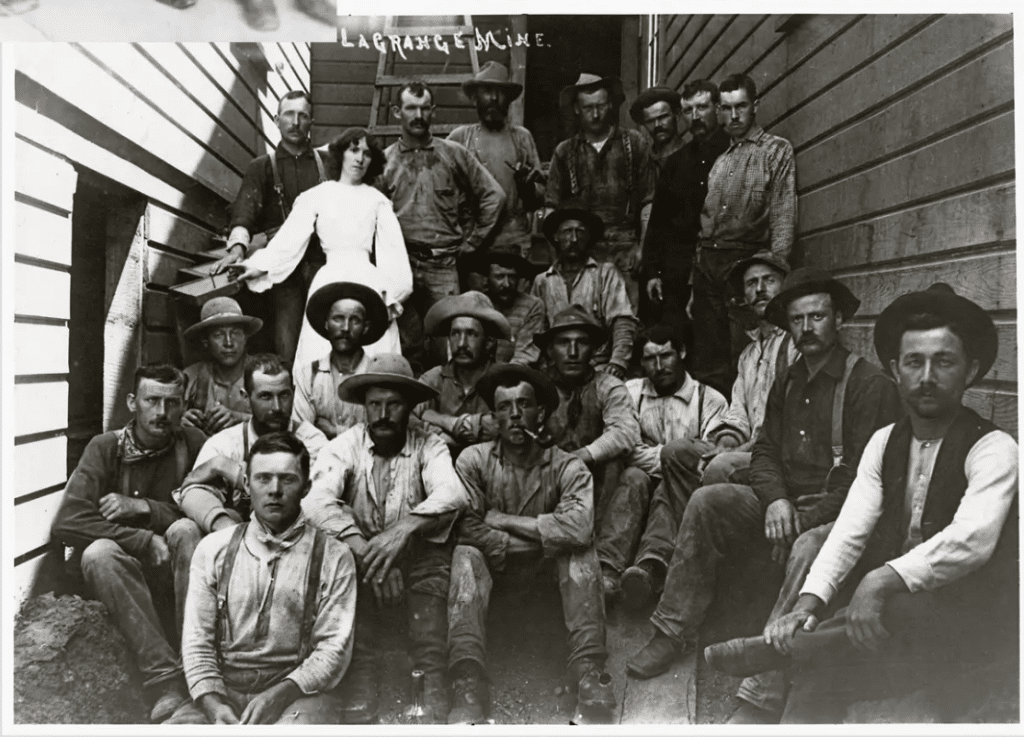
The modern blue jean traces its origins to the California Gold Rush of the late nineteenth century. In 1873, tailor Jacob Davis partnered with Levi Strauss to patent riveted work pants designed to withstand the demands of miners, ranchers, and laborers. The addition of copper rivets at stress points prevented tearing and dramatically increased durability, creating a garment that could survive the harshest working conditions.
Those early jeans weren’t intended to make a statement. They were simply built to last.
But durability has a funny way of becoming stylish.
Throughout the early twentieth century, denim became closely associated with the American West. Cowboys, railroad workers, and farmers embraced jeans as functional clothing, helping establish denim’s reputation as a symbol of rugged practicality. Over time, that image evolved from a necessity into something emblematic. Popular culture romanticized the resilience, independence, and grit associated with Western labor, and denim became part of that visual identity.

Hollywood accelerated the transformation.
By the 1950s, actors like James Dean and Marlon Brando turned blue jeans into something entirely different: a symbol of rebellion. Their denim-clad characters represented youthful defiance, independence, and resistance to authority. Schools even banned jeans in some areas, inadvertently making them a badge of youthful nonconformity for teenagers eager to distinguish themselves from the status quo.

Suddenly, denim wasn’t just workwear. It was attitude. As decades passed, fashion designers recognized denim’s cultural power. What began as clothing for miners gradually entered high fashion.
By the 1970s and beyond, designer labels began creating premium denim lines, while luxury fashion houses experiment with denim silhouettes, embellishments, and tailoring. Today, brands like Gucci, Diesel, and Balenciaga regularly feature denim on runways, proving that a fabric once associated with manual labor can coexist with couture.
Why Every Generation Reclaims Denim
One reason denim never disappears is its remarkable ability to reflect whatever cultural moment it’s inhabiting.
The 1970s embraced flared jeans decorated with embroidery, patches, and personal embellishments. Denim became a canvas for self-expression, perfectly aligning with the decade’s emphasis on individuality and counterculture.
The 1980s brought acid washes, stonewashing, and bold silhouettes that reflected the decade’s appetite for excess. High-waisted “mom jeans“, pleated denim, tapered legs, oversized jackets, and designer denim brands transformed jeans from casual basics into the focal piece of the look. Denim became bigger, bolder, and deliberately attention-grabbing.
By the 1990s, oversized jeans and denim jackets dominated mainstream fashion. Influenced by the baggy silhouettes of hip-hop culture, the thrifted and undone grunge aesthetic, and casual Americana, denim represented effortless cool. It was relaxed, approachable, and democratic. Nearly everyone wore it, regardless of age, occupation, or status.
Then came the early 2000s. Low-rise jeans ruled the era, often paired with baby tees, rhinestones, and maximalist accessories. Looking back, Y2K fashion can feel like a fever dream of celebrity tabloids, mall culture, paparazzi photos, and MTV red carpets. Yet its influence remains surprisingly strong.
Today’s resurgence of bootcut jeans, embellished denim, cargo-inspired silhouettes, visible waistbands, and fitted denim jackets all borrow heavily from the aesthetics that dominated the early 2000s.
At the same time, many of today’s most popular denim trends draw just as much inspiration from the 1980s. High-waisted jeans, oversized denim jackets, relaxed silhouettes, and vintage washes have all returned to prominence.
Fashion rarely moves in a straight line; instead, it operates in cycles, constantly revisiting and reinterpreting the past. Rather than reproducing earlier styles exactly, each generation selectively borrows elements from the previous decades and adapts them to contemporary tastes.
Today’s denim trends blend the bold proportions of the 1980s, the relaxed fits of the 1990s, and the playful nostalgia of the early 2000s into something that feels both familiar and new.
Social media platforms, particularly TikTok and Instagram, have accelerated this cycle. Trends that once took decades to return can now reappear within a few years. Vintage denim styles are constantly being rediscovered, repackaged, and reintroduced to new audiences. A pair of relaxed-fit jeans from the 1990s can feel entirely new again when paired with modern accessories, contemporary tailoring, or trendy styling techniques.
@lala_sadii They’RE ALL SKINNY AND LOW WASITED… ahhhh try on?!?
♬ Down – Lala Sadii
The constant reinvention of silhouettes, distressing techniques, washes, rises, and fits helps explain why denim survives trend cycles that eliminate other wardrobe staples. From skinny jeans to wide-leg jeans, boyfriend jeans to mom jeans, barrel-leg silhouettes to carpenter pants, consumers can find a denim style that aligns with virtually any aesthetic.
Fashion may change, but denim always adapts.
The Return of the Canadian Tuxedo
Perhaps no trend better illustrates denim’s ability to reinvent itself tan the Canadian tuxedo.
For years, wearing matching denim pieces was considered a fashion mistake. Denim jackets and jeans belonged together only if you were fixing a fence or starring in an Old Western.
Then fashion changed its mind. Today, double denim is everywhere.
The Canadian tuxedo’s history is surprisingly colorful. Fashion lore traces the term back to a 1951 incident involving singer and actor Bing Crosby, who was reportedly denied entry to a Canadian hotel because he was wearing denim. In response, Levi’s created a custom denim tuxedo for him, helping establish the phrase that would endure for decades.
The look later achieved pop-culture immortality when Britney Spears and Justin Timberlake appeared in coordinated head-to-toe denim outfits at the 2001 American Music Awards.
At the time, many viewed the look as fashion excess. Today, it’s fashion inspiration.
The resurgence reflects a broader shift toward intentional styling. Instead of treating basics as neutral building blocks, consumers increasingly use familiar pieces to create distinctive looks. Matching denim sets feel simultaneously nostalgic and modern, familiar and fashion-forward.
The timing makes sense. As temperatures rise and outdoor events fill calendars, denim becomes particularly versatile. Lightweight denim shirts, oversized jackets, vintage shorts, and coordinated denim sets offer a practical bridge between spring and summer wardrobes.
Festival culture has amplified the trend further. Events like Coachella, Stagecoach, and Lollapalooza regularly showcase denim in countless forms, from distressed vintage pieces to full monochromatic denim ensembles. Social media then magnifies these looks, turning standout outfits into widely shared styling references that quickly influence broader fashion trends.
Celebrity influence plays a role as well. Stars like Bella Hadid, Rihanna, Sydney Sweeney, and Beyonce have embraced coordinated denim styling, helping normalize and popularize head-to-toe denim once again.
What was once dismissed as a styling misstep is now embraced as a deliberate fashion statement.
Denim That Lasts
In an era increasingly shaped by sustainability concerns, denim’s longevity may be its greatest advantage.
Unlike many fast-fashion items designed for short-term wear, quality denim arguably improves with age. Fading, distressing, and softening become part of a garment’s character. A well-worn pair of jeans tells a story that a brand-new garment simply cannot.
Popular culture has long recognized this emotional connection. Recall The Sisterhood of Traveling Pants? A single pair of jeans becomes a symbol of friendship, memory, and shared experience. The story resonated because it captured something many people already understood: denim often becomes more meaningful the longer we own it.
This durability has fueled growing interest in vintage and secondhand denim. Thrift stores, resell platforms, and vintage boutiques have become treasure troves for shoppers searching for unique denim pieces with history and personality.
The appeal is both aesthetic and practical. Vintage denim often features sturdier construction and distinctive washes that are difficult to replicate. At the same time, purchasing secondhand clothing extends a garment’s lifespan and reduces demand for new production.
Consumers are also embracing upcycling. Old jeans become patchwork jackets, tote bags, skirts, and customized statement pieces. What might once have been discarded now finds a second life.
These shifts align with broader conversations about slow fashion and cost-per-wear. Instead of purchasing disposable trends, many shoppers are investing in versatile pieces they can wear repeatedly over many years. Few garments perform better under that standard than denim.
@greenfolkcollective his labor, my craft. 🪡 My dad has walked the floors of Buffalo Trace Distillery for many years wearing these jeans. It’s time for their next adventure. #upcycledfashion #sustainablefashion #upcycling #streetwear ♬ original sound – music.ation
A great pair of jeans can survive countless washes, adapt to changing trends, and remain relevant across decades. In some cases, they even become more valuable with age. That emotional longevity matters.
Ask someone about their favorite denim jacket or oldest pair of jeans, and chances are they’ll have a story attached to it. Maybe it was worn during college, inherited from a parent, found in a thrift store, or taken on countless road trips. Denim has a unique ability to absorb personal history while remaining wearable.
That’s part of what keeps it coming back.
Fashion trends rise and fall, but denim occupies a category of its own. It can symbolize labor or luxury, rebellion or tradition, minimalism or maximalism. It belongs equally on construction sites, festival grounds, or fashion runways.
More than a fabric, denim is a cultural mirror. Each generation reshapes it to reflect its own values, aesthetics, and aspirations.
And as another summer begins, jorts return, denim jackets come back out of storage, and Canadian tuxedos reclaim sidewalks and social feeds. Trends may come and go, but after more than 150 years, fashion is still finding new ways to wear the same blue fabric. Each generation finds a new way to wear it, and denim continues to give us reasons to keep reaching for it.