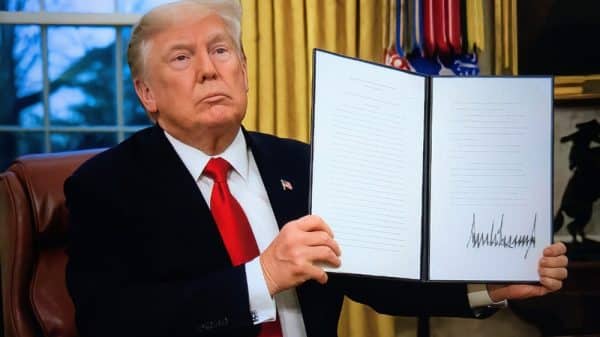
The defeat of Representative Thomas Massie in Kentucky’s Republican primary was about more than a congressional seat. It was a test of whether a Republican lawmaker could remain popular with voters while breaking from President Donald Trump on high-profile issues. The results suggest that the answer is no.
For years, Massie occupied a unique position with the GOP. He voted with Republicans on the overwhelming majority of issues, supported conservative priorities, and has won reelection since 2012. But on certain key issues, he has been shown to be willing to work across party lines based on his own sense of morality. These have included concerns over deficit spending, military intervention in Iran, and the transparency of files related to Jeffrey Epstein.
Massie’s actions resulted in a target placed on his back from his own party, and millions of dollars pouring into Kentucky in an effort to oust him from his seat.
Why Thomas Massie mattered
Since arriving in Congress in 2012, Massie has cultivated a reputation as one of the most independent Republicans. His policy stance can be best summarized as a fiscally conservative libertarian, where he supported a large percentage of Republican priorities while also being willing to oppose leadership on spending bills and foreign intervention.
His opposition to Trump’s “Big Beautiful Bill” was rooted in concerns of further expanding the federal deficit. He voted to limit the president’s military operations in Iran. And most notably, he was willing to work with the Democratic Representative Ro Khanna of California to force the Department of Justice to release files pertaining to Jeffrey Epstein.
None of these positions transformed Massie into a liberal. Rather, they reflected an older strain of conservatism- one that focused on a limited government, fiscal restraint, and skepticism of foreign entanglements.
He was a republican from a bygone era, and that is precisely what made his defeat so significant.
Massie was not a Republican who broke with his party weekly. He was a Republican who broke with his party occasionally. If even that level of independence is enough to trigger a well-funded primary challenger, lawmakers across Congress have to contend with the reality that they are either all in on MAGA Republicanism or out of the party.
Massie’s challenger
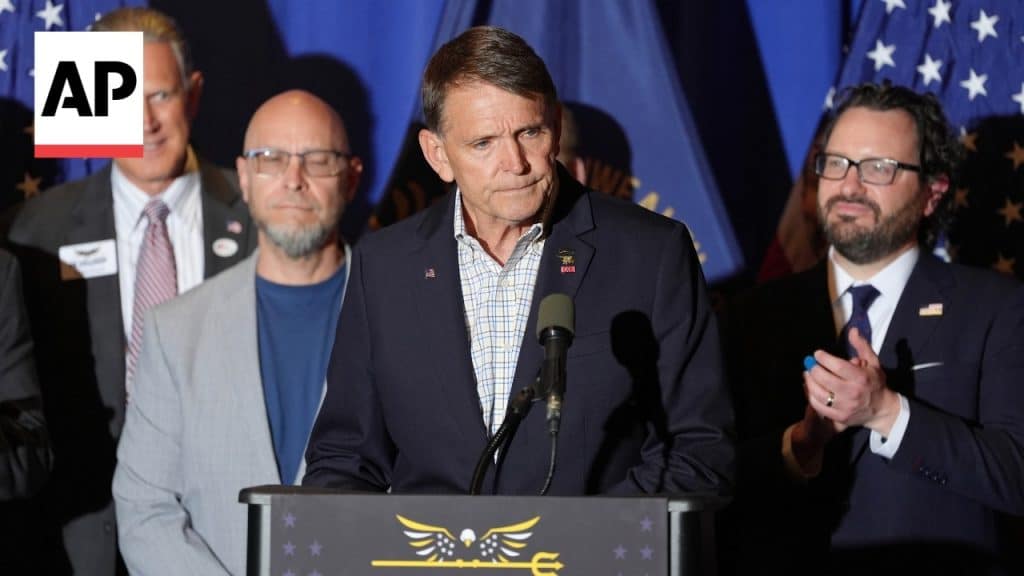
Massie’s challenger, Ed Gallrein, did not come from a renowned political family, nor did he run a campaign centered on a competing legislative vision.

Instead, Gallrein’s campaign revolved around a single message: Loyalty.
Gallrein declined most opportunities to directly debate Massie and focused heavily on Trump’s endorsement. His promise to voters was not that he would chart a new direction for Kentucky Republicans, but that he would faithfully support the president’s agenda. While some may view this as a display of party unity, I see it as fealty and a promise to become a rubber stamp.
Either way, Gallrein benefited from an enormous influx of outside money. Trump-aligned Super PACs and political organizations poured millions into the race, flooding local television and digital platforms with hundreds of hours of attack ads in the weeks leading up to the pivotal election.
For all the discussions of ideology, policy, and endorsements, the race highlighted a simpler reality of modern politics: money talks.
Massie had survived political challenges before, but with an estimated $20 Million worth of attack ads crashing down on him, his 10-point defeat was all but certain. By the end of the race, “more than $32 million was spent on advertisements in the race, making it the most expensive primary in U.S. House history”.
Breaking Down the Demographic
Perhaps the most fascinating aspect of the election was not who won, but who voted for whom.
Polling suggested a significant age divide within the Republican electorate. Younger voters leaned heavily towards Massie, while older voters overwhelmingly supported the Trump-backed challenger.
On the other hand, older Republicans remain as Trump’s most reliable voting bloc. For many, support for Trump has become inseparable from support for the Republican Party itself.
Many younger Republicans came of age amid growing concerns about federal debt, distrust of political institutions, and skepticism toward foreign intervention. Massie’s criticism of government spending and military escalation resonated with those voters.
The use of AI-generated political advertisements may have amplified that divide.
Several ads portrayed Massie alongside prominent democratic figures, including Representative Alexandria Ocasio-Cortez. While disclosures reportedly identified the content as AI-generated, less perspective individuals may have either failed to notice the disclaimer, or simply accepted the broader message being conveyed.
While it is impossible to know if the AI-generated advertisements directly changed votes, it does provide a glimpse into the future of political campaigning.
As AI-generated content becomes more sophisticated, campaigns will increasingly test the boundary between persuasion and manipulation. A point of concern for the elderly who both vote at much higher rates and will more often than not fail to notice disclaimers hidden in corners.
Loyalty versus ideology
Political parties have always required a degree of discipline. Yet they have also contained competing factions and viewpoints. Republicans once openly argued about spending, foreign policy, executive power, and government transparency while remaining part of the same faction.
Massie’s defeat suggests that the space for those disagreements is shrinking.
The message sent by the primary is difficult to ignore; even lawmakers who vote with their party most of the time may face political consequences if they oppose leadership on the wrong issues.
The freed congressman
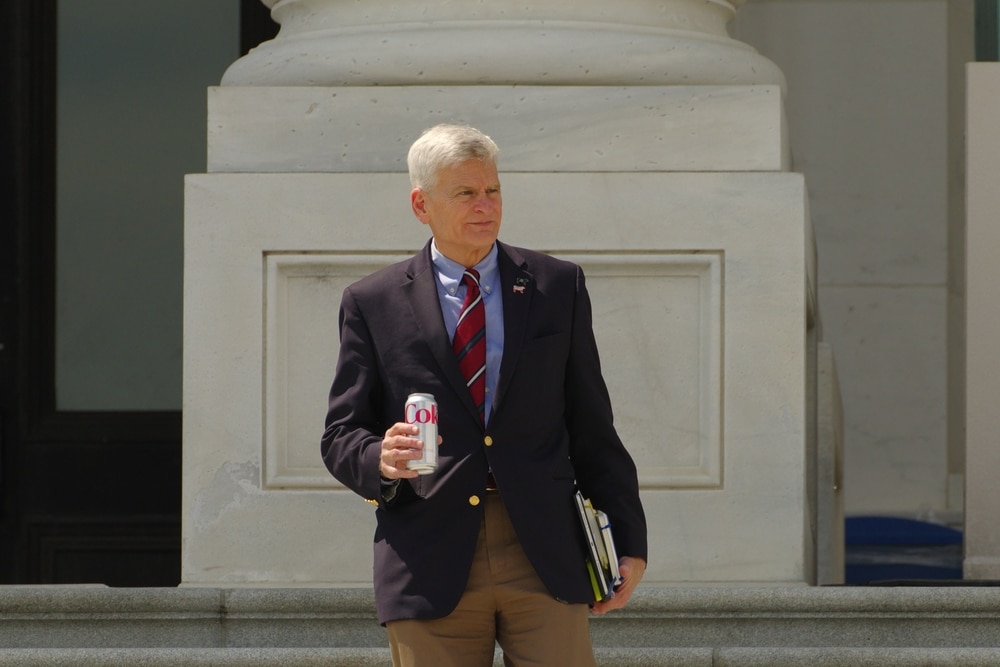
Ironically, the effort to remove Massie may create a new problem for those who opposed him.
Politicians facing reelection are constrained by political realities. Every vote must be weighted against electoral consequences. But when there is no future primary to fear, lawmakers often become more willing to vote according to their own beliefs rather than its consequences. With Senate Republican Bill Cassidy of Louisiana being an example:
“Sen. Bill Cassidy, R-LA., who just lost his primary for renomination over the weekend after he faced opposition from Trump, voted “yes” to advance the measure, the first time he has done so after having repeatedly voted “no.”
–NBC
With his vote, the Senate was able to move the War Powers Resolution forward, which would force Donald Trump to seek congressional authorization for further military action against Iran.
If the goal of the primary was to silence a dissenter, it may succeed in the long term. But in the short term, Thomas Massie and Bill Cassidy have nothing left to lose but their own convictions.
What’s next?

Massie’s defeat can be viewed as a demonstration of Trump’s continued dominance over the Republican Party. A well-established incumbent with deep conservative credentials was ultimately unable to survive after becoming a target of the president and his allies.
Yet another interpretation is possible.
The sheer amount of money, attention, and political capital required to remove Massie may reveal that independent voices remain more resilient than they appear. After all, this was not a lawmaker who opposed Republicans at every turn. It was a lawmaker who was unwilling to compromise on a handful of issues.
Could Thomas Massie return to politics later? Given the demographic trends revealed during the primary, it is certainly possible. But that is not the question that matters most.
The more important question is whether the Republican Party is becoming more unified, or simply less tolerant of disagreement. If loyalty increasingly becomes the party’s defining principle, the challenge will no longer be managing dissent today, but determining what comes next when the movement is eventually forced to exist without the figure upon whom it was built.