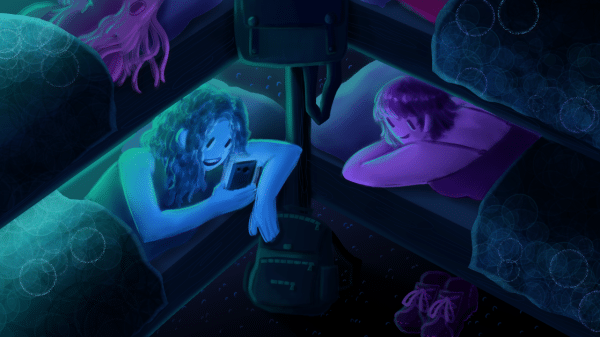
Every difficulty comes with a lesson you only understand later. My grey days taught me this: we judge others badly – and often wrongly.
Last year, things started falling apart for me. I felt drained, lost, and guilty. By the third year of university, I felt like I didn’t belong. I wasn’t good enough. I started losing my aura, my charm, my confidence. I left everything – my family, my friends, and my entire social life.
After a while, I started hearing rumors about myself: awkward, dramatic, confused. None of it was true. Those half‑truths didn’t sound like me. They didn’t know what it felt like to be lost in my third year – to want to quit, to leave everything.
Why we judge others so quickly
Then I realized: we are so quick to judge people. We draw conclusions based on what we see in a single moment – a frustrated sigh, a canceled plan, a cold shrug. Most of the time, we all do. We never stop to think that there might be something else.
For us, coldness means coldness, irritation means irritation, and withdrawal means withdrawal. Even I do the same thing. Maybe we’ve trained our brains to think this way. We are obsessed with making up stories on our own.
All we need are small signs – a slammed door, a harsh tone – and we fill in the rest. At the time, I felt my best friend started avoiding me. I thought she also found me awkward. I assumed she was embarrassed to move with me.
But the truth was, she didn’t know how to comfort me. She didn’t know how to react when someone felt vulnerable. She herself felt awkward.
This strange part of my story sparked a thought in me. I started thinking about it. Surprisingly, I found this trait in everyone. I don’t know why we humans do it.

For example, I blamed my university’s pressure for my frustration, confusion, and boredom. But then I started thinking my best friend was being cruel to me and leaving me out during a stressful time. It’s weird, right?
Paradox of judgment
Out of curiosity, I googled it. I found a very interesting idea: the Fundamental Attribution Error. It means when we mess up, it’s always because of something external – a bad morning, a tough week, not enough sleep. But when someone else messes up? Oh, that’s just who they are. Lazy. Mean. Dramatic. We attribute our own actions to external circumstances, while we attribute others’ actions to their personalities or character – without considering their circumstances.
Snap judgments
Your mind might be blown when you realize how judgmental we really are. Dr. Jonathan Freeman, an assistant professor, published research called “How Our Snap Judgments Affect Society”. It shows that our brains judge people in about ten milliseconds – less than the blink of an eye. We don’t decide to do it; it just happens. And those split‑second guesses shape everything – who we trust, who we avoid, who we decide isn’t worth our time.
But the point is, our snap judgments are not true all the time. We all know how we assume things will turn out, and how they actually do. So why do we judge others so quickly and so often wrongly? Part of the answer lies in what’s known as the Iceberg Model.
The iceberg beneath the behaviour
When we meet people, we just see irritation, disconnection, or idleness – that’s only the tip. Below the waterline, hidden from view, is everything: the fear of being left alone, the guilt of not being enough, the exhaustion of fighting invisible battles, the desperate need to feel like we matter. What we say and do is only the visible part. What we feel, perceive, expect, and yearn for lies beneath the surface.

Rigid expectations
We always want people to meet us in a perfect mood. We want our plans to go smoothly, our expectations to match. We don’t leave room for irregularities in our thinking. We assume: if the situation is this, then the person has to behave like that. They must do what they’re supposed to do. We never consider what’s going on below the waterline – the emotions, the fears, the unmet needs.
Our whole focus is on what’s visible on the surface. We mold our minds into very rigid shapes. Craving fixed patterns and logical structures makes it hard to stay grounded when life moves unpredictably.
But life isn’t a math formula where 2+2 always equals 4. Sometimes it could be 5. We never think it could be 5 – we always want 4.
What about ourselves?
Sometimes we judge ourselves just as harshly. We ignore our inner voice and only look at the surface – the tip of the iceberg. Even when the world runs smoothly. No obvious trigger. Everyone and everything seems fine. Yet, we still feel lost.
At times like that, we feel devastated, unsettled, lost, or just pissed off at the world. And before we even say a word to anyone, we start questioning ourselves. What’s wrong with me? Why am I doing this? Why do I feel this way? We find it illogical, even absurd. We hate ourselves for feeling this way.
But I think your body has its own healing time. It takes a while to restore your energy and spark a light again. The outside world might look fine, but inside, you feel burnt out. You feel awful. And honestly, no wonder – we’re all living in a messy world where our minds are constantly processing things, whether we realize it or not.
Take a moment and reflect on when you messed things up, were angry with people, screamed, gave up, or left. It’s not because you wanted to. It’s not out of you. Sometimes it’s out of shame, fear, pain, exhaustion, guilt, and confusion. Even when we are doing wrong, we feel hurt, disturbed, and broken simultaneously.
We only see the behavior of others and ourselves. Often, we don’t even know what’s going on below our own waterline. We’re unaware of the battles we’re fighting all the time.
Invisible to one’s self
Rodney Luther, in his article, defines the term “invisible to oneself”. It happens when a person takes on too much – trying to meet daily expectations, endless obligations, and growing demands – and slowly loses clarity of self. In this process, they lose connection with their own needs, conflicts, and sense of self. “They become psychologically occluded, losing touch with who they are and their own self‑agency. This kind of self‑invisibility is existential and subtle.”
A final thought
So next time you notice a half‑hearted smile, avoidance, or a sense of distance from someone – pause. Don’t let your mind race to conclusions. Don’t slap a label on them right away. Take a breath and ask yourself: Am I blaming their character without knowing what’s going on in their life? Am I judging them in less than the blink of an eye? What’s hidden below the waterline?
You don’t need to be a saint. Just press pause before you judge. Untangle the muddled threads before you sew. Look for patterns, not isolated actions. Ask yourself: Am I only seeing the behavior, not the battle behind it?
This isn’t the only truth – but it’s one we often forget. Maybe we can’t stop judging others completely. I’m not asking you to change everything overnight. But we can learn to pause before we decide someone’s whole story based on a single moment. That pause is where compassion starts.