


With heartfelt lyrics that dive into themes of love, loss, and the complexity of family ties, Kahan is known for being an artist who doesn’t shy away from the intense, often nostalgic experiences in life. He commented on his success in his documentary, “Noah Kahan: Out of Body”, sharing the fear that his new album wouldn’t be as inspired as “Stick Season”, which made him an overnight household name.
Digging into the evolution of relationships amidst success, shame, and moving on while debuting at No. 1 on the Billboard 200, it’s clear that Kahan still has something to say, and we all should be listening.
The stance on mental health
Kahan has always been clear about one thing: mental health should be taken seriously, and he will continue to support community resources and tackle stigmas one project at a time. After his debut album “Busyhead” was released in 2019, he launched his mental health non-profit, “The Busyhead Project,” with that exact goal in mind. According to his website, the project has since raised $6.6M in support of 170 community organizations worldwide, with nearly half raised in 2025 alone. Through charity events, mental health online resources, and benefit shows, Kahan’s dedication to providing mental health services is an ongoing mission.
“I’ve been given so many wonderful opportunities in my career, and it really is all for nothing if I don’t try and give back to the community that has supported me. If I can help anyone get through their struggles, it will be the proudest achievement of my career,” he explains on his official website.
Now, Kahan is tuning into his own emotion in “The Great Divide”, with a focus on the ever-changing relationships, highs, and lows he faces in his own life. With a proven pulse on the feeling of childhood reminiscence, hometown entanglements, and growing into new phases of life, “The Great Divide” is a must-listen featuring some of Kahan’s most reflective work yet.
“The Great Divide”– A New Era
What sets Kahan apart from similar folk-pop artists is his ability to somehow connect on a wide scale through specific descriptions of hometown streets, cities, and memories. It’s this ability to be honest and detailed that casts a wide net for fans to relate and appreciate the sensitivity and candor of his music.
With 17 tracks, “The Great Divide” strings out to approximately an hour and 17 minutes, making it quite a long album even before the four deluxe tracks were released the following day on “The Great Divide: The Last of the Bugs”. Despite its length, it’s a well-rounded exploration of emotion with each song carrying the depth one has come to expect from Kahan’s songwriting.
Kahan spoke about the pressure of leaving home and the struggle of airing out his family’s “dirty laundry” publicly, saying he regretted “not knowing how to communicate how [he] was feeling and choosing to do it through songs that were then marketed to millions of people”. He expressed his fear that the people in his life could feel “blindsided” and hopes to approach “The Great Divide” in a way that allows for expression while still respecting the privacy and feelings of his family.

“Noah Kahan: Out of Body” Documentary
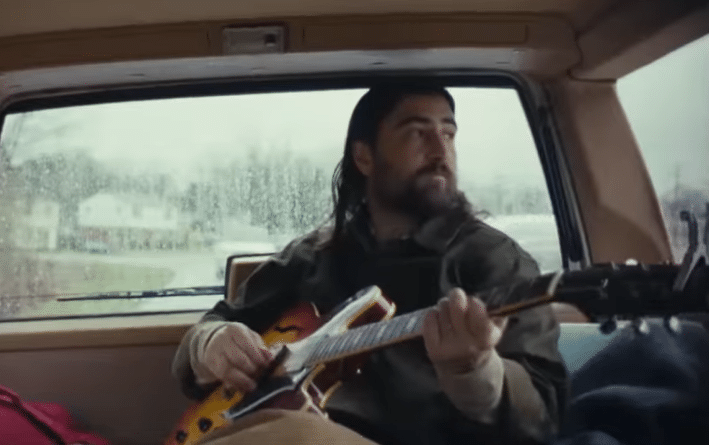
In his Netflix documentary “Out of Body”, Kahan puts his family relationships on screen to share their perspectives when it comes to the events that inspired “Stick Season”. It’s a deeply vulnerable, therapy-adjacent documentary where he opens up about his parents’ divorce and his own feelings of “shame” and “embarrassment”.
Despite Kahan worrying about how he discussed his parents’ divorce on “Stick Season”, his mother commented in the documentary in support of Kahan’s openness, saying, “Noah makes our dirty laundry just seem like being human.”
When talking about his father, he explains how his accident changed him. “This brilliant guy who was always a little weird and embarrassing, and maybe sometimes short-tempered, became slightly more weird, slightly more short-tempered.” It’s these personal stories and honesty that make Kahan’s documentary feel special. It’s about a real family with real issues and real love for each other throughout it all.
The documentary stands out in a sea of musician documentaries because it’s not just about his path to success, but the impacts it has had on his mental health. While one would expect overnight fame to be a musician’s dream, Kahan makes it clear that fame isn’t what is at the forefront of his mind. It’s not a priority, and it isn’t why he wrote lyrics on his childhood desk while living at home during COVID.
“The Great Divide” explores the aftermath and impact of success and fame on family dynamics and how they moved forward after “Stick Season”.
‘The Great Divide’ Lead Singles
The album’s lead single, sharing the name “The Great Divide”, set the tone for an album on mental health and growth, with the theme being about the division in a relationship and new perspectives on others’ lives and the different fears people carry. Kahan leans into the effects of anxiety, writing that he hopes this subject will be afraid of common things, “like murderers, and ghosts, and cancer on your skin”, instead of compulsive fears, like how he views his own soul, and questions his own character.
Paranoia and self-doubt are common themes in Kahan’s music, and a show of his personal battles with mental health. Despite his song’s cutting deep into those personal struggles, his willingness to share a piece of them with his audience is what makes it so successful. He doesn’t dance around the issue, but instead dives right into the heart of it all with skilled intricacy and an openness that’s a breath of fresh air in the genre.
The album’s second single, “Porch Light”, continues this thread of mental health with the story of an estranged relationship and the effects it has on both people in the situation. Despite hardships, Kahan writes in his chorus: “I’ll leave the porch light on, heartbroken each morning when it’s me who turns it off.” It’s a solid single that captures the family themes of the album and the perspective of leaving home and past relationships.
Standout songs
Contrary to the album’s title, there is actually a cohesive and unifying tone to Kahan’s latest album. Among the album’s 17 tracks, standouts include “Doors,” “Willing and Able,” and “Dashboard”.
“Doors” pays tribute to his hometown and relationships in Vermont with the line “I hope you’re moving on, ‘cause I’m the trouble ahead”. The song also houses perhaps one of the best lyrical moments on the album, with Kahan describing being born in Vermont during a storm, saying, “in that frost, a heart was formed, malcontented and unwarm.” It becomes clear that this album will be heavy and full of self-reflection.
“Willing and Able” continues this thread with a somber turn, illustrating the feeling of growing apart from a sibling and having leftover tension from childhood that hasn’t been resolved. In the song, Kahan describes having a “bone to pick” and “Sitting in the yard” or by the TV, as children do. It’s a devastating depiction of how siblings can go from understanding each other’s upbringing to becoming strangers leading individual lives. Kahan conveys this by writing that he wishes he could “know [them] much more sometimes” and go back to being kids doing nothing together.
“Dashboard” acts as the juxtaposition to “You’re Gonna Go Far” on “Stick Season”, by describing the perspective of someone being left behind and holding a grudge against the subject for running away to a new life. While “You’re Gonna Go Far” is written as an encouragement of someone moving on, “Dashboard” criticizes the subject for leaving, saying “you aren’t somebody else ‘cause you’ve worked on yourself” and “cross[ed] state lines”. This is the embodiment of how Kahan imagines his friends and family would feel about his newfound success, especially as he revealed he moved to Nashville in his documentary. He went on to discuss the struggle to adjust to that new, competitive environment, and his battle with feeling like an imposter.
Final review
With standout lyricism and staying true to his own style within a saturated genre, Noah Kahan’s fourth studio album is a fresh addition to today’s music scene. It’s a masterful look at how childhood impacts adult lives and how relationships shift over time. Nothing stays static for long, and Kahan doesn’t shy away from continuing to share parts of his personal life to show that. The album veers more into his family dynamics, while still acting as a record of his mental health, which fans can continue to relate to.
With Gen-Z largely being in the transitional period into adulthood, the album’s themes are sure to resonate with its target audience. It’s an intricate look into what it feels like to move away from home and deal with the difficulties and rifts many families tackle.
Noah Kahan’s upcoming tour begins June 11th in Florida and will conclude January 10th in Cancun, Mexico. While many dates have already sold out, there are still tickets available for festivals, according to Kahan’s website.













Frank Sterle Jr.
May 14, 2026 at 3:16 am
Half of ‘Movember’ — that being the month of November’s designation to publicly addressing men’s, though it should also include boys’, health issues, including that of the mind — typically passes before I, a daily news consumer, hear or read anything about it in the news or social media.
There remains much platitudinous lip-service on this matter, especially when it comes to proactive mental illness prevention and treatment for males. Various mainstream news and social media will state the obvious — that society must more progressively address, fruitfully treat, and even prevent such illness in general.
But they will largely fail to properly respond to the problem of males refusing to ask for help due to their fear of being perceived by peers, etcetera, as weak/non-masculine. The social ramifications exist all around us; indeed, it is endured, however silently, by males of/with whom we are aware/familiar or to whom so many of us are closely related.
The mindset maintains, albeit perhaps subconsciously: Men can take care of themselves, and boys are basically little men. It’s the mentality that might help explain why the author of Childhood Disrupted: How Your Biography Becomes Your Biology and How You Can Heal was only able to include one male among its six interviewed subjects, there presumably being such a small pool of ACE-traumatized males willing to formally tell his own story of traumatic childhood adversity. …
To get anywhere, males need the same strong support by the mainstream media (i.e. news, social, non-fiction literary, and even entertainment) that females have had for decades, and still do. Males have instead observed thus known that for the most part they haven’t been taken as seriously as their female counterparts. If anything, the media are generally cynical toward their cause.
I even recall a metro-daily newspaper editor sarcastically referencing some educationally neglected males as “the poor little boys” in a brief phone call with me. Her attitude clearly rang with incredulity — that males (especially Caucasian ones) can’t really be a socially/societally disadvantaged group.