


For months, driving to work on a moped had been routine, if not always convenient. But as fuel prices climbed and availability grew less certain, that routine began to shift.
“Taking the train just made more sense at a certain point, it was much cheaper, and only about a 15 minute difference”.
Across cities facing rising fuel costs, similar decisions are becoming more common. Commuters are rethinking habits that once felt fixed, weighing cost against convenience in ways they hadn’t been before.
Across the world, that quiet calculation is becoming routine.
A global oil disruption, triggered by the shutdown of shipments through the Strait of Hormuz, has begun to ripple far beyond energy markets and into everyday life. Oil does not move instantly from well to consumer: it travels through a complex system of shipping, refining, and distribution that often takes weeks to complete.
Asia is particularly exposed. The region sources roughly 60 percent of its crude oil from the Middle East, making it more dependent on the route than anywhere else in the world. Now, as those delays catch up, the effects are becoming harder to ignore, not just in rising prices, but in how people move, work, and plan their daily lives.
Drivers are planning their routes more carefully and reconsidering or postponing convenience trips. In cities, long underused transit systems are seeing a resurgence in ridership as people look to save on the higher cost of fuel.
Government responses
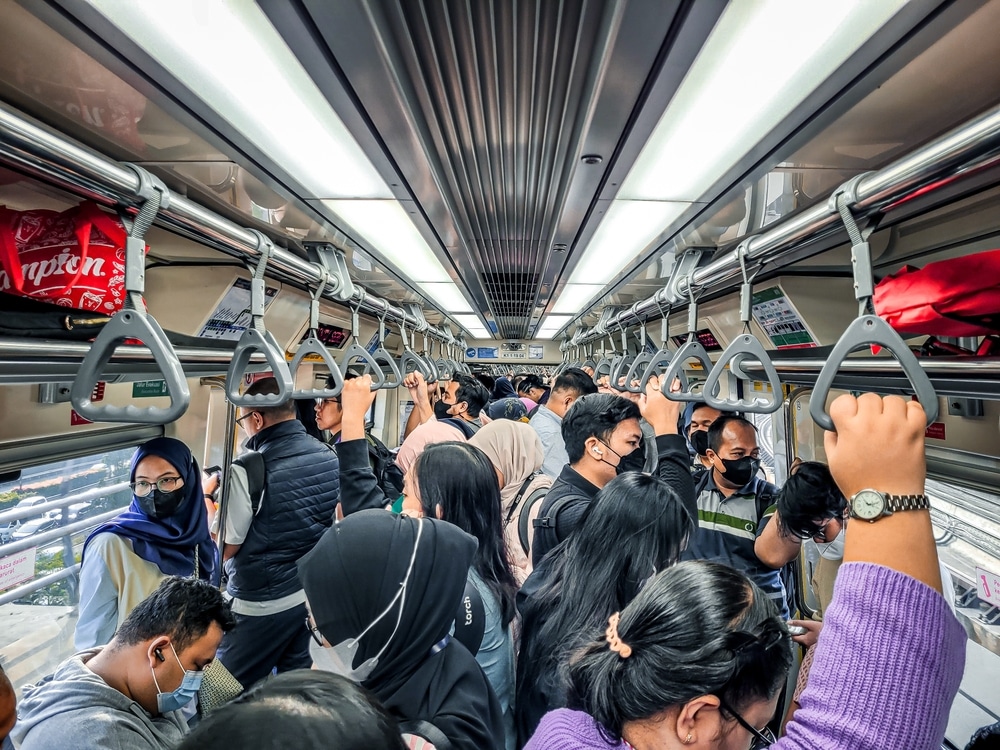
Governments facing constrained supply and few immediate alternatives have turned to managing demand. Across parts of Asia, officials have introduced measures aimed at not increasing supply, but at reducing how much fuel people use in the first place.
In the Philippines, a four-day workweek has been introduced for segments of the public sector, cutting one day of commuting to conserve fuel. Elsewhere in Southeast Asia, governments have encouraged remote work, reduced office hours, and quietly discouraged nonessential travel.

While these policies frame themselves as temporary and pragmatic responses to an uncertain situation, they deeply affect people by altering the rhythms of daily life.
Government restrictions
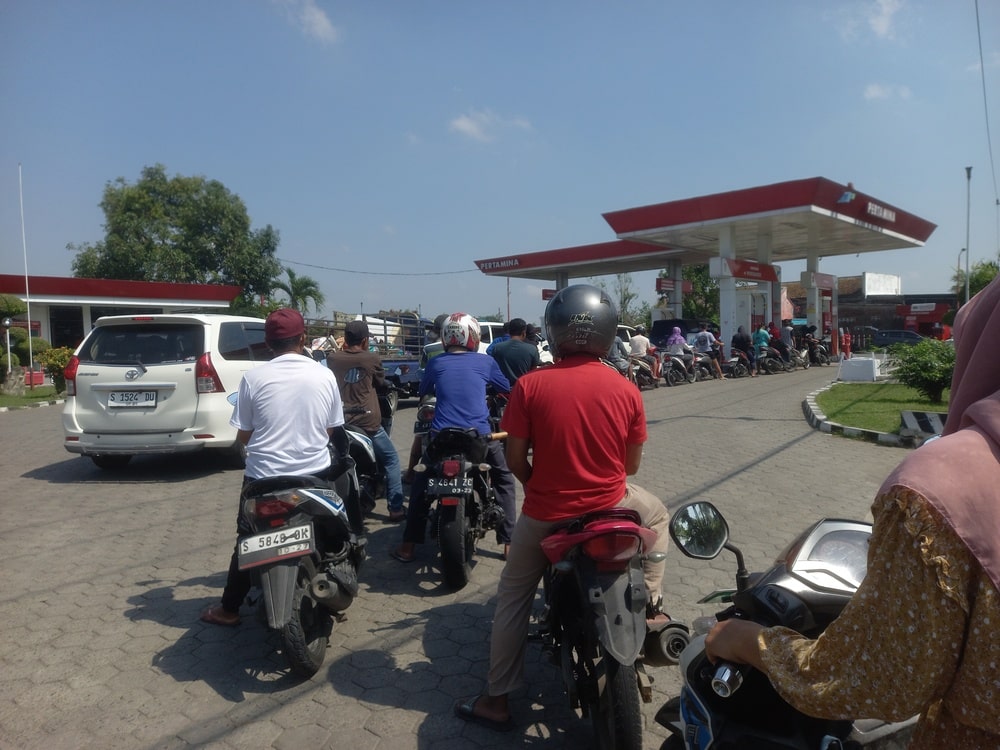
In Myanmar, where shortages have been more acute, restrictions are stricter. Authorities are rationing fuel purchases, and some regions are implementing systems that limit when drivers can fill up their tanks. For many, movement itself has become a chore, rather than being taken for granted.
These measures reflect a broader reality, that when supply cannot quickly increase, the burden shifts to individuals. If disruptions continue to persist, countries will face a sustained reduction in demand, forcing governments to rely increasingly on behavioral changes rather than market solutions, and this is a shift extending beyond transportation
Beyond Transportation
Fuel isn’t just something people put in their cars, it underpins much of the global economy. As oil prices continue to rise, so too does the cost of moving goods. The result is a slow but widening ripple effect: higher food prices, more expensive clothing, and increased costs for everything from construction materials to consumer products.
In practical terms, the shortage is becoming an “everything shortage.”
The cost of delivering groceries rises, and those increases are then passed on to consumers. Manufacturing becomes more expensive, squeezing supply chains already under strain. In some regions, even basic goods are becoming less reliable, not because they are unavailable, but because transporting them has become too costly.
Produce
For farmers, the effects are arriving at a critical moment.
The same disruption affecting oil has also tightened global fertilizer supply, much of which passes through the same shipping routes. With roughly a third of the world’s fertilizer passing through the Strait of Hormuz, the slowdown has sent prices to historic highs.
The result is a difficult set of choices. Farmers must decide whether to use less fertilizer and risk smaller yields, or plant fewer acres altogether. Across the United States, some are shifting crops, planting more soybeans which require less fertilizer, while cutting back on historic corn production. Others are applying nutrients more sparingly, accepting that crops may grow smaller or less abundantly.
These decisions will not produce immediate effects; instead, they will shape harvests, supplies, and eventually prices months down the line. What began as an energy shortage is now extending into food.
An unequal impact
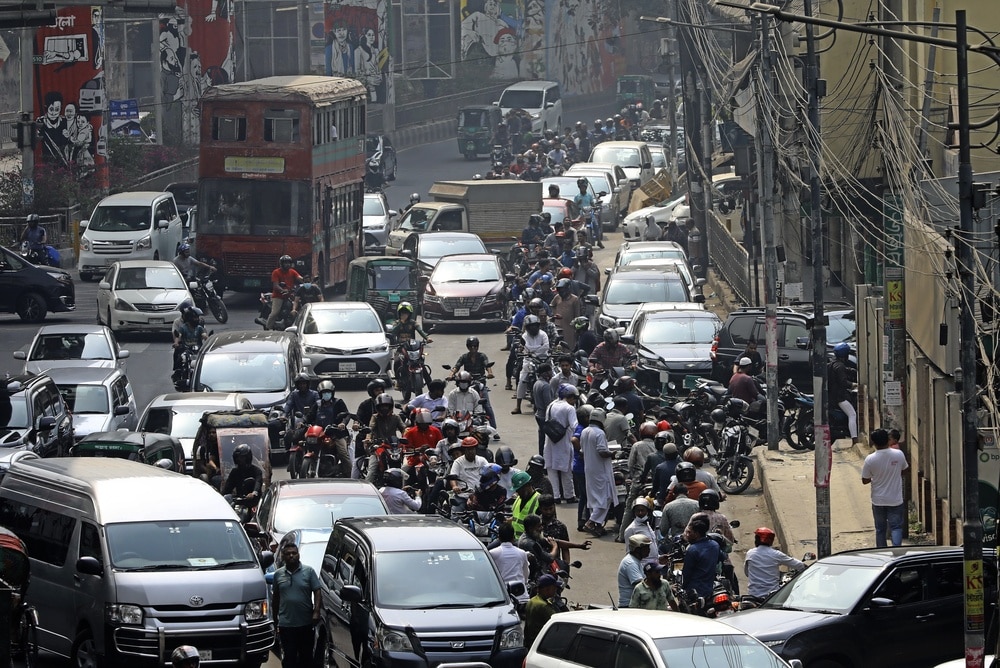
(Credit: Shutterstock/Raez Ahmed Sumon)
Wealthier countries often buffer these pressures.
Governments with financial resources and strategic reserves have moved to cushion the impact- releasing stockpiles or sourcing oil from alternative suppliers. These measures do not eliminate the problem, but they can soften the effect, allowing daily life to continue with fewer immediate disruptions.
In developing economies and smaller nations, where reserves are limited and fiscal flexibility is more constrained, these shocks can cause far more immediate consequences. Rising fuel costs strain public budgets, weaken the currency, and push up the price of essential goods for people already barely hanging on. Power shortages strain clinics, and delayed shipments disrupt the delivery of essential supplies.
In some cities, life continues with only minor adjustments: slightly higher prices, slightly longer commutes, and a growing awareness of energy use. In others, the disruptions are more immediate and more visible- long lines at fuel stations, stricter controls, and a daily routine that requires constant adaptation.
Unlike sudden price shocks, which arrive all at once, this crisis is unfolding gradually. Each week brings small changes: another price increase, a new restriction, a longer delay, all of which add up over time.
What began as a small adjustment- leaving the moped behind for the train- has become routine. The extra time, which was once seen as an inconvenience, has begun feeling like a trade-off worth making. The world has not come to a complete halt.
Cars still move, shops remain open. Fuel, though more expensive and less reliable, is still available in many places. People have planted the seeds and now act more cautiously with their oil expenditure. This transformation is not dramatic, but it is changing the way the world moves one “shock” at a time.










Frank Sterle Jr.
May 14, 2026 at 3:11 am
There has been, and almost certainly will continue to be, an overly predictable American-UK proclivity for sanctioning Iran, its officials and even their allies since the Iranian Revolution, sanctions resulting in, among other negative impacts, reduced oil production revenue by the country long-demonized by much of the West.
The 1979 Iranian Revolution’s expulsion of major Western nations was in large part due to British and American companies exploiting Iran’s plentiful fossil fuel. The expulsion may have been a big-profit-losing lesson learned by the ‘energy’-corporation heads, one that they, via intense lobbyist influence over the relevant governments in Washington and London, would resist reoccurring to them anywhere globally.
If/when Iran militarily surrenders to Western forces thus big corporate interests, soon-enough afterwards it will also be compelled to surrender access to much of its vast fossil fuel reserves to American and British ‘energy’ companies. Those corporations, and likely Israel’s government/interests as well, know there’s still much to be effectively appropriated. And it’s understandably probable that those corporate fossil-fuel interests would like Iran’s government to fall thus re-enabling their access to Iran’s resources.
The U.S./British invasion and occupation of Iraq (2003-11) very likely were viciously violent acts largely motivated by such Western insatiable corporate greed. According to AI Overview (for what it’s worth), “some [U.S.] companies did secure lucrative contracts for oil services and exploration in Iraq following the war.” Also, “British oil companies, particularly BP, significantly benefited from the Iraq War by gaining access to and exploiting Iraq’s vast oil reserves.”
Yet, I read/heard nothing in the mainstream (Western) news-media about these post-war foreign fossil-fuel-corporation incursions into Iraq; and I doubt that the morally-/ethically-challenged news outlets would objectively/fully report on similar big-business incursions into a post-war-defeated Iran.