

Despite what the culture will have you believe, not everything you do needs to have monetizable value. With the oversaturation of the market, having hobbies that are purely for your own enjoyment might just be the healthiest thing for both yourself and the environment.
Lately, it feels like everyone’s an entrepreneur and anything fun is a missed business opportunity.
You make art? Why don’t you sell it? You like to thrift? Upsell on Depop. Are you into gaming? You should be streaming. Are you a fitness nut? You should have an online course. Love nightlife? Why don’t you have a 25-part TikTok series documenting everything you do? Nothing can ever be done just because you like it. There’s always got to be some end that validates your means.
But living for other people’s validation is no way to live. To be clear, there’s nothing wrong with trying to make a profit off of something you love. But we’re living in a time of lots of profit and very little love. People are churning out slop disguised as authentic passion in the hopes that it will be profitable enough to make their joy valuable. And I believe that speaks to much larger issues endemic to our society.
Hustle culture
The era of one primary income being enough to support an individual, let alone a family, is long gone. As of November 2025, approximately 72% of Americans have a side hustle, or are considering getting one. And 44% say that they need a side hustle in order to financially survive.
Regardless of what the White House or the Washington Post claims, for the average American, the economy is a cause for concern. Every day, the cost of living soars upward, while our wages continue to stagnate. It is no wonder, then, that there is an immense amount of pressure to obtain a secondary or even tertiary source of income.
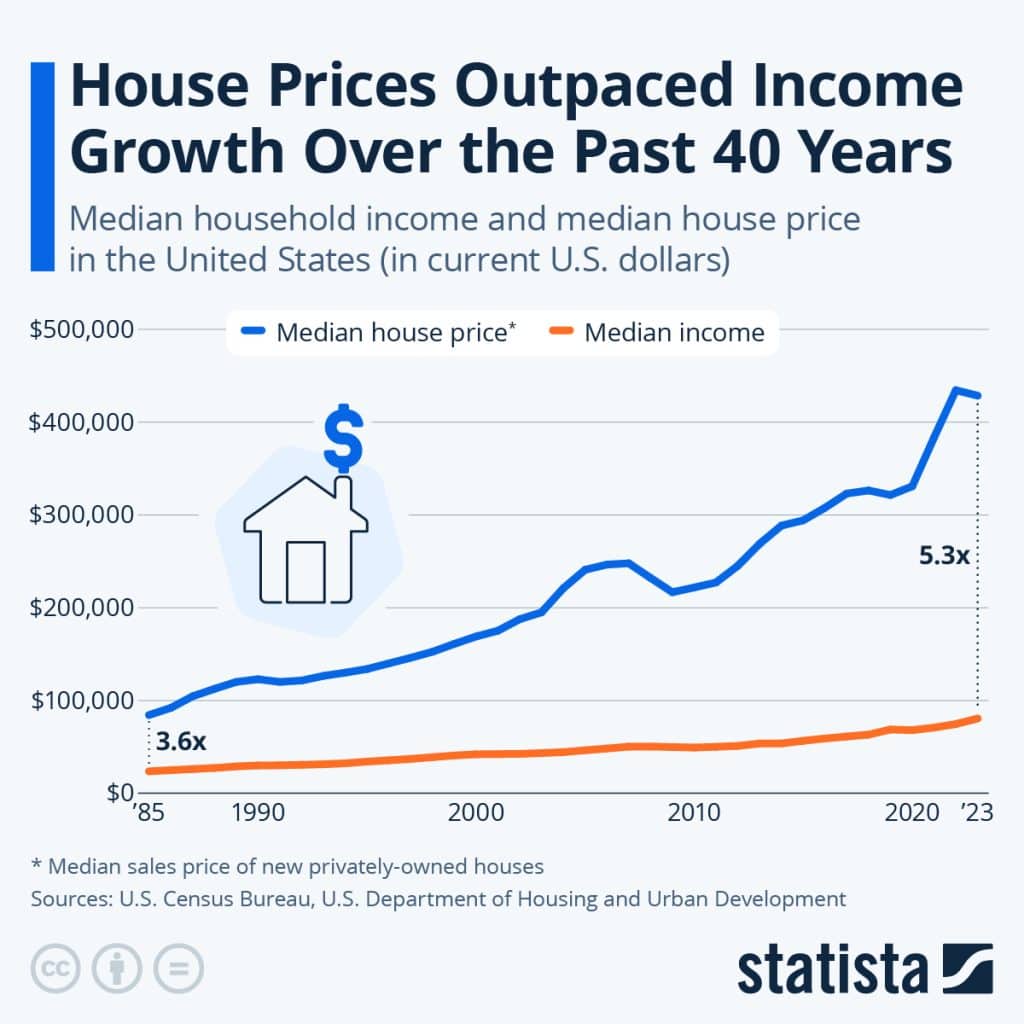
But the unfortunate consequence of this mounting pressure—y’know, beyond the economic instability and underlying anxiety—is that any entertainment or leisure becomes superfluous self-indulgence. When you have to constantly worry about productivity, investments in hobbies like art, music, or gardening look like a waste. Everything requires time and money. Time and money you could be investing in making more money.
And this is especially true if you aren’t good at your hobby yet. “…in an era defined by maximalism and monetization, it’s harder to be an amateur. If we’re good at something, we want to go all-in, and even to make money from it. We appear to be disconnecting from the mode of life in which we do things in moderation, just because we enjoy them” (The New Yorker).

As YouTuber, Alastair discusses in his video on “the grindification of hobbies,”
“We’ve taken everything that used to be just for fun and turned it into another form of work. We’ve lost the ability to do something, just because it feels good to do it. Everything has to have a trajectory, a purpose beyond just existing…We’ve infected our downtime with the same productivity mindset that already dominates everything else” (Alastair).
So if you want to do something you love, you better find a way to make money off of it. Which is how we get what I’ll call—for lack of a better word—small-business slop.
Small business slop
Whenever I stroll through my local farmer’s market or craft fair, I’m struck by one thought: this sucks. Okay, I’m kidding. But there is a serious problem going on. These markets used to be places for real artists. Where people passionate about their craft could share their work.
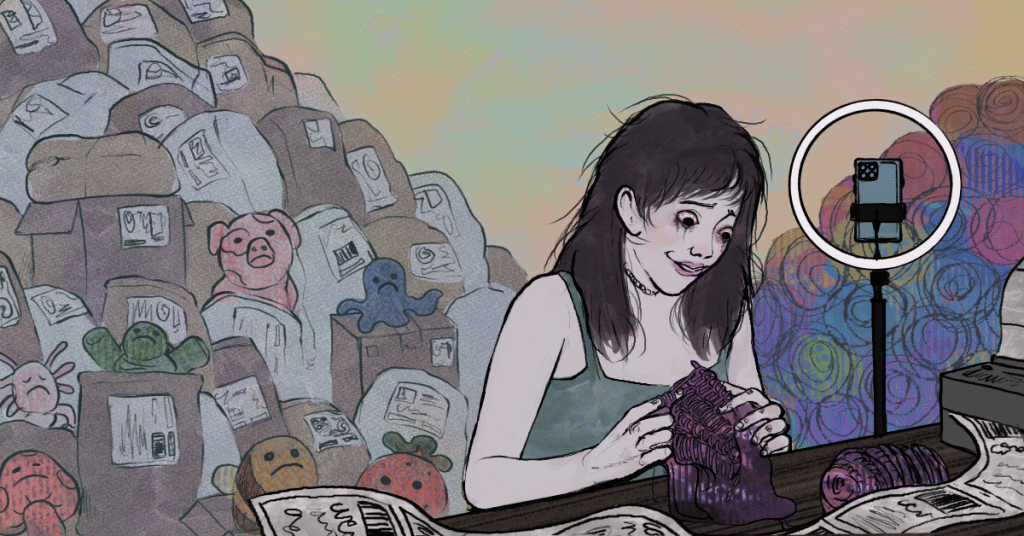
But now, they’re inundated with landfill-destined junk. AI art decals on Amazon tumblers, 3D printed dust-collecting plastic from $15 templates, dime-a-dozen crochet plushies, kitschy trinkets, and stickers drop-shipped from Temu. And I’m sick of it. Because it is painfully clear that there isn’t genuine passion here. It all feels like a superficial money grab.
And it’s not an issue exclusive to the arts. Every other scroll, there is someone trying to sell me something. If they’re not selling a physical product, they’re teaching you how to sell your hypothetical business. “Here’s how I grew my followers from 1,000 to 100,000 overnight,” “Top 5 tips for growing your business.” “What you’re doing wrong with starting your small business.” All for what? So you can become part of the masses shilling the exact same products and services as everyone else?
Where does it end? I’ll give you a hint, it’s the landfill.
Overproduction final boss
Everyone talks about the problems with overconsumption, but what about overproduction? It is completely normal to have a bit of waste from practicing your craft while you’re still learning—that’s part of the joy of having a hobby. But in an effort to make quick money, many of these businesses are skipping the learning process in favor of overproducing high quantities of their amateur work. Then they use the labels “handmade” and “artisanal” to justify the value of their work, despite its low quality.
But I ask—what are people going to do with the mountains of rotting resin pyramids and 3D-printed paperweights once the fad dies down in 10 years? Never mind 10 years, it’s already happening now. Every week, I see another “entrepreneur” crying while their piles of stock collect dust around them.
I’m not trying to dog on small businesses or people genuinely interested in art. But we have to draw a line. There is a big difference between an artist or content creator with a unique perspective, offering the skills they’ve carefully honed, and somebody tired of their day job, looking to get rich quick off of some tutorials and templates they found on Etsy. One is a meaningful contribution to society, and the other is actively damaging the environment and oversaturating the market.
As YouTuber, Drama Kween, discusses in her video about the influx of AI in local markets,
“The art isn’t cool. It’s not innovative. It’s not doing anything. It’s just straight up stealing sh*t, and then putting a price tag on it… Selling AI art is also such a risk, because you’re risking people taking a look at it and being like, ‘mm, actually that looks really strange. I’m pretty sure that’s AI art.’ So, where are you going to put all of that stock? Where does it go to?” (Drama Kween)
The importance of hobbies and living for the self
I want to say, I am not without sympathy for these people. If anything, I find their situations devastating. Because within their mediocre copy-paste business strategies, I see a kernel of real curiosity for the craft. You don’t start a business like this just because you think it will make you money (unless you’re a drop shipper, in which case, you probably did). If that were the goal, then everyone would have finance or real estate firms. You go for it because part of you finds it fun. Whether it’s a craft, streaming games, baking, or gardening, there is a genuine joy that drives you to it.
It just gets lost somewhere along the way because of the need to justify it with profits. You forget about the parts that make you happy in favor of producing the things that are most marketable or profitable. And in doing so, you’re filtering your medium for joy through the expectations and desires of others. Thus, defeating the purpose of the activity in the first place.
There is value in doing something that brings you joy, just because you enjoy it. No one else has to enjoy it; you don’t have to be good at it or make money off of it for it to be a valuable action. In fact, it is only when you allow yourself to invest in your own happiness that valuable things are made. Successful artists don’t get into art because it will make them money. They do it because they love it, and through loving it, they develop the skills and perspective that people admire enough to buy.
As Joshua Rothman writes in his article for The New Yorker,
“In a world that often pushes you around—telling you how much you’ll work, and when you’ll rest, and what you’ll seek to achieve—hobbies ask you to discern and respond thoughtfully to your own evolving preferences. Hobbies give you chances to manage and know yourself. Which is another way of saying that they give you freedom” (The New Yorker).
And that is the true value and importance of the “hobby.” It is a method of self-cultivation that should not be tainted by the values of society. It does not matter, however menial the activity may be. Through the exploration of your joy, free from the influence of others, you find the purest version of yourself and your desires. And in doing so, you find the most meaningful parts of yourself that are worth sharing.
Why I’m not starting a small business
If it’s not already obvious, I’m something of a hobby enthusiast. I’m an artist, musician, writer, reader, and so much more. I, of course, appreciate that others enjoy the products of my hobbies, but the important part is that their enjoyment is not a prerequisite to my own.
The fact that my hobbies make me happy is enough reason for me to invest in them. Because, unlike living for the approval of others, happiness is never a waste. I do not pretend to think that it is an easy task to shield your joy from the expectations and judgments of others. But I propose that despite its fanciful facade, investing in hobbies is self-care work just as important as getting proper sleep or fresh air and sunshine.
It is just as Ralph Waldo Emerson muses in his essay, “Self-Reliance,”
“…truly it demands something godlike in him who has cast off the common motives of humanity, and has ventured to trust himself for a taskmaster. High be his heart, faithful his will, clear his sight, that he may in good earnest be doctrine, society, law, to himself, that a simple purpose may be to him as strong as iron necessity is to others” (Emerson).
Although the value of the hobby may not be visible to the naked eye of society, its benefits are indispensable.