
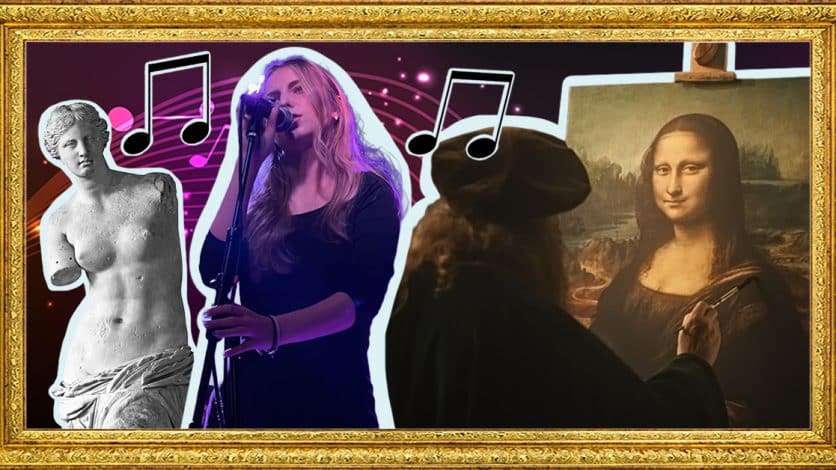
Almost exactly six years ago, I decided I wanted to become a singer. I have to be honest and give my sixteen-year-old self some credit: the approach I chose wasn’t to create TikTok clips, but to enter a music conservatory. Specifically, to graduate with a degree in jazz singing. So maybe TikTok clips would have been a wiser choice, but at least I had an academic method.
I still remember when I announced to my Italian parents that I wanted to study music and that I wanted to do it in New York City, which was located more than 4,000 miles from our home in Rome. They needed a few minutes to digest the news.
My parents never forced other professions on me. However, my father used to say, “You can do whatever you want, but please, not an artist.” He understood the complexities of the job and how exhausting it can be. He and my mother didn’t know if this passion was worth it, and I wasn’t sure either.
Thinking process
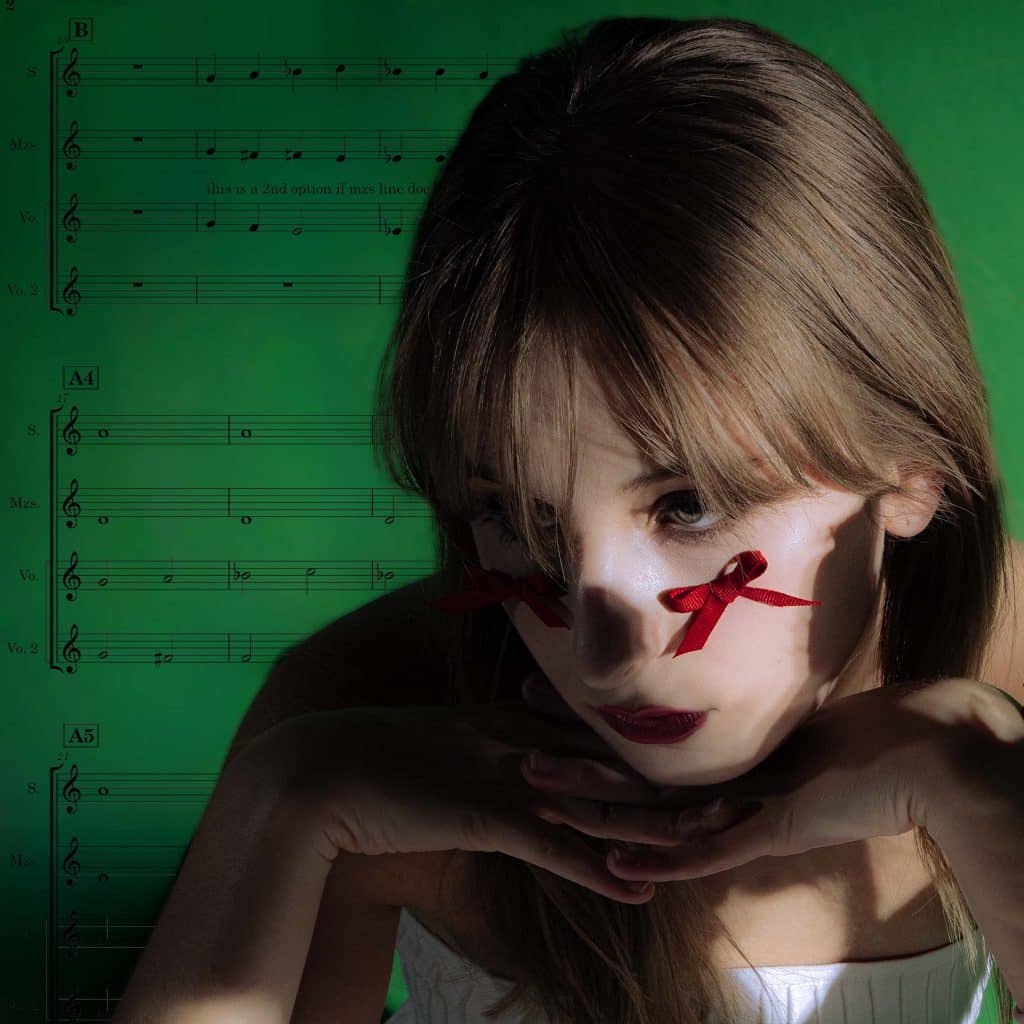
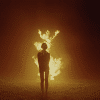
Even after receiving the acceptance letter, with a scholarship attached, I spent months pondering whether I should leave my entire life behind. I can’t say what ultimately drove me to get on that plane—maybe naivete or passion (which are really the same thing). Speaking of passion, below you can see some of the pictures taken by Mattie Gillette for my first release, “Into the Self.”
Everything about music was fascinating to me: its shapes, its colors, and its nuances. Music strikes emotional strings within us that nothing else in the world can. It’s an undeniable and infinite energy; an ocean yet to be explored.
All creative mediums have this power. The idea that you can’t survive on art may feel like a product of the capitalist system. But is it the only thing that makes us distrust the artist’s career? Perhaps not.
First questions
In my (short) academic and professional career, I’ve realized that the problem is deeply rooted in ethics and philosophy. Questions like “Will I be able to establish myself in the art scene?” and “Do I really have talent?” quickly transformed into, “Can I create something truly authentic and original?” “What is originality after all?” “Does it exist?” “What is art itself?” And, perhaps most importantly, what does new media say about who we are as people and as a society?
The problem lies not only in the idea of originality and the individual in art, because this presupposes the creation of a subjective and objective plane of beauty. Here, our paths will diverge.

Objective vs. subjective
In my experience, there are two types of people in this world. Some believe that everything is completely subjective and that the human experience is broken down into thousands of variations for each of us. Others are convinced that the world actually has an objective plan and that it is useless to deny it.
I constantly oscillate between the two positions, a Nietzschean clock where, instead of human experiences, my indecision repeats endlessly. I am getting used to the idea of an undeniable objective plan, which validates at least a basic level of art we can perceive. Ultimately, beauty has always been attractive to human beings. And even artists who seek to reject canonical beauty must be able to recognize it in order to take a different direction.
Here’s a Nietzsche summary from TikTok:
After talking with my friends, I’ve realized that most artists don’t really agree with this position. For example, my roommate, who is a singer, staunchly defends a completely subjective level of reality and the way the public approaches art. But in my opinion, the idea of originality makes it impossible not to consider an objective level of art (and of the world, really).
What has been said about originality
Nothing is original; every idea, artistic or personal expression, has already been explored. Even the few interpretations that strike us as fresh are based on past experiences; not only our own, but those of all those who came before us. Thus, by copying each other (even if unconsciously), we prove that we can recognize similar, if not identical, things as valid. Fortunately, people much wiser than I have spoken out on the issue, and I will cite them to support my case.
Big Brain Essays
One of the most interesting analyses on the theme of originality is undoubtedly Jonathan Lethem’s literary essay, “The Ecstasy of Influence.” I wish I had read this essay during my freshman year because, at the very least, I would have developed more nuanced beliefs about art, culture, and philosophy. And I would have avoided excessive rumination about the ethics, function, and legitimacy of art to finally find inner peace, ultimately allowing me to take “Giant Steps” more seriously than I did at the time.
In any case, in his work, Lethem not only copies but straight-up plagiarizes. He states that all works of art enter the public domain the moment they are exhibited to any audience, as gifts to the world. Spoiler alert: He concludes his work by admitting that he completely copied his content from other essays and that he simply reapplied it in the context of his essay.
When viewed through the eyes of reason, Lethem’s methods initially appear absurd and extreme. After all, art is a gift born of sacrifice.
However, his position carries its own form of reason. If we limit our access to existing cultures and traditions, how can we evolve, as individuals and as a society? Aren’t we a tapestry of all that preceded us? My musical education is a perfect example, since it taught me that almost all popular music comes from the Blues.
None of our thoughts or creations is original, no matter how much we wish they were. There is no Adam and Eve of art. Culture directly reflects the chaos of life. This is why art moves us and connects us, because it is a source of plagiarism: universal, derivative, and extremely repetitive.
To sum it all up
No art is original. Moreover, what matters, and what makes the wheel turn, is authenticity: the sincerity with which the artist approaches the work, themselves, and the world. This is why I decided to dedicate myself to simplicity. The music I perceive as most genuine tends to explore the infinite nuances of the obvious.
I love clichés and repetitions, because that’s life. And the artists I see who attempt to force something different, innovative, and artificial never strike me as deeply. It’s a constant digging for something sincere, which usually never comes.
At the risk of appearing bland, sincerity is “an antidote to an increasingly frenetic world, and what we can perceive as the harsh truth,” as David Foster Wallace put it. So it seems like we’re not going to have issues “keep[ing] this thing alive even though no one cares anymore” (see TikTok below).
I highly recommend reading additional essays that explore these concepts in more depth. Several that have helped me gain some clarity are “The Ecstasy of Influence” (Jonathan Lethem), “E Unibus Pluram” (David Foster Wallace), “Talking to Myself” (Adrian Piper), and “It’s Not Plagiarism. In the Digital Age, It’s Repurposing” (Kenneth Goldsmith).
In the end, it remains subjective, so what do you think?

Allie
March 24, 2026 at 6:54 pm
Love this! Super thoughtful!