When thinking of poetry, what comes to mind? Probably romance: all the rhymes about unrequited love and dramatic lines on passion. The poems we see online often fall into this category, and that may not interest everyone. But poems can be way more than a love story. They can speak to our deepest emotions and show us new ways of seeing the world.
Here, we’ll take a look at some of the benefits of self-discovery poems and what we can learn from them.
So, what is self-discovery poetry?
If it’s not romantic, then what does self-discovery poetry sound like? Really, it can be a lot of different things. Whatever inspires an author could become their lens for understanding themselves.
Self-discovery poems usually handle identity or intense emotions, sharing the parts of ourselves we may hide. These poets explore their minds, their memories, and their relationships to the world around them in the hopes that their audience can connect with their stories.
But self-discovery poems can take on all kinds of forms, from realistic and worldly to absurd and fantastical.
Author Robin Gow’s identity journey often takes the form of surreal and strange things, like dinosaurs or mythical creatures. These topics allow him to freely explore family, community, queerness, and his sense of self in his own way.
When writing, Gow starts with a question rather than an answer. This enables him to approach his emotions with curiosity, and the answers then unfold as he writes.
As readers, we, too, can use this method and read in hopes of answering questions about ourselves. Our own curiosities can spark a connection to pieces and inspire self-reflection.

Unlike love poetry, self-discovery poems can give us a whole new lens of thinking about ourselves. As many of us enter our own coming-of-age stories, we are searching for meaning and purpose in ways that we weren’t before. Often, we want to see something relatable that will make us feel truly understood.
And that’s the beauty of these poems! They invoke a different kind of emotional thinking, pushing readers to explore their inner worlds in new ways.
Reflecting on our experiences
Self-discovery poems can act as a guide for our personal adventures, as poets may share stories and emotions that feel very similar to ours.
Gow says, “It provides an entry point into understanding yourself…sharing the emotions and sensations of what it means to come into an identity.”
With its emotional, sometimes metaphysical language, poetry can reach the hidden parts of ourselves that can’t be put into words. It allows us to further explore intense feelings that we don’t always know how to express.
The poems also encourage us to investigate the parts of ourselves that we may find uncomfortable or unfamiliar. For Gow, self-discovery poetry has become a way of understanding his queer identity in a new light.
“So many parts of our identities are not a checkbox or one small part of our life,” Gow says. “It’s a holistic kind of understanding.”
In reading self-discovery poetry, we can confront all parts of ourselves and how they interconnect. This helps us better express ourselves and grasp the full scope of our identities by appreciating everything that makes us individual.
Connecting with community
While it may sound similar to meditating and journaling, you don’t have to read alone! Joining a poetry reading space is an amazing way to share stories with others and make new connections. If a piece resonates with you, there is a major chance it will resonate with someone else, too. And by bonding over those moments, we can begin to comprehend how we fit into the world around us.
Gow highlights the value of reading and writing communities as sites of collective learning that give poems more life. How someone reads aloud could change your perspective, and others will point out details that you may have missed. Digging into a group interpretation of a poem reveals the beauty of different perspectives.
“Reading is meant to be not only something to experience in that intimate private way,” says Gow, “but something you try to explore with other people.” Having a community provides powerful moments of connection that we sometimes lack in our daily routines.
In college, a poetry reading and writing space was essential for Gow. “I didn’t appreciate at the time how rare and wonderful that is,” he adds. There is so much value in sharing your reading experience with others!
There are tons of ways to find these spaces, from after-school reading clubs to poetry groups at local bookstores. They offer uplifting, community-powered outlets to trade stories and form friendships!
A poetry deep-dive
For reading inspiration, we can look to a few of Gow’s poetry collections. These books represent key identity milestones and speak to times of great change. There are plenty of questions, stories, and emotions that readers have found relatable and galvanizing on their own journeys.
Backyard Paleontology
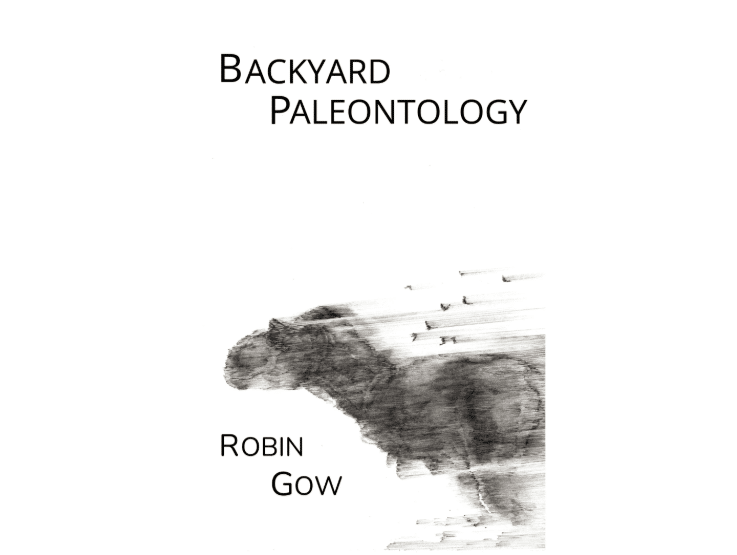
“Now my bunk bed waits there and turns into a stegosaurus.”
—Robin Gow, Backyard Paleontology
In Backyard Palentology, Gow delves into childhood memories and family relationships at a time when he didn’t fully understand them himself. He uses his love for dinosaurs to reflect on growing up, transness, and changing family dynamics.
Gow uses the past to move into the future even when the past does not quite feel complete, just as paleontologists can’t get the entire picture from dinosaur bones,
Readers cherish this collection for its discussions of queer identity and family dynamics. It has resonated with many who are working through their own pasts. Plus, dinosaur lovers are drawn to the fantastical and imaginative lens of Gow’s writing.
You can learn more about this chapbook here!
Lanternfly August
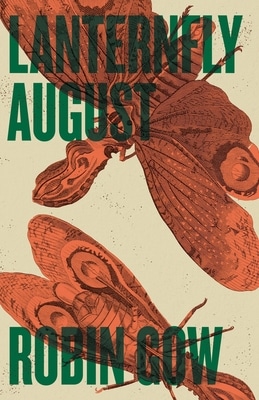
“When I say ‘future,’ I do not mean ‘tomorrow.’ I mean a time without us. What does it mean to ask the future how to spend this evening?”
—Robin Gow, Lanternfly August.
In Lanternfly August, Gow focuses on feelings of alienation and disconnection from the perspective of the invasive lanternfly. He moves away from personal memories, instead looking at complicated feelings of being unwelcome within a certain community.
Gow notes that “feelings of displacement and otherness are not uniquely human,” showcasing how we are more connected to nature than we often think.
Readers have loved this intense exploration of self in relation to others, as well as the effects of community on personal identity. With prevailing themes of self-love, sorrow, and interconnection, this book analyzes all the strange emotions that we encounter as we navigate our world.
You can learn more about the book here!
How do I find more poetry like this?
If you feel drawn to this style of poetry, then there are plenty of great ways to find other collections. You can check out the poetry sections of local bookstores, which often feature both new indie authors and more famous works. You can also discover new poets through events like open mics or writing workshops.
Of course, BookTok has tons of curators who can suggest new titles, making it a useful online space to discuss recommendations!
And, if you are a fan of the surrealism of Robin Gow’s work, there are countless magical authors to check out! Gow recommends the works of Frank O’Hara, CAConrad, Cameron Awkward-Rich, and Donika Kelly. These authors have some amazing collections and are definitely worth a read.
On to the next discovery!
In a time of seeking out the best version of you, self-discovery poetry is an enjoyable way to get more in touch with your inner self. You can cultivate a reading space with others to ask questions, reflect on your experiences, and better appreciate the characteristics that make you unique.
“Being a poet is both what you do and what you do for other people,” Gow concludes. Identity is bigger than you alone–it’s who you are within your community, too. Reading together reminds us that we are always connected and all hoping to understand our complex feelings.
As you venture into the unknowns of the Real World, let self-discovery poetry be the map toward understanding every incredible aspect of you.