Starting my final year of university, I quickly realized how fast time crept up on me. Three years felt incredibly long, and I thought I had all the time in the world to accomplish all my goals before I graduated. But now, I sit staring at my computer, screen full of job applications, and only 3 months left until the term ends. My adult life starts soon. I’m trying to teach myself that there is no race to lose in your 20’s.
But then, I turn to my friends. One has already lined up her summer internship, one is waiting on that job offer from her apprenticeship, and another is applying to a master’s program. I could have all these options available to me, but I don’t. I’m caught up in wondering what could have set me behind, or if I need to accomplish all the things my friends are.
At this point in my life, I have found myself becoming incredibly self-critical about where I stand compared to my friends and peers. I’ve gotten more competitive in the way I make decisions about any sort of aspect of my future. I feel the need to one-up anyone with an accomplishment to avoid feeling behind. Not only has this happened to me, but almost every one of my friends, and it’s hard to realize it’s occurring when it is.

I can’t help but think that everything I’ve done thus far isn’t enough. I find myself pushing to do more and more and more. It’s exhausting. Why am I incapable of pausing and taking a deep breath? Why do I keep running when no one is chasing after me? These thoughts have been formative to my path of slowing down. No one teaches you how to react to your friends beating you to a job offer or graduation date, and that’s because you don’t need to be taught. You aren’t falling behind your friends or peers, there’s no race to lose, and you’re exactly where you need to be.
Why do we think this way?
There are many reasons this might occur in 20-something-year-olds. A key theory that highlights this conflict is the Social Comparison Theory. This, in simple terms, is defined by the psychological idea that people evaluate their own success and self-worth based on others’ accomplishments. Aspects such as appearance and abilities strongly contribute to this idea and are a key reason this behavior is so common at our age.
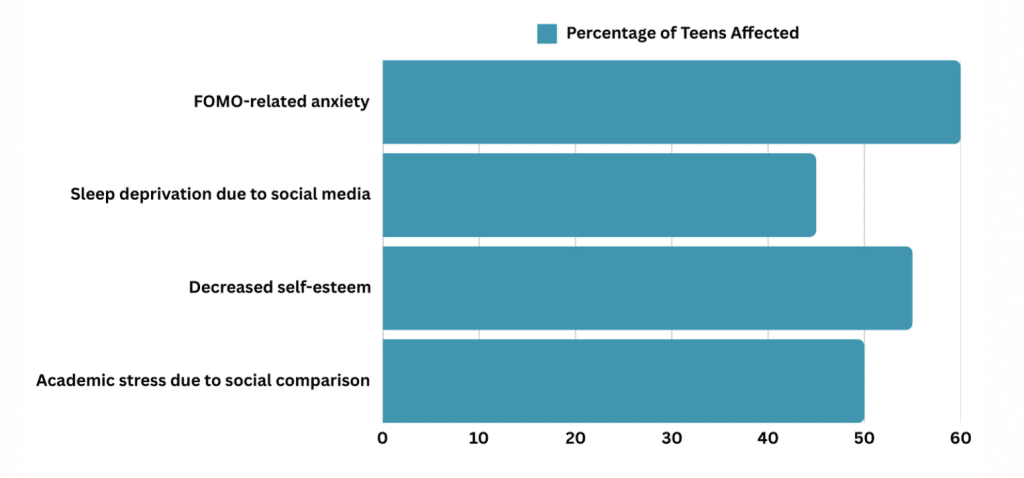
Additionally, external factors can worsen or trigger this behavior. One main contributor, and probably the most familiar, is social media. Social media is inherently fabricated, allowing users to compare themselves to individuals who don’t portray the “typical” day-to-day. This happens to me and many others exceedingly when engaging with the platform, LinkedIn. LinkedIn allows users to post their career successes, often omitting the work it took to get there. It makes it seem easy. When experiencing the best highlights of a person’s day, it’s easy for reality to become distorted. These instances further thoughts of self-doubt or feeling like your life may just not be good enough.
The fear of missing out
They can also further the FOMO concept. The Fear of Missing Out is so common when we begin comparing ourselves to others’ successes. We’re aiming for an unattainable goal! Similarly, this stage of life is incredibly important for developing your self-identity. Without fully understanding your values, morals, and goals, it’s easy to seek out validation from others. This influences the fluctuation of self-esteem in oneself by how they believe they are performing compared to others.
Further, the use of social media in your 20’s plays a significant role. We take to it to post our accomplishments, like graduation, a new job, or even gaining financial independence. While these milestones should be acknowledged and celebrated, they can oftentimes reinforce the perception of being behind your friends. These accomplishments happen at different times for everyone, but society can push the notion that you have to work to a specific success timeline. Remind yourself that this isn’t the case! Recognizing these factors helps you move toward self-appreciation and avoid the obstructive effects of comparison.

There actually isn’t a race
While the concept of growing up is universally an exceedingly challenging thing to grasp, you don’t realize just how much everyone around you is facing the same exact thing. From my experience, your 20s are messy, confusing, and frustrating, so you may not realize how liberating and exciting they are. Every situation is dramatic until you stop running, take 3 steps back, and truly understand what to take away from it and how to learn from it. It takes time to understand that you’re not falling behind and it’s okay to slow down!
Circumstances are everything
Every circumstance that a person is placed in creates its own path. You might’ve taken a boring part-time job to pay for vacations and ended up meeting someone on said vacation who owns a PR company you could work for. You did that while your friend submitted their work to an art competition and ended up gaining admission to the school they really wanted to get into. Just because you’re nearly the same age and have been on the exact same path for the past few years does not automatically grant you the same accomplishments.
Circumstances form our opinions on options we’re given, choices we take, and risks we see. This does not mean your entire outcome is dictated by these aspects. Take a closed door as a sign that you weren’t meant to go through it, and find a way to overlook the fact that people you know may be on the other side. Limitations like this shape your direction. Redirect! What is made for you, you will find.
You’re moving at your own pace, which is exactly what you’re meant to be doing. Don’t beat yourself up for thinking you’re falling behind; you’re not. There is no imaginary track to run on with a certain prize for finishing. Take your time! And if it makes you feel any better at all, we’re ALL doing it.
The curse of comparison
A common conflict I’ve noticed when facing this problem, and maybe the largest influencer, is how much comparison contributes to your success. It’s human nature to see someone or something and compare your life to it. However, it becomes harmful when these interpretations begin to affect your outcomes.
For example, if you notice another student achieving great accomplishments, ones that you may envy, you may believe you are starting to fall behind. Rather than acknowledging your own incredible strengths, you dwell on the fact that you aren’t there yet. Mindsets like this shift your idea of success and undermine your effort, or lack thereof, leading to feelings of self-doubt and imposter syndrome.
Additionally, you may find yourself following validation over self-satisfaction. You will realize how unbeneficial that is to your success, and will begin to create a world of things that don’t interest you. Surround yourself with people who support you and who you can support in return. Become the person people envy because of your gratitude. Allow yourself to see others achieve, and feel happy for them. Take your time understanding there’s no race to lose. Your success will become a whole lot more genuine.
There’s no race to lose in your 20’s
As I finish university forever and begin looking forward to my future, the sound of everyone around me’s accomplishments sounds louder than my own. I’m learning to silence the noise and listen to myself. The concept of a life timeline is incredibly easy to try and follow: securing that summer internship, finalizing your five-year plan, or waiting for payday to cash in your paycheck. All of this is to help you realize that the timeline you came up with on your twentieth birthday may not work out the way you anticipated. But the truth is, very few (lucky!) people can make it a reality. For the rest of us, a little more determination is required.
For a 20-year-old, the concept of putting yourself on a pedestal is the opposite of productive. However, you have to allow yourself to recognize your own accomplishments and be a little selfish about it! The moment you move inward and not outward, you will begin to realize just how important your successes actually are. You’ll begin working for yourself, not for the validation of other people. Your setbacks are the creations of new pathways leading you to development. The process of redirection might feel like standing still.
I’ve learned the importance of moving at your own pace and the liberation that comes with enjoying what you do. You’re not losing any race because there isn’t one. The people you think you’re running beside aren’t actually trying to beat you. You’re allowed to slow down. Find a way to reach the conclusion that things aren’t working, and be okay with pivoting. Life isn’t coming at you; it’s coming from you. We become the best versions of ourselves when we work towards what we want, not what others expect from us.