The Reform UK party stands as the self-proclaimed fastest-growing political organisation in Britain currently, but why are voters and politicians being drawn to the group?
Who is Reform UK?
Reform UK began in 2018 as the Brexit Party, with the tunnel-visioned aim to push Britain out of the European Union. After their success following the exit from the EU, the party rebranded as what they are today, switching to a broader critique of UK politics and positioning themselves as an alternative to the most prominent parties at the time.
The party’s loud and polarising attitude in the media has seen them become a serious disruptor to political order, taking their movement from what was just a ‘fringe party’ a few years ago to a big player in the House of Commons.
Much of Reform UK’s public recognition comes from its association with Nigel Farage. As the party’s most prominent figure, Farage brings name recognition, media attention and a clear political brand. His presence ensures Reform remains highly visible, particularly in online spaces and broadcast media, even when the party holds few elected seats. For supporters, this visibility signals confidence and clarity but for critics, it reinforces the idea that Reform is driven more by personality than policy.
Reform UK deliberately keep their political messaging short and sweet. The party focuses heavily on topics such as immigration and national sovereignty, framing themselves as an honest and straight-talking group who say what other parties will not. Their strict, anti-establishment tones stand as the crutch of their party, offering direct and succinct policies to their supporters instead of lengthy manifestos.
Who has defected to join Reform UK – and why?
Defections to Reform UK have increasingly been viewed as a sign that the party is gaining a degree of recognition within Westminster. While the number of MPs who have switched remains small compared with the scale and history of the Conservative Party, each move still carries symbolic significance — particularly when it involves a well-known figure.
For many politicians, leaving their party reflects uncertainty about its direction or leadership. In choosing to join Reform UK, however, defectors often present their decision as a belief in the party’s message and priorities.
Although defections alone do not transform the political landscape, they can influence how a party is perceived. Each addition brings experience, attention, and a suggestion that Reform UK is carving out a more established place within the broader political conversation.

Below is a list of some Conservative MPs who have left and joined Reform UK in recent times:
- Suella Braverman – Former Home Secretary and MP for Fareham and Waterlooville, defected in January 2026.
- Robert Jenrick – Former Shadow Justice Secretary, defected in January 2026.
- Andrew Rosindell – MP for Romford, defected in January 2026.
- Danny Kruger – Former MP for East Wiltshire, defected in September 2025.
- Lee Anderson – One of the earliest Reform defectors (March 2024), later re-elected under the Reform banner.
- Jonathan Gullis, Chris Green, Lia Nici, and Ross Thomson – Former Conservative MPs who joined Reform as defections or supporters through 2025.
For the most part, these politicians have been left disillusioned by the Conservative Party and its direction. Those who have switched have often voiced their opinions about Reform UK giving a stronger voice to their voters and having a clearer stance. Braverman, arguably the highest profile defection, called loyalty in politics a “Two-way street” when she spoke following her defection, and that “if [a] party keeps breaking its promises, you should question your loyalty”.
Crucially, these defections do not mean Reform UK is on the verge of government. What they do mean is legitimacy. Each switch helps normalise Reform as a serious political option and reinforces the idea that frustration with the current political system exists not just among voters, but inside Parliament itself. For a party built on challenging the status quo, that perception matters almost as much as votes.
Why are voters switching from traditional parties?
According to Ipsos’ latest Political Monitor taken this January, 30% of their voting pool intend to vote for Reform UK in the next general election which gives the party a majority vote. For many voters, switching to Reform UK is less about enthusiasm for the party itself and more about frustration with the political system as a whole. Years of leadership changes, broken promises, and political scandals have left large sections of the country feeling disconnected from both Labour and the Conservatives. Reform UK benefits from this disillusionment by positioning itself as an alternative to traditional politics.
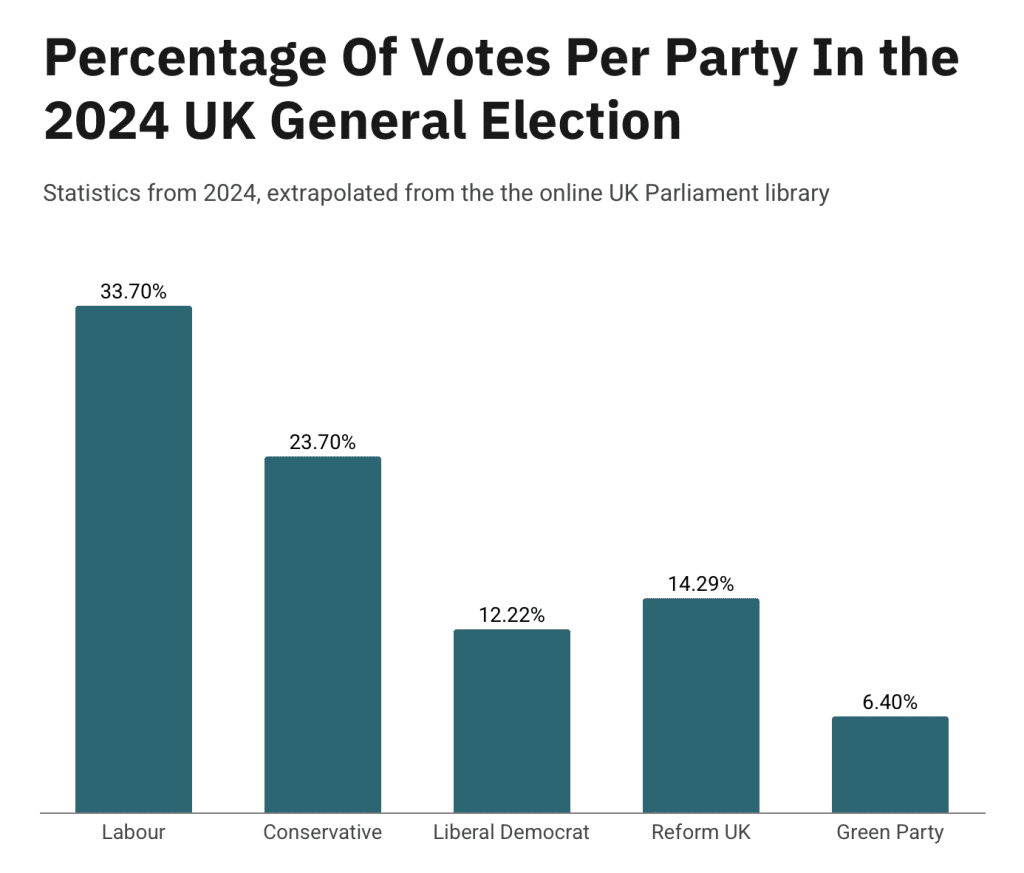
Reform UK has seen a stark increase in voters largely due to their policies on anti-immigration. In a society where protesting against immigration has been so prevalent over the past 2 years – seeing rioting and organised peaceful protesting – their stance, which looks to limit and stop illegal migration completely, has been a comfort to many UK citizens. Their ‘Stop the Boats’ policy centres on strengthening borders and enforcing laws and consequences for illegal migrants.
Whilst a large percentage of their voters are considered older, younger voters have also expressed their distrust for politicians and find reason in the straightforward manner in which Reform UK approaches politics.
What next for Reform UK and politics generally?
Whether Reform UK can turn attention into lasting political influence is largely untold. The party’s recent growth has been driven by visibility, media coverage, and dissatisfaction with the traditional parties; sustaining that momentum will require more than protest appeal. Long-term success depends on building local organisation, fielding credible candidates, and maintaining support beyond moments of political frustration.
The rise of Reform UK is less about one party and more about a wider breakdown in trust between voters and the political system. Defections from the Conservative Party and shifts in voter support highlight how unstable UK politics currently feel, particularly for those who believe traditional parties no longer represent them.
Understanding why people are switching matters more than simply reacting to the headlines. Reform UK’s growth reflects frustration and disengagement, coupled with their promise to change the way the UK operates to be somewhere that the public enjoys living.