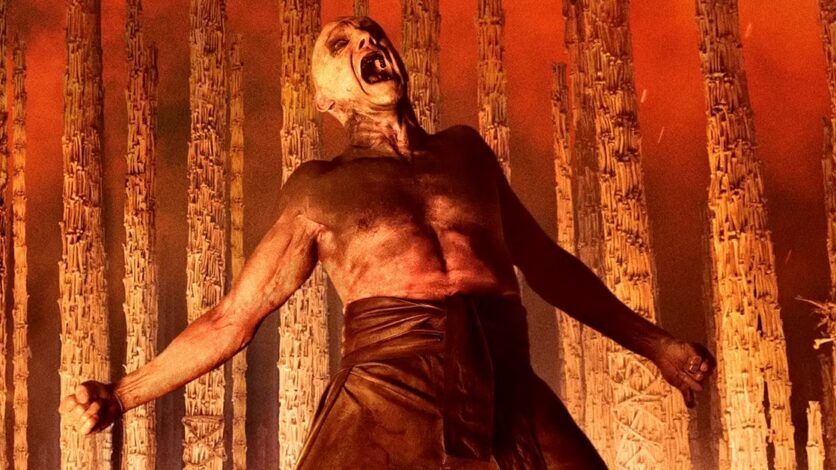
Just 28 weeks after the release of the astonishing reboot 28 Years Later, its sequel has finally arrived. Ever since the announcement of a new trilogy, fans have been craving another glimpse into the terrifying and exhilarating world of the “28 Days” series. Picking up right where its predecessor left off, this sequel wastes no time getting to the point, all in Nia DaCosta’s inspired style.
Danny Boyle handed the the second film over to a newer voice in the horror film world, Nia DaCosta. DaCosta has had her experience with another well known horror series, having directed and co-written a remake of the 90s cult classic Candyman.
In directing the story that Alex Garland has continued, DaCosta has set herself aside from Danny Boyle’s kinetic and sensory-overload style. Hers is a more reserved, yet just as exciting take on the post-apocalyptic UK we’ve come to know and love.
*WARNING: Minor spoilers for 28 Years Later and The Bone Temple ahead*
Last time on 28 Years…
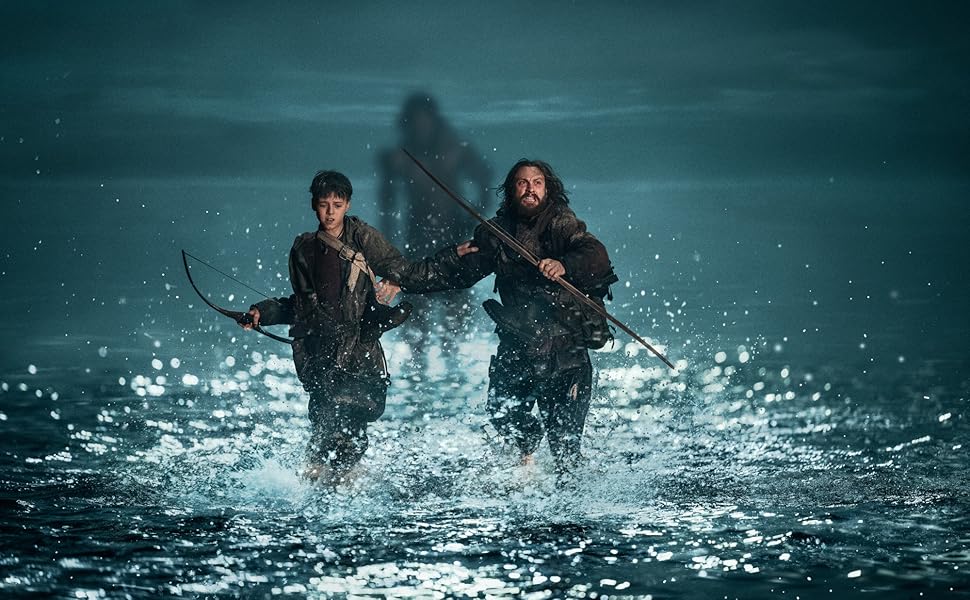
28 Years Later is a proper reboot, one that stands on its own while breathing new life into a dying, if not dead, franchise. The original films’ creators Danny Boyle and Alex Garland were clearly excited to get back to their roots, as 28 Years Later redefined the series in totally unexpected ways.
Placing a coming-of-age story into the post-apocalyptic world they created so many years ago was the perfect way to get old fans excited. The new cast and filming style also allowed newcomers to sink their teeth into something familiar but fresh.
The film starred Alfie Williams, a terrific child actor, alongside stars Jodie Comer and Aaron Taylor-Johnson. The story is a horror-thriller first, and a fantastic family-drama second. It’s scary, soul-crushing, heartbreaking, and at times? Quite funny.
This new story led to one of the craziest endings in recent memory, throwing many movie-goers for a loop. Unbeknownst to us, Alex Garland and Danny Boyle had been planning a trilogy. Now the second entry has arrived, and it is just as bonkers and electric as its predecessor.

New director, new style, same scares!
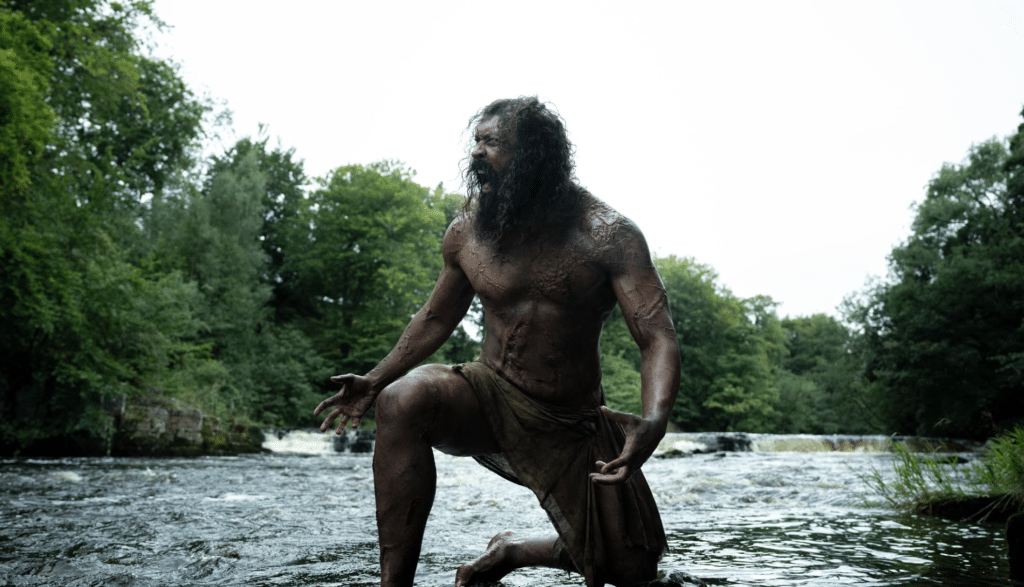
Danny Boyle is a legendary director, and the energy he brought to 28 Years Later leaped off the screen. I was hoping Nia DaCosta wasn’t going to try and replicate his style, and she sure didn’t. This film is clearly stamped with her signature.
While 28 Years Later and 28 Days Later has some ingenious cinematography, The Bone Temple feels much more focused and restrained. I love both styles, but this is clearly the way the follow up was meant to be made. DaCosta’s elegant touch allowed for the big moments to really sink in as you’re watching them unfold.
What’s upheld are the exciting sequences of action and suspenseful set pieces alike, as well as some beautiful landscapes. DaCosta has a great eye for beautiful scenery, and clearly has a knack for getting poignant performances from her cast. She perfectly captures the overall tone of the series while leaving her mark on this second entry. It’s an impressively substantial, scintillating, and sprawling sequel.
New composer, new style, same scares!
Besides the visual grace of the film, the biggest difference technically would be the change in music. The score of the first film was composed by Scottish Hip-hop group “Young Fathers”. Their music is extremely experimental, ranging from soulful, to heart-pounding, to mind-numbing; and I mean that as a compliment.
This time around, Hildur Guðnadóttir has made the score, and it is a much more classic approach. It’s an emotionally punchy and suspenseful musical journey, one that plumbs the depths of horror and soars the heights of emotional anguish.
This film also sports a killer soundtrack, utilizing some ironic and hilarious choices that results in quite a few fantastic sequences. One scene in particular really brings the house down with utmost style and pizazz- you’ve got to see it to believe it.
Phenomenal performances, yet again
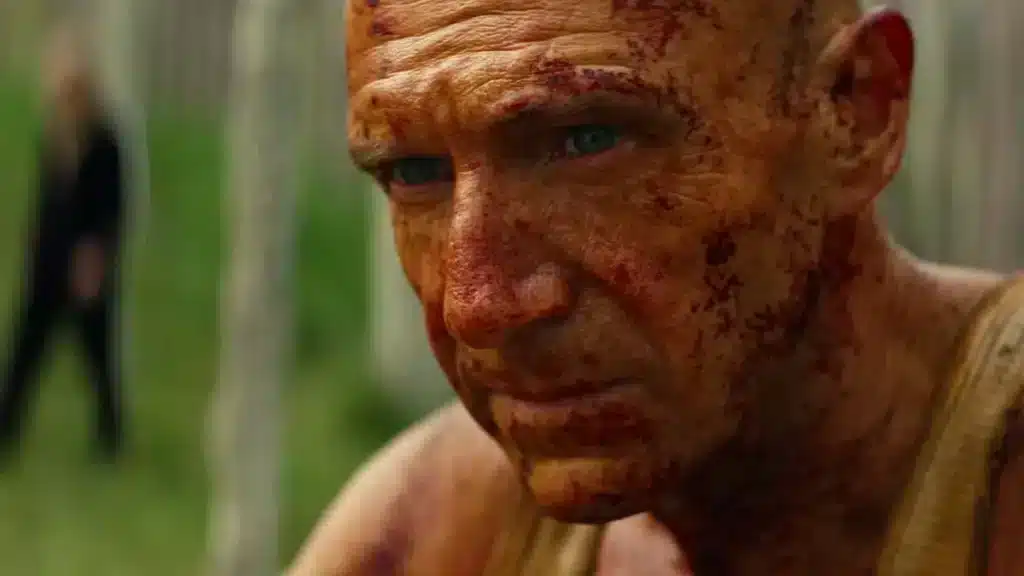
The story still follows the young Spike in his unfortunate solo quest to survive. He reluctantly joins with the gang of the viscous “Jimmys”, seen briefly at the end of 28 Years Later. While Spike continues to drive the plot, his character takes a backseat to the two powerful central performances: Jimmy Crystal and Dr. Ian Kelson.
Dr. Ian Kelson was a very important part of the first film, though he didn’t appear until the final third act. This time around, it could be argued that he is the main character. We get a much bigger glimpse into his life in virus-stricken Scotland, and some wonderfully strange scenes of discovery. The always great Ralph Fiennes continues to surprise, finding new and enchanting ways to make his character unforgettable.
Equally unforgettable is Jack O’Connell’s Jimmy Crystal, the Satan-worshipping gang leader. Jimmy is pure evil, and a good chunk of the runtime showcases just how terrible and depraved of a man he really is. It’s frustrating in the best possible way, villains don’t come much more despicable than this. Garland’s choice to place Spike within the grasp of this venomous sinner keeps you guessing all the way to the end.
Religion at the end of the world
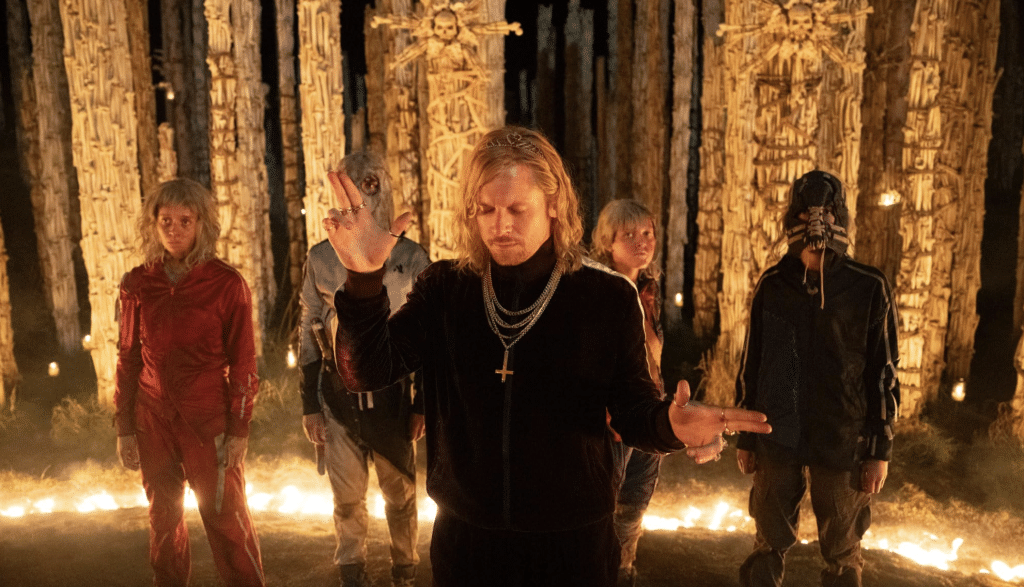
The biggest theme that’s tackled in The Bone Temple is religious values in a world gone mad. At a certain point, when Dr. Kelson and Jimmy Crystal meet face-to-face, the film pits science against religion in a surprisingly meditative manner.
Jimmy and his followers are Satanists, believing the virus is actually just Satan’s way of unleashing his wrath on the world. The acts that Jimmy and his gang commit in the name of Satan, (or “Old Nick”), are putrid. While the series has never shied away from violence, this time around they really push the limits in a gut-wrenching way.
What’s so brilliant about Jimmy’s story is the way it was planted in the first film. 28 Years Later starts with Jimmy as a young boy, though at the time, nobody watching that sequence could’ve guessed where it was leading to. Now, with the scope of the story on grand display, it’s a treat to find out exactly where Garland was leading us.
The end?
Alex Garland has left us, once again, with one hell of a cliffhanger. While I know very little about the third film at this point, it seems like it could be the best of the bunch. That’s the challenge with trilogies of course: each film should service each other, as opposed to standing out among the rest. But it seems Alex Garland knows that.
So far this new series has shown an extremely assured sense of scale, both technically and thematically. These first two films have solidified themselves as sequels well worth making, creating an exciting and unexpected new chapter in an almost forgotten franchise. All in all, I’m sure the final film will be a confidently ambitious, well-crafted, and kick-ass coup de grâce with emotional fury to spare.
28 Years Later: The Bone Temple is playing in theaters now. Get out there!