When people lost their Supplemental Nutrition Assistance Program (SNAP) benefits as a result of the November government shutdown, it was the straw that broke the camel’s back. I knew I couldn’t just sit back and watch anymore. So I interviewed some lovely experts to help figure out some ways to assist those who lost SNAP benefits, particularly if you don’t have much time, money, or resources to offer.
A realization
Though the government has since reopened and SNAP benefits have resumed, I realized that help is always needed, especially during this time of year. According to UC Davis Health, around 5% of Americans suffer from seasonal affective disorder, usually abbreviated as SAD. Cold weather and a lack of sunlight exacerbate this depressive disorder. Symptoms of SAD may include, but are not limited to, general malaise, disinterest in hobbies or other enjoyable activities, changes in sleeping patterns, impaired or slowed cognitive functions, and suicidal thoughts.

Lower-income families also struggle to meet nutritional needs during this time of year—with or without SNAP benefits. According to a study from the National Library of Medicine, “[p]oor parents and their children spend less on and eat less food during cold-weather budgetary shocks. Existing social programs fail to buffer against these shocks.” So, I got to work redrafting, reframing, and gathering even more expert advice on giving back in ways we might not always think of, and here’s what I found.
Best practices
When working with or volunteering for organizations, there are a few things to keep in mind.
“It is always best practice to reach out to any organization first before you show up with any donations or to volunteer,” says Carrie Grover, Executive Director of Tracy Community Connections Center in Tracy, CA.
This ensures that you bring only what the organization needs or that you have the applicable skills to aid in their work.
If you’re considering helping an overseas effort or a food bank, especially, it’s best to donate money rather than material goods, if possible. There are many reasons for this, but they all boil down to the fact that organizations know how to spend money and allocate resources better than an individual. For example, food banks have the buying power to turn a couple of dollars into several meals. These organizations appreciate people giving what they can, but it’s best to contact them first.
“If you can buy an extra can or box of food at the store, even one thing donated is better than nothing,” adds Grover.

Decluttering
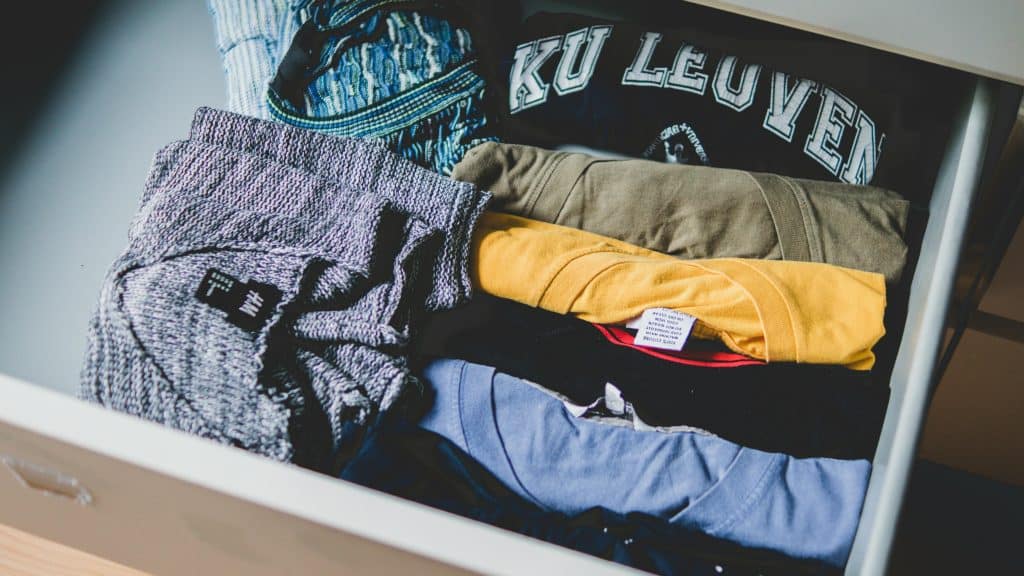
I’m willing to bet you have a lot of barely-used stuff just lying around. I know I do. Well, it turns out our minor hoarding tendencies may have a practical use.
“Give from what you already have,” advises Alesha Brown, Founder & CEO of Fruition Publishing Concierge Services® and Chief Operating Officer for Crusading Outreach Ministry Inc.
“Instead of buying new items, gather gently used coats, gloves, or blankets from friends and classmates, and donate them to a local shelter or community center.”
Not only does this help with keeping clutter down in your own living space, but it also helps to keep perfectly good items out of landfills and oceans. A double win!
Social media
Believe it or not, social media can be a powerful, minimal effort tool to organize and mobilize people for a good cause.
“It costs you nothing to share a nonprofit’s social media posts or fundraising campaigns,” explains Grover.
“Post a quick fundraiser asking friends to Venmo $1 each to a cause you care about. Share a link to a website that does good work in your community.”
You can also use social media to connect with other like-minded people and peers who are willing to help.
“A student making one Instagram reel or a simple flyer for a youth program can help us reach more families than a generic ‘like and share,’” adds Brown.
While doomscrolling gives you that satisfying hit of dopamine we all crave, using social media to help others makes the world a better place.
Use your existing skills and creativity
When I think of volunteer work, I don’t often imagine using my technology skills or creative side. Still, it turns out a little creativity can go a long way. Chalice Nelson, Licensed Professional Counselor and Expressive Arts Therapist, has “experienced and witnessed how one’s creativity and the arts can be a powerful tool for connection, healing, and giving,” and she has several unique ideas for giving back that I’d never considered.
She suggested, for example, “taking photographs that capture moments of joy for those in your community who often go unnoticed or are seen as a bother, giving them a new perspective on their own story.”
Nelson also suggests grabbing your art supplies and creating affirmation cards for friends, neighbors, and strangers.
“Art breaks the mold of traditional ways of giving back. It allows us to pour into others while also refueling ourselves. Giving through creativity fosters emotional awareness, reduces stress, and helps us process life’s transitions to create meaning and paths forward.”
Your creative talents and skills are also useful when working with nonprofits, and you may have more to offer than you think!
“[U]se your talents to help a nonprofit. Are you good at graphic design or Canva? Can you alphabetize and file paperwork? Nonprofits have such tight budgets and time restraints, and [they] would love help with even one flyer or getting a stack of mail sorted,” adds Grover.
Brown echoes this sentiment, encouraging, “Use your existing skills. If you’re good at tutoring, design, social media, or organizing, ask a local nonprofit if you can donate a few hours of that skill.”
Volunteer time sporadically
While many think of volunteering as a major commitment, there are more flexible ways to get involved.
“Show up once for an existing effort,” says Brown.
“Students often think, ‘If I can’t commit long‑term, I shouldn’t volunteer.’ Nonprofits like ours are grateful, even for one‑time help at a holiday meal, gift drive, or coat distribution. You can sign up for a single shift—checking people in, packing bags, or serving food—and still make a real impact.”
Another fantastic example that happens to be somewhat local to me is the DC Tutoring & Mentoring Initiative (DCTMI) in Washington, DC.
“Since we began our work 10 years ago, the DC Tutoring & Mentoring Initiative has worked to find a volunteer tutor or mentor for every kid in DC who needs extra support inside and outside the classroom,” says DCTMI Communications Director Gabrielle Liu.
They offer a “multitude of flexible, accessible [some are hybrid/virtual] programs college-age students can get involved with and make a commitment to serve their community in the new year.”
The hybrid opportunities are especially accessible for those of us who don’t have a car (guilty!). And I know I’ll be looking into getting involved in the new year. If you happen to live near the DC area and want to help, here’s a sign-up link!
Reach out
While the holidays may be full of magic and sparkle, the winter months can be some of the hardest for people struggling with mental health issues. Besides those suffering from SAD and lower-income families struggling to feed themselves, this time of year is just an overall stress pit. In fact, a 2023 survey by the American Psychological Association revealed that almost 9 out of 10 people experienced some form of holiday-related stressor. Sometimes, the people who need us most are closer than we think.
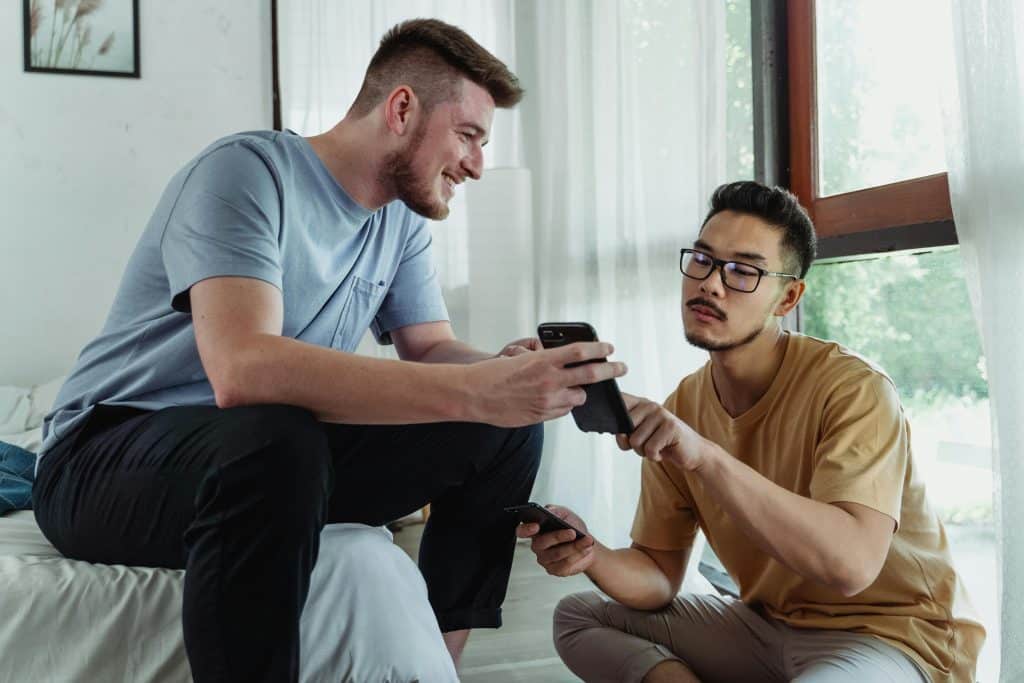
“Practice ‘micro‑presence,’” suggests Brown.
“One of the most underrated ways to give back is to be intentionally kind to the people already around you who might be struggling—roommates, classmates, campus staff. Checking in on the quiet friend, inviting someone who can’t afford to travel home to join your holiday meal, or walking a stressed friend to counseling services are all forms of giving back. They don’t show up on a donation receipt, but they absolutely change lives.”
“[B]eing a supportive peer can have a tremendous impact,” echoes Melissa Legere, LMFT, Clinical Director, and Co-Founder of California Behavioral Health.
“Many who are struggling feel as if they are alone. Offering to listen can help ease some feelings of isolation and help build trust.”
As cliché as it sounds, even a smile or a compliment can save a life.
Start something
Do you see an issue in your neighborhood or on campus that others don’t? Noam Schechter, class of ’27 at Yeshiva University (YU), did, and it led him to help create the Makor Inclusion Program.
YU has paired with Makor Care and Services Network, a professional nonprofit that provides services to individuals with intellectual or physical challenges and their families,” to create The Makor College Experience, a program that pairs Makor students with YU students based on common interests.
“As a student in Yeshiva University, I was always incredibly impressed by the students in the Makor program,” explains Schechter. “However, most students go their entire time not interacting and barely acknowledging these incredible students. And most students don’t take the time to get to know them.”
The Makor Inclusion Program currently has 20 pairs of Makor and YU students. The pairs get together once a week to hang out and do whatever they want.
“Through these get-togethers and getting to know each other, Yeshiva students can recognize that although this person externally may seem different…we all have so much in common, and we can all get along as friends,” explains Schechter.
Though rewarding, the program is still small, and Schechter sees room for growth in participation.
“Sadly, the most challenging part is simply getting Yeshiva students to sign up. People have very busy schedules and assume they don’t have [the] time or capability to participate in a program like this.”
Despite these setbacks, Schechter advises, “[O]nce you find a problem, don’t settle until you think you have a good solution for it. And once you do think of your solution, don’t settle until you have seen it all the way through…Don’t give up until you’ve created something.”
The bottom line
With every day seemingly bringing a new disaster, it can be all too easy to fall into despair. The important thing to remember is not to give up. There are small but powerful ways to help those who need it most. Whether you choose to lend an ear, an hour of your time tutoring, or your wicked Canva skills for a flyer, we all have something to give.