Calling someone a narcissist has become a trend across various social media Platforms, internet quizzes, self-help articles, books, and columns, advising us how to spot a narcissist and when to stay away from them. But what if I told you everyone is a narcissist to some degree? Even you.
When my ex-situationship betrayed me, I called him a narcissist to anyone who’d listen. The accusation left my tongue like venom. If he had died by my poisonous words, it would have felt deserved. My distaste for him became all-consuming, like the queen Olivia Rodrigo, I became obsessed with “who likes me, and who hates you.”
Though riveting to drag his name through the mud, doing so had stopped me from looking within my own inner blocks and turmoils. Why did I continue to allow such a selfish person to re-enter my life for five years, constantly?
I had started to realize that speaking spiteful words had felt easier than actually moving on or admitting any fault in the matter. The word itself had begun to lose its meaning, becoming just a word. A cheap ploy for labeling toxic people we don’t know what to do with. And what truly was a narcissist, anyway? I felt ashamed that I didn’t really know the word yet I was associating him with more than his own name.
The fact that it is everywhere made me feel better, but where did this phenomenon even come from?
Narcissism origins: Narcissus
The word “narcissist” dates back to the Greek myth of Narcissus, as I recently learned in my poetry class when the professor was explaining metaphoric ways to call someone self-centered.
Narcissus was the son of the river god, Cephissus, and the nymph, Liriope. He was said to be very handsome. Suitors, both men and women, were so enamored by his beauty that they’d fall instantly in love. They worshipped at his feet to the point of their own destruction. I don’t blame them, though; I, too, have had my fair share of putting crushes on a pedestal. I digress; Narcissus worshipped the admiration yet was cold in delivering his rejections.
Ameinias, one of his suitors, killed himself with a sword over said cold rejection. In some versions, Narcissus was the one who threw the sword with which he committed suicide as his form of rejection. Ouch. That’s the equivalent of today’s “go fuck yourself.” If someone wanted me dead over my affection towards them, I might be led to be just as dramatic with how I handle it.

Before ending his life, Amenias prayed to the god of revenge, Nemesis, to make Narcissus feel the pain of unrequited love. Nemesis heard his plea and analyzed all the hearts broken by the handsome boy thus far and decided, enough was enough. She made Narcissus fall in love with the only person he could and the only one that would never return his love…himself.
Paying homage to his mother, Nemesis led Narcissus to a clear, still river. So clear was the river, it was there that he fell in love with his own reflection. He spent days contemplating his own beauty. He did nothing else but hunch over the river. Heartbroken, he’d never be able to grab his lover’s face; he falls into the river and drowns trying to obtain his reflection with his bare hands.
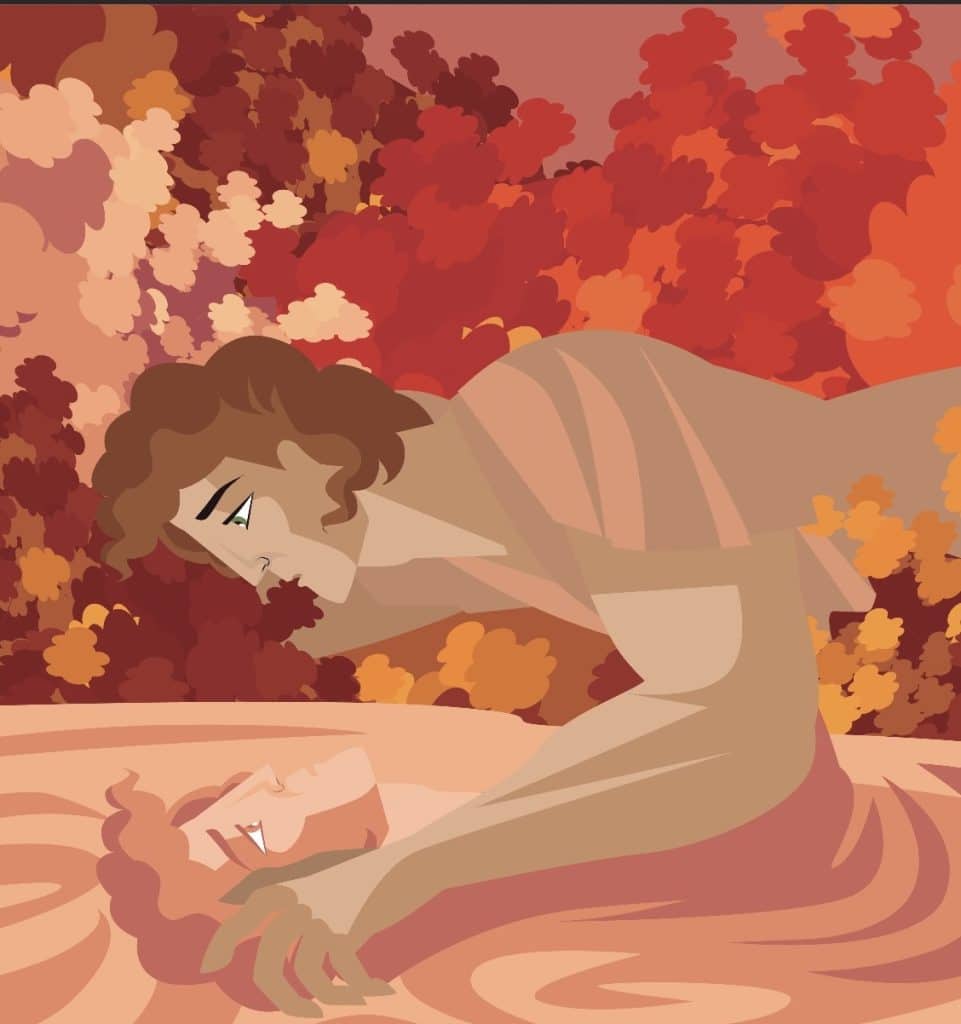
Thus, Narcissus died, and the term “narcissist” was born.
Narcissism
The very basis of narcissism is a disregard for the feelings of others; however, it goes beyond just looking at your reflection for too long. Common narcissistic personality traits are: an inflated ego, a desire for excessive attention, an insecure self-esteem, troubled relationships, and selfishness, characterized by a lack of empathy.
It’s no wonder that Narcissistic Personality Disorder (NPD) was named after the myth of Narcissus. When Narcissus was born, his mother asked a seer, Tiresias, if their son would live to an old age. The seer responded, “as long as he never comes to know himself,” inferring that one’s quest for self-obtainment separates him from connection with people, resulting in death.
Death, as mentioned in some historical religious texts and literature, like the bible or a Gluck poem, does not only have to refer to the physical state of dying. It can symbolize all that separates someone from the community, as well. Without community, a person fails to meet the fundamental need of giving and receiving love. Without proper love, fuck the rest of Maslow’s hierarchy of needs.
The Greeks sure know how to sell a story and many different versions of the same story at that; regardless, in each version, the message remains the same: one’s obsession with the self leads to separation from reality around you. Separation leads to destruction.
Narcissistic Personality Disorder (NPD) diagnoses
It makes sense why calling someone a narcissist, considering its history, has become so popular. We must not forget that narcissism is a clinically recognized personality disorder; to receive a diagnosis, an individual must consistently and severely meet at least five of the nine criteria outlined in the DSM-5-TR. 9 characteristics of NPD (paraphrased) are:
- A grandiose sense of self (thinking you’re better than everyone else)
- Deep obsession with obtaining power, beauty, success, validation, and a perfect romantic partner(s)/friend(s)
- Belief that you should only be around people of high status
- A constant need for praise and validation, even when unwarranted.
- Extreme sense of entitlement
- Manipulative/takes advantage of others for personal gain
- Lack of empathy, does not care, or gets uncomfortable with the needs of others
- Insecure and envious, and a belief that others are also envious of you
- Arrogant (your pride does not match your accomplishments)
Some traits not included in this list, but highly suggestive in other research, include: difficulty handling/regulating emotions, fear of rejection and failure, a hard time authentically admitting when they’re wrong, shame, hypersensitivity towards criticism, and perfectionism.

Narcissism as a spectrum
Does this sound like someone you know, possibly even yourself? That’s because, according to a professor of human behavior at the Washington D.C Center of Nuerocognitive Excellence, Melody Wildman (LSW),
“Psychologically speaking, narcissism is a personality trait that every person possesses to some degree. Like any characteristic, it exists on a spectrum. We all fall somewhere along the narcissism continuum.”
I used to think, like so many others today, that someone was either a narcissist– a lying, manipulating monster—or just not. It was very black or white; dog or cat. Maybe that wasn’t the case anymore.
Dr. Psychology also believes narcissism runs on a continuum. In their article, “It’s not Narcissism, It’s a Loophole!” they refer back to the book, Rethinking Narcissism, by Dr. Craig Malkin. Dr. Malkin created a scale for narcissism from 1-10 with 3 different categories (paraphrased):
- 0-3 = Echoist (sensitive people pleasers)
- 4-6 = Healthy narcissism (puts themselves first when needed, has a balanced sense of self, is confident, and sets boundaries while still caring for others)
- 7-10 = Narcissist (selfish, dominates relationships, struggles with empathy, needs constant validation)
I wish I could confidently say I never leave a 3, but truthfully, I sometimes choose a 7. Does that mean I have NPD? The answer is NO. Psychologist Emily Mayfield, from Mindset Therapy, states,
“…we have each had moments where we feel entitled and want special treatment. Imagine running late at the airport because of traffic, and you want to get to the front of the security line because you are late. This expectation is understandable, but it is also based on a belief that you are entitled to get to your gate on time while jeopardizing the on-time arrival of those you cut in front of. And many people are also preoccupied with power and beauty, another trait of NPD.”
Depending on life circumstances and where you’re at developmentally, you fall under different stages of narcissism. That doesn’t mean you’re a narcissist. Remember, a diagnosis requires that these traits persist throughout a person’s life and intensify over time.
Facts about NPD
If you’re still thinking someone you know has NPD, let me share with you some facts.
NPD only affects ~1-5% of the U.S. population aged 18+, as NPD can’t be diagnosed before the age of 18. Developmentally, minors are more susceptible to self-entitlement attitudes. In America, we’re told at a very young age that we’re ‘special’.
The theory that we are all unique and deserving of all the sweet things life can offer became especially popular after the self-esteem parenting movement of the late 1960s. Affirmations like “I love myself,” and “I am unique and special,” were posed to help people with low self-esteem, but inflated those with already high self-esteem. Despite popular belief, neither low nor high self-esteem is good; rather, we should aim for a normal one. Aka the healthy narcissism Dr.Malkin refers to.
Inherently, we are not uniquely special in any extraordinary way (in the most neutral sense). We share more similarities than differences, and the constant insistence on individual exceptionalism, such as repeating “I am special” in the mirror, can ultimately deepen division and encourage unchecked entitlement.
Gen Z displays Narcissism by design
Because of this ongoing self-esteem movement and our easy access to one another digitally, Gen Z shows higher levels of narcissistic expression because selfie-based platforms reward and normalize self-focus.

According to the selfie study in 2021, the very act of taking a selfie enables moderate narcissism. Constant selfie-posting promotes grandiose self-promotion, appearance fixation, and the pursuit of admiration through likes and followers. The platforms Gen Z has grown up on (Instagram, TikTok, Snapchat) are designed to reward constant visual self-curation, turning everyday self-expression into performance.
The study also found that most users engaging in this behavior are adolescents and young adults.
By no means am I knocking down selfies; I still indulge myself from time to time. However, I definitely have rethought the state of our generation after reading this study, and when my child psychology professor vented to the class,
“Who do you think you are, making people look at your face just because YOU think you look good? Don’t even get me started on people who make lip-syncing videos and choose to post them.”
It’s safe to say that guy wouldn’t have survived the 2021 mugshot TikTok trend, where Gen Z users staged ‘criminal’ mugshots with aesthetic lighting and pretty makeup. Remember Narcissus and the river? We are Narcissus, our reflections, a river always at our disposal.
What Echo teaches us
Calling back to Narcissus, not only did the story teach us about basic narcissistic traits, but it also sheds light on how everyone lands on the narcissistic spectrum.
Let’s go back for a moment. Another one of Narcissus’s rejected suitors, Echo, a nymph, hints at narcissism being a spectrum everyone lands somewhere on.
Echo loved to talk. In every conversation she engaged in, she charmed, flirted, and always got the last word. She was beautiful like Narcissus, yet deceptive. One day, she tried to distract Hera, Zeus’s wife, from catching Zeus’s infidelity. Hera discovered this and cursed Echo to a life where she was only able to repeat the last few words anyone spoke to her.
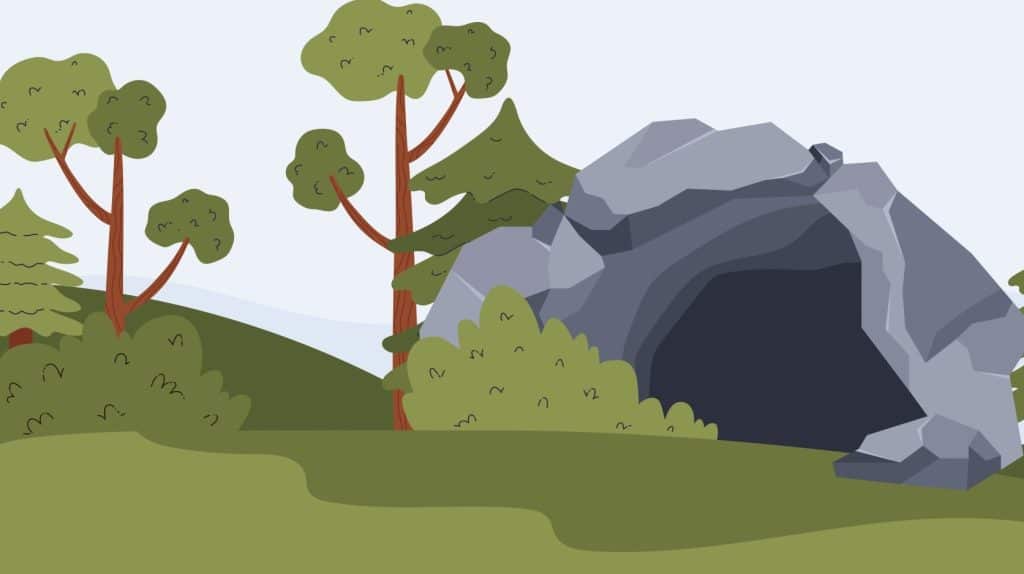
After getting cursed, depressed, and desperate, Echo finds Narcissus one day hunting in the woods. Unable to speak, she charges at him, pleading with him to love her with the last words he had said to her, which were along the lines of “get off” and “who are you?” Frightened, Narcissus takes her off of him and runs away. She ends up wandering into a cave, where all that remains are the last words bouncing off the walls, almost like a whisper. An echo.
Though her ending is sad, I couldn’t help but wonder why no one, in any of the versions I had read, had no one called Echo the narcissist? She only cared to hear herself speak, used her cheerful conversation to lie, and harassed Narcissus. When he rejected her, she withered away in a cave.
Why was the rejection of someone she didn’t even know so detrimental? Because Echo also displayed narcissistic traits. Her sense of self was so grandiose that she thought Narcissus should’ve loved her as a given rather than a possibility. All his suitors did.
Because narcissism exists on a spectrum, everyone exhibits its traits in different ways. Are you loudly self-obsessed like Narcissus, or more subtly driven by entitlement like Echo, lingering in the background as an echo while still craving recognition?
Is he a Narcissist?
I had been in an on-and-off situationship with my ‘ex’ (???) for the past five years. The night his ex-girlfriend pulled up to our day and told me they had sex that day, it broke my trust in ways I never knew possible. I couldn’t tell people he cheated on me…can someone who never wanted to be your boyfriend really cheat (another article for a different time), and betrayal felt too minimal.
He had, at the very least, promised me loyalty. So to lie to my face and say he was sleeping all day, when he was really with his ex, felt like more than selfishness. It felt like an injustice—a crime that demanded repayment through slandering his name.
When narcissism was still black and white to me, so was he. And so that’s what he became: either selfish or non-selfish. I reduced situational complexity to a title. Diagnoses turned into insults.
His words were usually beautiful, crafted to perfection, but for once, under a night sky so clear you could almost see Narcissus staring at his reflection, he was speechless. (Thanks, Hera.)
After days of silence, he reached out, not to apologize, but to ask for his jacket back. By then, I wasn’t just disillusioned with the pedestal I had placed him on (one he helped build), but also with my own selfish desires. I was more like my ex than I had previously cared to admit.
Would I ever lie and sleep with a previous ex the day of our planned date? Absolutely not. But I did expect someone who repeatedly said they couldn’t be in a relationship to pinky promise me commitment to a shared future. I didn’t care that he wasn’t ready, only that I was.
So, is my ex a narcissist? Is yours? It was never my goal to truly answer that question. Only bring into awareness that it isn’t our job in the first place to do so.
Stop diagnosing people
The way mythologists and modern culture alike have glossed over Echo’s narcissism, and the ease with which I jumped to diagnosing my ex, helps explain why the term narcissist is so casually and frequently used today. Many people believe they understand narcissism, yet overlook the more uncomfortable truth: our responsibility lies not in labeling others, but in recognizing narcissistic traits within ourselves and what we choose to tolerate in our own lives.
People with Narcissistic Personality Disorder are not emotionless monsters. However, narcissistic traits can exist alongside abusive behavior, and real victims are often trapped in genuinely harmful situations. True narcissists rarely seek treatment, largely because they don’t believe anything is wrong. How could they when the word itself has been diluted to the point where everyone is calling everyone a narcissist? My ex once told me his previous partner had called him one, and, well, we know how that turned out.
What we owe ourselves is honesty. If even the snow on the ground were clear enough, would you stop to look at your own reflection?
The ability to recognize our behaviors and remove ourselves from situations that cause emotional or physical harm, along with the willingness to share accurate, nuanced, and genuinely helpful information, is a learned skill.
Heal yourself. Set boundaries. Look into your own reflection, but know when to step away before you drown and take others down with you. And finally, stop diagnosing people.