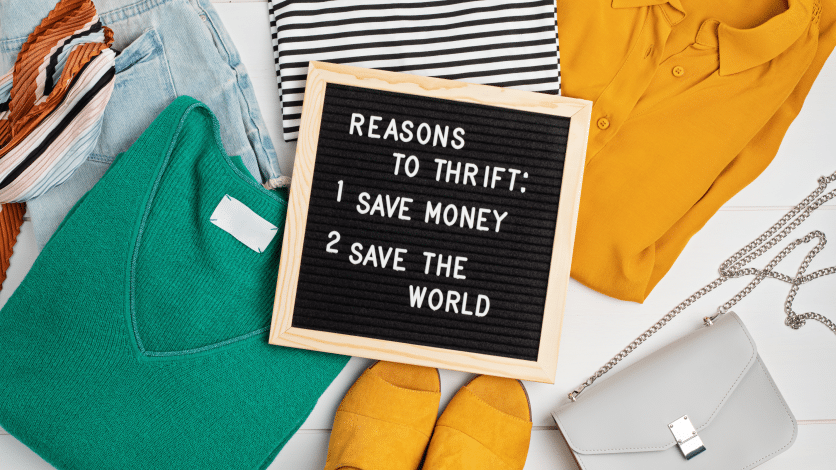
Money in today’s economy is already being split in a hundred different directions. Whether you’re sitting in a college classroom, clocking in for a part-time job, or heading out for a night with friends, you still want to put your best foot forward.
That being said, spending upwards of fifty dollars from a single paycheck on one pair of jeans isn’t realistic. Thrifting allows you to find quality pieces at a fraction of the price.
Thrifting puts pieces from everyone’s closet in one place. Items are discounted and priced for what they actually are—not to create a high-margin profit.
Unlike Depop or Poshmark resellers, actual thrift stores don’t hike up prices on products. It’s an even playing field for everyone.
Gen-Z thrifting culture is a community of people who want to keep thrifting about finding the best things for the best prices.
It’s a way to find high-quality pieces from popular brands such as American Eagle, The North Face, and Nike.
Unlike online sellers, thrift stores offer prices that stay consistent across the board.
You aren’t buying cheap, slippery, or thin fabrics like the ones you’d find on Shein. You’re finding real denim, authentic leather, and hand-beaded pieces.

Unlike a retail store, thrift shops offer a plethora of options. Each piece is one of a kind.
More Style, Less Spending
With the rise of social media and the desire to curate an “aesthetic,” thrifting is the perfect way to score a unique wardrobe without committing to a major financial investment.
Gen-Z thrift culture is largely made up of college students looking to get the most bang for their buck. With textbooks costing upwards of a hundred dollars, extra spending money isn’t always in the cards.
With thrifting, you don’t have to budget for months—you can spend the day thrifting.
You aren’t blowing half your paycheck on one item. Now you have room to play around with a budget. You don’t end up wearing uncomfortable shoes just because you spent a hefty penny on them.
Instead, you can buy boots to go with your skinny jeans, sneakers that are already perfectly broken in, and kitten heels for date night with your little black dress.
You do the math. Why buy one piece of clothing when you could buy five for the same price?
After breaking out that calculator app, if I haven’t convinced you yet, don’t worry—I’m just getting started.
Get in Loser, We’re Going Thrifting
It might not be the 2000s anymore, but that style is far from over. Everybody still loves to hop in the car and go shopping with their girlfriends.
Thrifting isn’t just something to do—it’s a pastime you enjoy with friends.
It’s not predictable. You go bowling, and there are only so many ways to roll a ball and knock down some pins. You go out to lunch, which can be fun, but you usually end up ordering the same thing.
Thrifting is engaging. When you walk through the door, you never know what you’ll find.

There’s the chaos of searching the racks to find that perfect piece—or the excitement of picking out something so ugly you have no idea how to style it.
I thrift all the time. I take my friends, we grab lunch, and make a day of it. Thrifting has evolved into a lifestyle of its own.
Even if you aren’t a college student, saving money is great for anyone who wants to look good. A friend of mine, Claire Porter, a local baker, says:
“I enjoy thrifting because every time you go there are new possibilities. You could be looking for one thing and find something even better. It’s a creative outlet where you find new pieces on the spot and match them in your head.”
Challenge Accepted
The thrift queens of Charlotte, New York, known as @thenoughtiesedit, go down the racks to pick out tops and pants. They then style one of the two options to match their slightly gothic, alternative look.
After they successfully style their outfits, they take them out on the town.
Taking your friends, putting on headphones, and running through the racks opens up endless possibilities.
You know your best friends better than anyone. Thrifting opens the opportunity to curate pieces that fit their personal style. If that’s not your thing, you can always let loose and thrift entirely new identities.
Make up fake names and go out for the evening. It builds confidence, helps you find your personal style, and might even lead to a new favourite version of yourself.
Gen-Z thrifting culture means making thrifting fun for everyone—whether you go in for a quick challenge with friends or walk out with a whole new capsule wardrobe.
The “shopping challenge” culture is always changing and has no set rules.
Whether you’re thrifting for fun, for a gift, or following trends—like thrifting wedding dresses and going around town—there are endless ways to enjoy it.
Although we left the Plastics back in 2005, having one hell of a girls’ day and iconic style isn’t just for the Mean Girls.
Rare Finds, Real Thrills
I used to thrift as a kid, and I remember it being a taboo subject. Not that you couldn’t talk about it—you just probably shouldn’t.
If you revealed your Columbia jacket was thrifted, someone suddenly stripped it of its value. Even so, without SparkNotes, no one would have known.
Now, I flaunt my seven-dollar Lululemon sweatshirt to everyone I know.
Sometimes thrift stores get a bad reputation for being old and musty. I think that’s part of the charm.
There’s nothing like finding the perfect coffee table book to pull your décor together. You’re surrounded by the smell of old books and the flick-flick of hangers under your fingers.
You know that feeling when you win the big prize at a fair—a giant stuffed bear that costs less than the five games it took to win it?
Imagine that feeling again—except this time, you found it. The jackpot. The holy-grail piece you’ve been searching for, for at least half of what you would’ve paid elsewhere.
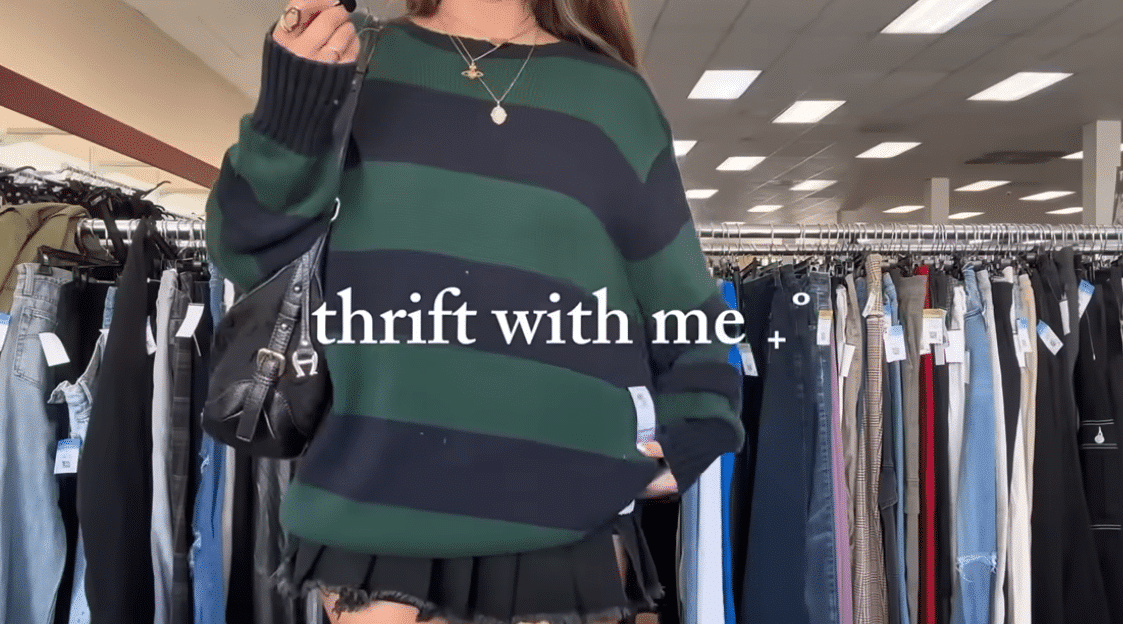
Influencers and content creators have brought attention to thrifting by showcasing their hauls. In turn, a community of thrifters has formed—one that inspires and roots for each other.
The It-Girl Effect
While fitting in and bragging about known finds can be fun, originality feels better.
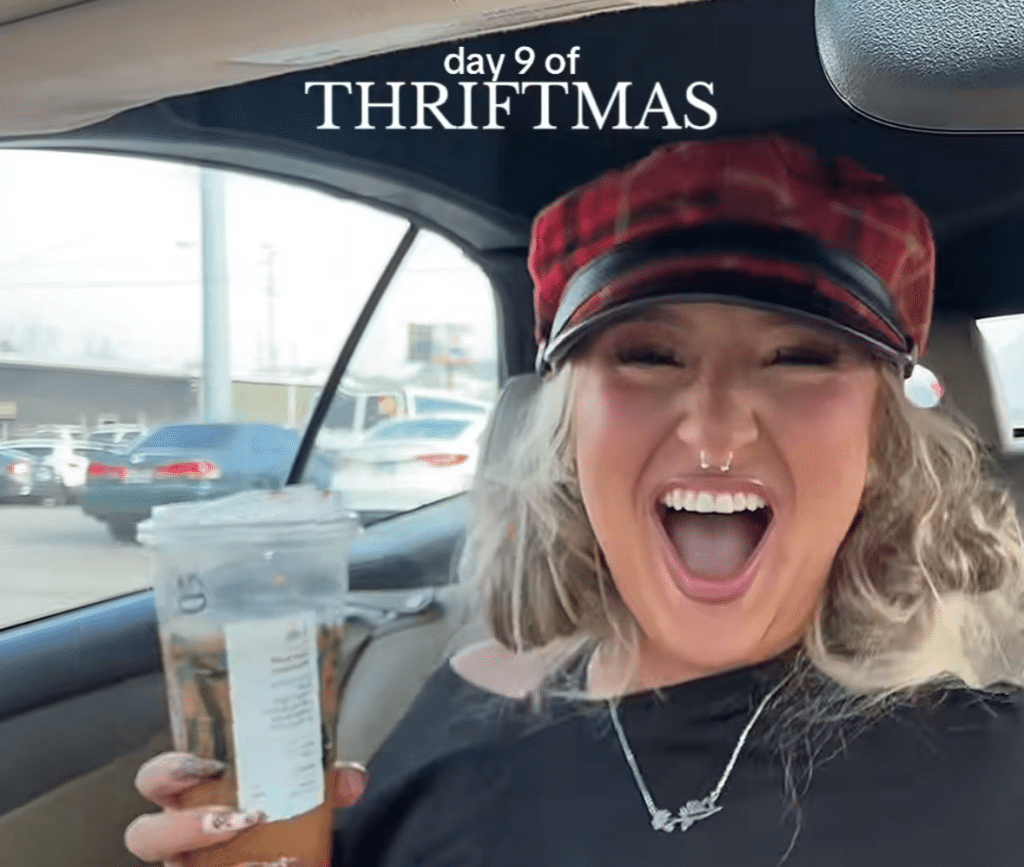
Content creator @lillianclairee takes it one step further during the holidays with her Thriftmas series on TikTok.
Wearing something no one else has sets you apart. You don’t see it every day, and that’s exactly why it works.
I can’t count how many times someone’s said, “I love that—where did you get it?” Not in a Regina George way, but in a genuinely appreciative one.
I’ve found everything from hand-stitched beaded tank tops to vintage Calvin Klein jeans.
Gen-Z loves aesthetics, which is why Gen-Z thrifting culture has become so popular. Branding shows up everywhere, especially in fashion.
The “curation narrative” plays a huge role in thrifting’s rise. Thrifting makes it possible to curate an affordable wardrobe by mixing new and old pieces into something entirely your own.
Gen Z has moved away from looking identical. The goal now is to look wicked cool.
Circular Fashion in Action
If nothing else has struck a chord yet, maybe this will. Our planet is inundated with plastic and continues to suffer from the byproducts of fast fashion.
Gen-Z is a generation fueled by change, and that includes making strides towards helping the environment.
Thrifting doesn’t only mean a change in personal style; Gen-Z thrifting culture also affects global statistics.
Thrifting helps improve the environment by cutting back on those practices. Studies show the fashion industry accounts for roughly 10% of global greenhouse gas emissions.
Since COVID, fast fashion has only expanded. Many people have lost touch with the idea of quality over quantity.
The production of fabrics like polyester and other synthetics releases pollutants such as hydrogen chloride into the air.
Some fabrics don’t biodegrade at all. Instead, they contribute to microplastics in our oceans.
Here’s a statistic that puts it into perspective: producing just one pair of jeans requires roughly 2,000 gallons of water.
So how does thrifting help? It stops overproduction.
Thrifting gives clothing a new life. It recirculates pieces that already exist instead of creating more waste.
This means fewer resources and less energy are used to create disposable fashion. It also helps combat overconsumption.
Large thrift chains like Goodwill and the Salvation Army do more than sell secondhand items. They promote sustainability and support their communities.
According to Goodwill’s official site, CEO Steve Preston sends a message to supporters highlighting their objectives for the community:
“Our network of stores and career centers advance employment opportunities and training programs while also promoting a healthier planet through sustainability innovation.”
Whatever draws you in—affordability, experience, or sustainability—is reason enough to hop in the car and go thrifting.
If nothing else, try it. You never know what you’re missing.
Because with thrifting, you truly never know what’s waiting behind those thrift store doors.