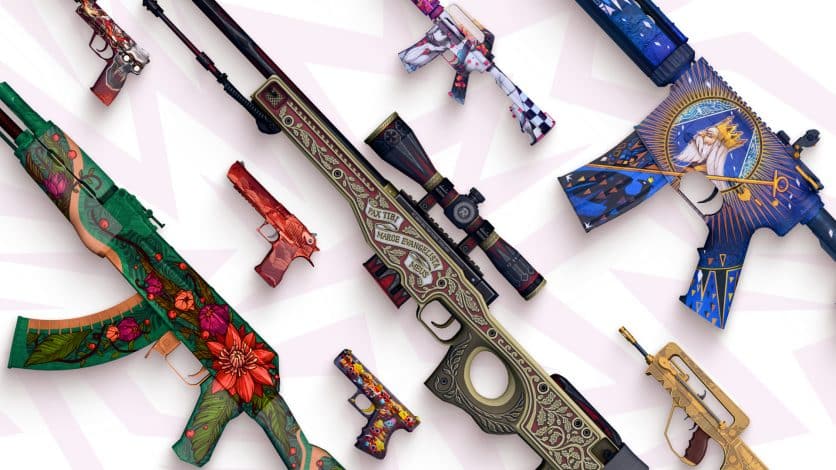
Weapon finishes are a key part of the CS2 ecosystem, and the game’s economy depends on how skins are classified and priced. Every skin has two main traits: its rarity tier and its exterior quality. These traits decide how often a skin drops, how worn it looks in-game, and how desirable it becomes to players and collectors.
Valve’s system assigns rarity using fixed drop chances. Exterior quality comes from a float value generated when the item is created. This float sets the exact wear level. Two skins with the same rarity can have very different prices if their float values differ.
Because these mechanics affect both appearance and market behavior, understanding rarity and wear helps players make smarter buying, selling, and trading choices. It also explains why skins from the same case or collection can vary so much in demand and long-term value.
Overview of CS2 Skin Classification
The CS2 item system uses two basic attributes to define every weapon finish: rarity and exterior quality. Rarity determines how often a skin appears in drops or cases. Exterior quality shows the wear level based on the float value. Valve states that both traits are set when the skin is created and cannot change later.
Most players learn these categories by browsing CS2 skins in different collections. Community wikis list skins by rarity colors, case origins, and collection families. These labels match Valve’s official terms, which makes the system easy to understand even for new players.
This structure forms the base of the skin economy. Once players know how skins are sorted by rarity and wear, it becomes easier to judge value, compare float ranges, and see how these factors affect a skin’s overall desirability.
CS2 Skin Rarity Grades Explained
Rarity is one of the most important features of any CS2 skin. It controls how often the skin appears in drops, how hard it is to pull from a case, and how it is displayed in-game. Valve uses several fixed rarity tiers, each marked with a color. These tiers apply to both new and older skins.
Below is the official rarity order used in CS2:

| Rarity Tier | Color (In-Game) | Typical Items |
| Consumer Grade | Light Blue | Basic, low-tier drops |
| Industrial Grade | Medium Blue | Common collection skins |
| Mil-Spec | Dark Blue | Common case skins |
| Restricted | Purple | Mid-tier case and collection skins |
| Classified | Pink | High-tier finishes |
| Covert | Red | Top-tier case weapons |
| Extraordinary | Gold | Knives and gloves |
| Contraband* | Orange | Discontinued items |
*Contraband applies only to removed items like the M4A4 | Howl. It is no longer part of active drops.
Rarity directly affects drop odds. Covert skins are much harder to get than Mil-Spec items. Extraordinary skins appear only as knives and gloves. This system also affects prices on the Steam Market and third-party sites, where rarity helps set a baseline value.
However, rarity does not account for wear, float value, or pattern differences. Two skins from the same tier can still have very different prices. In the next section, we will look at exterior quality—the second major part of CS2 skin evaluation.
Exterior Quality Grades (Wear Levels)
Rarity shows how uncommon a skin is, but exterior quality shows how worn or clean it looks in CS2. Every skin gets a float value between 0.00 and 1.00 when it is created. This number sets the skin’s wear permanently. Valve explains that each wear grade has a specific float range. These ranges can vary a little by weapon, but the system is the same for all skins.
CS2 Exterior Quality Grades and Float Ranges
- Factory New (FN) — 0.00 to ~0.07
Very clean with sharp details. Often the most valuable, especially for designs that need clarity. - Minimal Wear (MW) — ~0.07 to ~0.15
Slight wear but still close to FN quality. A popular cheaper alternative. - Field-Tested (FT) — ~0.15 to ~0.38
Shows moderate wear. Colors and patterns may start to fade. - Well-Worn (WW) — ~0.38 to ~0.45
More obvious scratches and fading, especially on bright skins. - Battle-Scarred (BS) — ~0.45 to 1.00
Heavily worn with strong fading or damage. Some skins still look interesting at high wear.
How Float Affects Appearance
Wear is not even across the weapon. “Wear maps” decide where scratches and fading appear first. This means two skins with the same float can still look slightly different.
Why Exterior Quality Matters
Exterior quality can influence price as much as rarity. Even a small float change can affect the skin’s look. Some skins look best in FN only, while others gain a unique style at high float. Together, rarity and wear create the base of how skins are valued in CS2.
How Rarity and Quality Together Affect Skin Value
Rarity and exterior quality are the two biggest factors in skin pricing. Their impact is strongest when combined. Market data shows that rarity sets the basic scarcity, while float value adds more variation within the same tier.
Two skins with the same rarity can differ greatly in price depending on their float. A Covert skin in Factory New can cost several times more than a Battle-Scarred version, especially if the design looks bad when worn. Market trends show that clear visuals make high rarity feel more valuable.
Pattern variation adds a third factor. Pattern indexes change how fades, stripes, or shapes appear. Rare patterns with low floats can sell for much more than normal versions. This shows how rarity, float, and pattern details work together to increase value.
Rarity also changes how players judge wear. Lower-rarity skins are more appealing in clean floats because they act as affordable upgrades. Higher-rarity skins can still be valuable even in unusual wear levels; some Battle-Scarred versions gain unique dark or worn looks that collectors enjoy.
This combination matters for long-term value. Skins with limited supply and few low-float versions often rise in price, especially when they come from old or discontinued cases. As supply drops, rare float values can become more important than rarity alone.
Understanding how rarity, float, and pattern effects interact helps players see the CS2 market more clearly. Instead of relying only on rarity colors, they can judge skins by all the traits that influence demand and long-term worth.
Conclusion
Rarity and exterior quality are the main factors that shape how CS2 skins are valued and traded. Each skin has a fixed rarity tier and a permanent float value. These traits influence appearance and long-term price trends. Understanding how they work together helps you judge wear levels, understand drop odds, and see why similar skins can differ greatly in price.
Float values, pattern indexes, and case availability all affect demand. Successful traders use verified data and careful visual checks. This makes it easier to spot skins with long-term potential—whether they come from old cases, rare patterns, or unusually clean wear.
By combining knowledge of rarity, float, and market trends, players gain a clearer view of the CS2 skin ecosystem. Whether you are buying your first skin or building a full collection, these mechanics help you make informed decisions in a changing market.