What is a novel? For most of my life, I believed “book” was entirely interchangeable with “novel.” When I thought of a “novel,” I would think of classics like The Adventures of Huckleberry Finn, Pride and Prejudice, or Moby Dick. We typically associate the novel with 19th century England, versus viewing them as modern. For many centuries, England has dominated the global literary scene alongside Russia and France. Yet, for a long time, I didn’t understand what that really meant. The novel is largely a Western invention. So what happens when a non-Western civilization adopts the form?
The actual qualifications for a written piece to be classified a novel are as follows: fictional, typically a minimum of 50,000 words or 200 pages, and containing a narrative written in prose. This general format has been around for centuries; the first recorded novel is actually a Japanese tale called The Tale of Genji by Murasaki Shikibu.
Despite this, the Victorian era of Britain dominates public perceptions of the novel due to the prevalence of its imperialist empire. According to celebrated historian Franco Moretti, we can think of the literary world as a visual space with a center and a periphery. The center, as previously mentioned, includes countries like England, France, Russia, and later on, parts of the United States. In the periphery lies essentially every other country.
For better or worse, the center maintains a strong influence on the periphery.
Themes of Haruki Murakami
Haruki Murakami is a Japanese author who first gained popularity in the 1980s. His writing style is defined by an abstract, dream-like quality. His stories feature themes of love, grief, and the human quest for connection. I adore several of his books, including his very popular Norwegian Wood and Kafka on the Shore. These novels both follow young men with a lost sense of self as they form strange relationships. With his surrealist approach, Murakami bends the traditional rules of existence to capture a more nuanced, intimate sense of reality.
Yet curiously, Toru interacts with Western culture throughout the novel. He eats Western food and watches Western movies like The Graduate (1967). The novel is even named after the song “Norwegian Wood” by The Beatles.
Japan was never a colony of any Western state, so how can we account for the abundance of Western references in this Japanese novel? What difference does it make? The answer may be self colonialism.
The Self Colonialism of Haruki Murakami
Japan began opening itself to the West in the late 19th century, and since then, they have adopted many of its cultural ideals However, Japan is a non-Western state. Even with their efforts to imitate Western modernization, the practices of the West will not always map onto a country with such different origins. The disjunction between the two competing cultures can cause conflict, as seen in characters like Naoko, Toru’s love interest in Nowegian Wood. Naoko connects with Toru as the two grieve Toru’s best friend and her boyfriend, who tragically passed in their high school days.

Norwegian Wood places Toru in Tokyo, the epicenter of cultural chaos in Japan. For the main character, Toru, Tokyo induces a dreamy, maze-like state. He struggles to get his bearings and to open himself up to the people and world around him. Whenever he leaves Tokyo, things become clearer and calmer, distinct from the isolating modernization of the city. These details mirror Japan’s cultural history, as it developed its capital city much faster than its smaller cities.
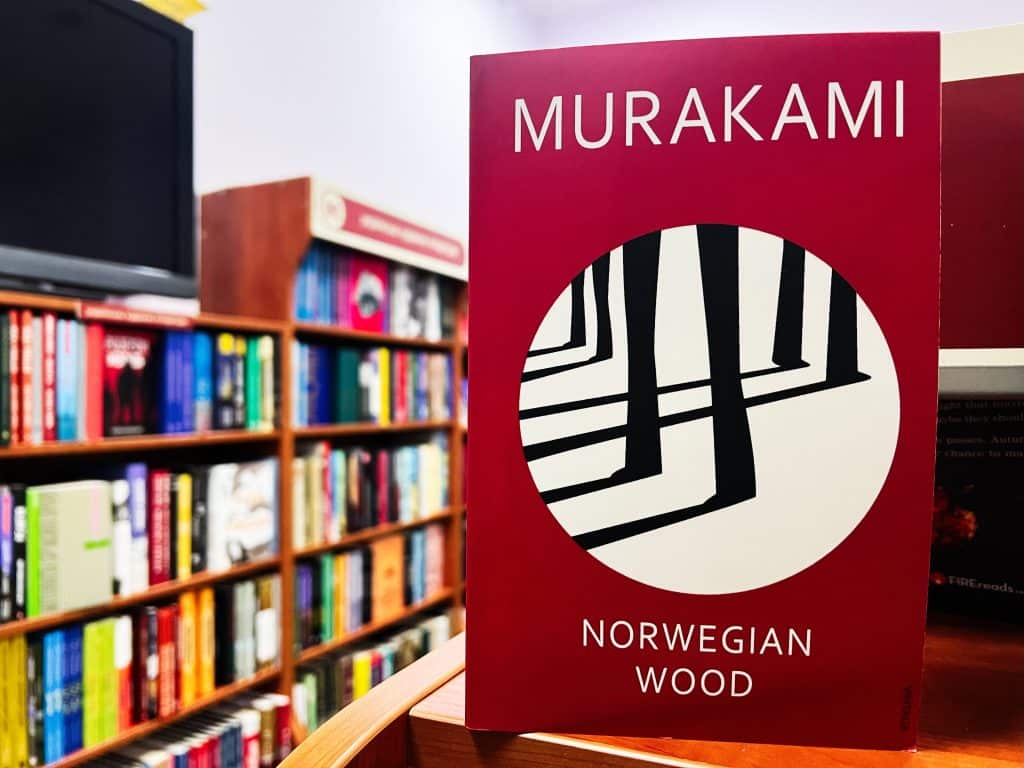
As someone from the United States, I initially did not see any reason to second-guess Norwegian Wood‘s status as a novel. I admired the charming yet impactful narrative but never stopped to ask why a Japanese novel set in the 1960s would build its story around Western culture. Yet Murakami has had to defend himself against allegations of over-westernization, symbolizing a greater cultural phenomenon that is worth pondering.
The Post Colonialism of Arundhati Roy
Meanwhile, post-colonial novels contain even stronger overtones of isolation, detachment, and grief from the struggle of internal conflict. Where self-colonialism refers to a country adopting the cultural essence of another powerful country, post-colonialism describes the after-effects of a given country imposing their culture onto a region for the purpose of domination and extraction. For instance, India was one of the British Empire’s biggest colonies.
Arundhati Roy’s The God of Small Things centers characters who are grappling with a stark cultural dichotomy: the traditional values of India versus the allure of Westernization modernization.
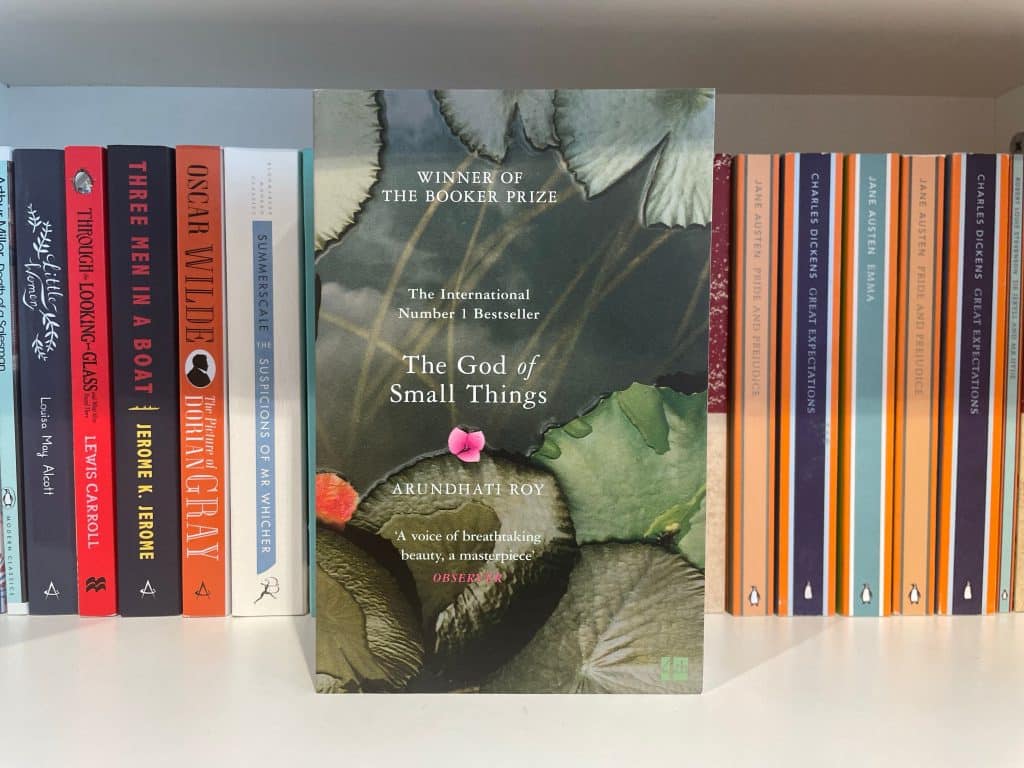
The novel was published in 1997 but takes place in India during the 1960s. Its protagonists are twins Rahel and Estha, whose childhood is deeply disturbed by the tragedies of the adults surrounding them. The novel is extremely fragmented, making it difficult to distinguish the true timeline and amplifying the chaotic atmosphere. The initial tragedy unfolds after the death of the twins’ British cousin, Sophie Mol. Her passing causes the rest of the family to freeze in time, forever caught in the grief of the past.
The God of Small Things offers a compelling critique of colonialism, which makes its novel format all the more significant. Although it is an Indian novel, Roy originally wrote it in English. By incorporating crucial elements of the current state of India, the novel must also confront the lasting trauma of British colonialism.
Reimagining the World With Kazuo Ishiguro
Kazuo Ishiguro is a Japanese-born British novelist and the winner of the 2017 Nobel Prize in Literature. Ishiguro writes mainly science fiction. Although his stories take place in futuristic settings, they purposefully reflect the world we know today.
Interestingly, Ishiguro makes a point to exclude explicit mentions of race from his novels. Yet he infuses his novels with connotations of nonwhite identities. He manages to capture the incredibly intimate experience of ethnic difference without ever specifying race. In doing so, he expands beyond the literary center and dips into the periphery.
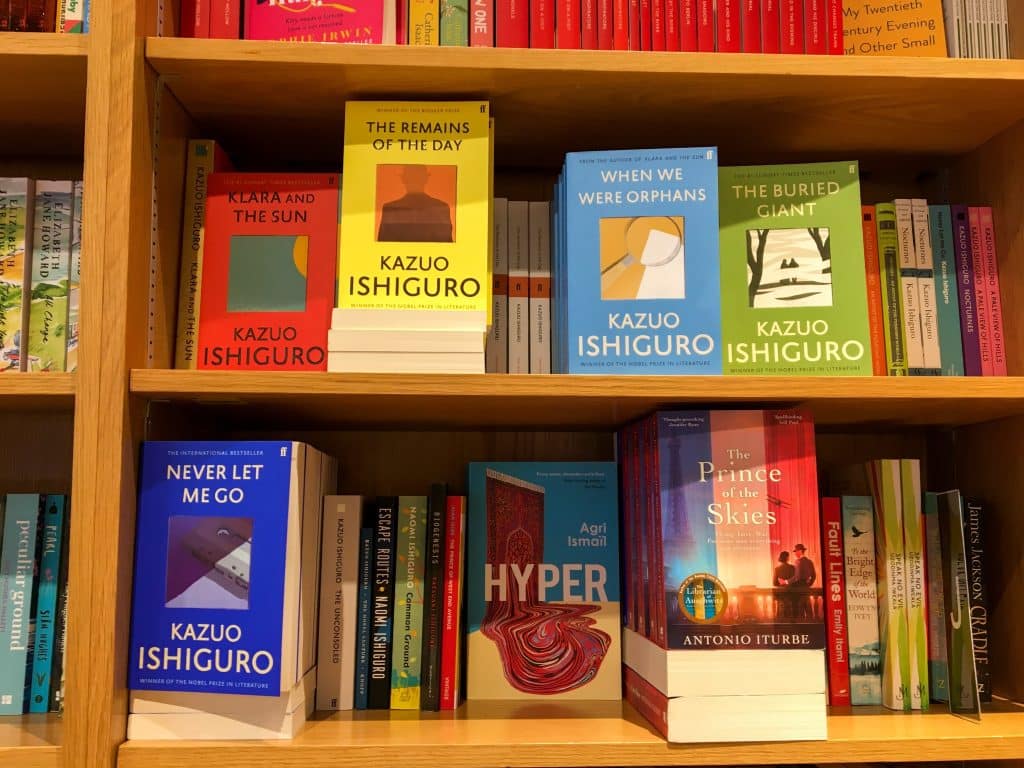
Never Let Me Go was published in 2005. The novel follows a young girl, Katie, as she navigates childhood. Although Ishiguro writes a convincingly normal perspective, there is something undoubtedly strange about Katie’s situation. She resides in the sunny English countryside in a boarding school called Hailsham. Students must adhere to strict rules and are constantly reminded that they are “special.” Amidst this ambiguity, Katie reflects on various memories with her best friend, her lovers, and her teachers.
The novel is can be easy to dismiss on the first go, especially if you aren’t sure what to look for. Yet growing up “not like the others” is precisely the fabric that defines the nonwhite experience. This experience is often defined by separate rules and expectations, as well as the inability to imagine another way of life.
The Contemporary Asian American in Ling Ma’s Severance
So where are we today? While stories like The God of Small Things and Norwegian Wood take place within non-Western, but Westernized countries, Severance explores the experience of an Asian immigrant. The main character in Severance is a woman named Candice Chen. Candice leaves China at a young age to live in the United States, specifically New York. She prints Bibles for a living, at least before a virus called the Shen fever sweeps across the world. Her life is riddled with nostalgia, as she is incapable of fully grasping her American-Chinese identity.
Unlike other novels, which largely maintain an element of timelessness and probe the functionality of culture and morals, Severance is boldly contemporary. Candice makes direct references to modern companies like Sephora and Urban Outfitters. She jumps between two time frames: her life before the virus and her life during, slowly unraveling how past and present are intimately connected.
Candice primarily desires human connection. Yet she is held back by the nostalgic and desperate detachment produced by a hyper-modern, consumer-driven life in the US. She walks blindly through a set of prescribed routines: do the work and get the check, all the while pretending that she understands more about her Chinese identity than her American one.
While taking a distinct approach from the other authors, Ma nonetheless encapsulates the difficulty of the ethnic experience. Along the way, she strives to cultivate a sense of relatability, making the exterior details feel relatively interchangeable.
A Newer Perspective
I always adored reading growing up, and I still do. I’ve read classic authors like Jane Austen, Virginia Woolf, Aldous Huxley, and even a little Herman Melville. But truly understanding the role of literature and how it can relay ideas through its very format infused new depth into my reading pursuits.
For a long time, the Asian American identity was not something I associated with literary “classics.” But expanding my knowledge allowed me to see that literature is an ideal medium to represent and subsequently transform the effects of racial hierarchy.