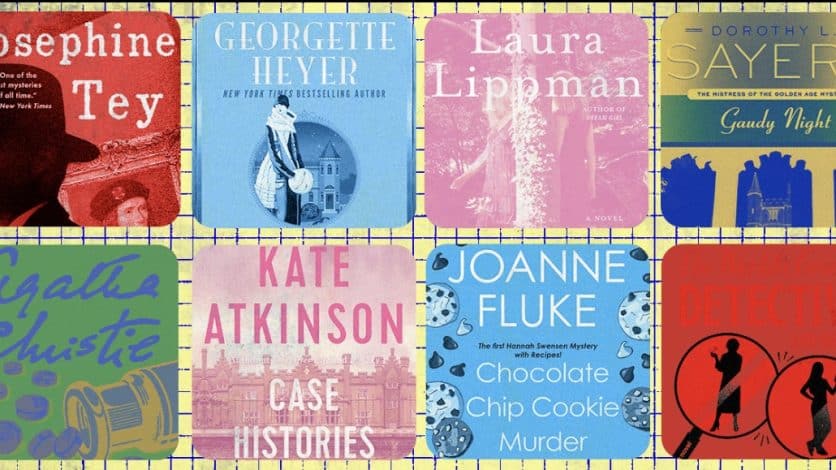
These eight recommendations celebrate the breadth and brilliance of female-authored detective fiction. Whether you’re a devoted mystery reader or just dipping your toes into the genre, these novels—spanning from Golden Age classics to contemporary page-turners—showcase how female writers have mastered and revolutionized detective fiction.
From Agatha Christie’s intricate puzzles to Dorothy L. Sayers’ intellectual explorations, female writers have been defining—and redefining—detective fiction for over a century. While women have always been powerhouses in crime writing, their contributions extend beyond the cozy mysteries and drawing-room murders they’re often credited with. They’ve crafted thrillers that probe the darkest corners of human nature, literary mysteries that challenge genre conventions, and contemporary detective stories that bring fresh perspectives to age-old questions about justice, truth, and survival.
Josephine Tey – The Daughter of Time (1951)
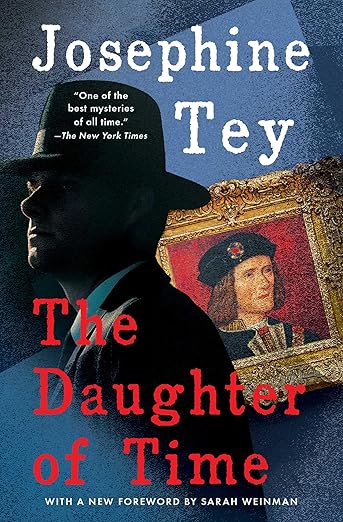
What if history’s most notorious villain was actually innocent? Josephine Tey poses this question in The Daughter of Time, a novel that transforms historical research into edge-of-your-seat detective work. Inspector Alan Grant, laid up in a hospital bed with a broken leg and dying of boredom, becomes obsessed with a portrait of Richard III. The king’s face doesn’t look like the face of a murderer. Grant can’t believe this man would murder his own nephews—the Princes in the Tower—to secure his throne. Armed with historical records and his detective’s instinct for reading people, Grant investigates a 500-year-old cold case.
“Grant had dealt too long with the human intelligence to accept as truth someone’s report of someone’s report of what that someone remembered to have seen or been told.”
― Josephine Tey, The Daughter of Time
Tey pioneered the armchair detective novel with The Daughter of Time. She proved that intellectual investigation can be just as thrilling as chasing suspects through London’s fog-shrouded streets. The novel’s brilliance lies in its method. Grant applies modern detective techniques—examining evidence, questioning accepted narratives, following the money—to historical sources. The novel is a masterpiece in critical thinking while masquerading as a mystery novel, and it raises important questions about how history is written and who gets to control the narrative.
Perfect for: Readers who love intellectual mysteries and historical intrigue
Buy on Amazon or Barnes and Noble
Agatha Christie – Sleeping Murder (1976)
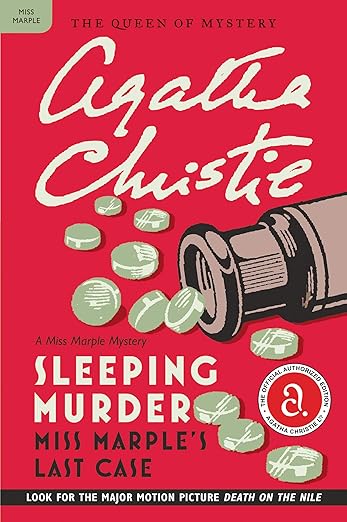
Agatha Christie’s final Miss Marple mystery is a haunting meditation on buried trauma and the persistence of memory. Gwenda Reed, a young bride newly arrived from New Zealand, moves to the English seaside. But the house she arrives at feels eerily familiar. She knows exactly where doors should be placed, which wallpaper belongs in which room. When she attends a performance of The Duchess of Malfi, Gwenda is seized by a horrifying vision: a dead woman at the bottom of the stairs and a man’s hands reaching for her throat.
Miss Marple, called in to investigate, recognizes these aren’t visions but suppressed memories of a murder Gwenda may have witnessed years earlier. Christie’s posthumously published novel may be her most sophisticated. It weaves together themes of childhood memory, the dangers of looking into the past, and the horror of discovering darkness in what should be the safety of home. Christie also demonstrates her mastery of misdirection, proving that even in her final Marple mystery, she could still surprise readers who thought they’d figured out her tricks.

Christie’s brilliance extends to other works as well, particularly Hallowe’en Party, where seasonal menace and vulnerability create an unforgettable sense of dread.
Perfect for: Fans of psychological suspense and classic whodunits
Buy on Amazon or Barnes and Noble
Dorothy L. Sayers – Gaudy Night (1935)
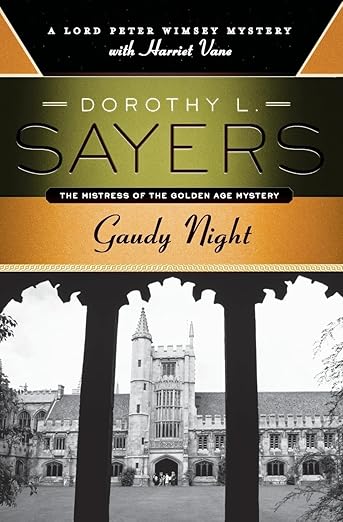
Gaudy Night is Dorothy L. Sayers’ masterpiece—a mystery novel that’s as much about women’s intellectual freedom and the meeting of equals as it is about poison and academic sabotage. Mystery novelist Harriet Vane returns to her Oxford college for a reunion (a “gaudy” in Oxford parlance), where she is drawn into investigating a series of vicious anonymous messages and vandalism targeting the professors.
As Harriet navigates the cloistered world of academia and eventually calls in Lord Peter Wimsey to help solve the case, Sayers crafts a detective story that incorporates multiple genres—it’s a mystery, a romance, a philosophical inquiry, and a defense of women’s independence. Her prose is elegant, the academic politics sharply observed, and the central relationship between Harriet and Peter is one of the most satisfying in all of detective fiction: two minds meeting as equals.
“A marriage of two independent and equally irritable intelligences seems to me reckless to the point of insanity.”
― Dorothy L. Sayers, Gaudy Night
Perfect for: Readers who want substance with their suspense
Buy on Amazon or Barnes and Noble
Georgette Heyer – The Unfinished Clue (1934)

Best known for her Regency romances, Georgette Heyer also penned several detective novels. The Unfinished Clue showcases her skill with both barbed dialogue and tightly plotted mysteries. General Sir Arthur Billington-Smith hosts a disastrous country house party where every guest seems to loathe him—and each other. When the General is found dead, the suspect list is long, and each character has both motive and opportunity.
Heyer brings her signature wit and keen eye for social dynamics to the classic whodunit scenario. Her characters are sharply written, their dialogue crackles with period-appropriate slang, and she doesn’t shy away from making her victim thoroughly unsympathetic. The pleasure of Unfinished Clue lies in both the puzzle—Heyer plays fair with clues while maintaining genuine suspense—and the entertainment value of watching her gallery of upper-class suspects squirm, bicker, and attempt to outwit the investigating inspector.
Perfect for: Fans of classic British mysteries with bite and humor
Buy on Amazon or Barnes and Noble
Kate Atkinson – Case Histories (2005)

Kate Atkinson proves that detective fiction can be both heartbreaking and profound in Case Histories, the first novel featuring investigator Jackson Brodie. Three cold cases haunt Cambridge: a toddler who disappeared from a tent in her family’s garden, a wife and mother murdered with an ax while her husband stood nearby, and a young woman who vanished from her father’s office. These investigations seem unconnected, but Atkinson weaves them together with devastating emotional intelligence and dark humor.
“What did you do when the worst thing that could happen to you had already happened – how did you live life then? You had to hand it to Theo Wyre, just carrying on living required a strength and courage that most people didn’t have.”
― Kate Atkinson, Case Histories
Atkinson’s novel is fiction that happens to be a mystery—or perhaps a mystery that achieves the depth of literary fiction. Her prose is rich, characters fully realized, and readers begin to understand that the real mystery isn’t just who committed these crimes but how people survive loss. Jackson Brodie himself is a beautifully complex character: a divorced, melancholic detective haunted by his own sister’s murder, trying to bring resolution to others while carrying his own unresolved grief.
Perfect for: Readers who love character-driven fiction with mystery elements
Buy on Amazon or Barnes and Noble
Liza Tully – The World’s Greatest Detective and Her Just Okay Assistant (2025)
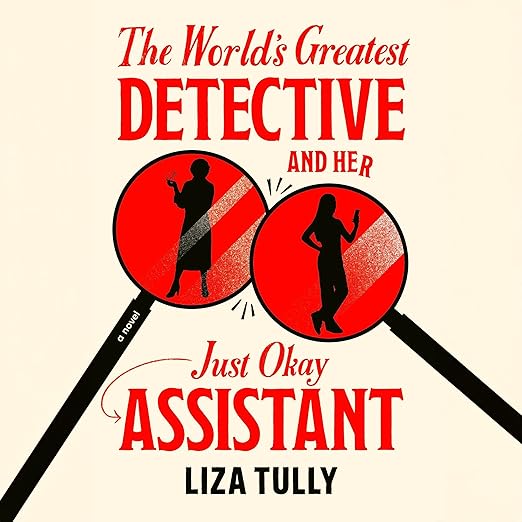
Detective fiction has a long tradition of eccentric genius detectives and their long-suffering companions—think Holmes and Watson. Tully’s novel embraces and subverts these tropes with the story of brilliant private detective Aubrey Merritt and her assistant Olivia. When a high-profile murder lands in their lap, the duo must solve a case that’s as much about their own evolving partnership as it is about catching a killer.
What makes this novel fresh is Tully’s affection for the genre she’s interrogating. It’s a love letter to detective fiction, bringing modern sensibility and humor to classic conventions. Aubrey is exacting, but brilliant, while Olivia gets to be more than a narrative device for exposition. The mystery itself is genuinely engaging—Tully proves you can be funny and self-aware while still delivering satisfying detective work.
Perfect for: Readers looking for humorous, self-aware mysteries with heart
Buy on Amazon or Barnes and Noble
Joanne Fluke – Chocolate Chip Cookie Murder (2000)
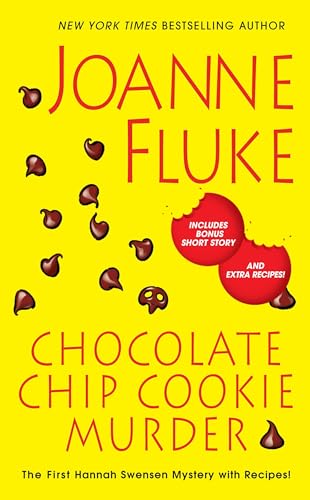
Sometimes what you want from a detective novel isn’t a psychological thriller or a period classic—sometimes you want comfort food for the soul. Joanne Fluke delivers exactly that with Chocolate Chip Cookie Murder, the first in her wildly popular novel in her Hannah Swensen series. When Hannah’s delivery driver Ron is found dead behind her Minnesota bakery, The Cookie Jar, the plucky baker launches her own investigation, determined to find his killer.
Fluke perfected the modern cozy mystery formula: an amateur sleuth with a distinctive day job, a tight-knit small-town community, and murder investigations that never get too dark or violent. What makes the Hannah Swensen series work is Fluke’s warmth toward her characters, her skill at creating a community readers want to revisit, and yes, those recipes—each book includes a collection of recipes for the baked goods Hannah makes.
“Solving crimes certainly wasn’t as easy as they made it seem in the movies.”
― Joanne Fluke, Chocolate Chip Cookie Murder
Perfect for: Cozy mystery fans who want comfort, community, and clever sleuthing
Buy on Amazon or Barnes and Noble
Laura Lippman – What the Dead Know (2007)
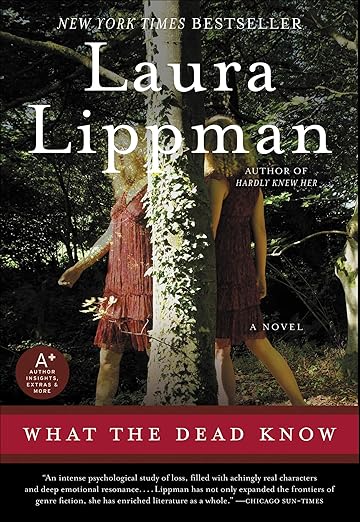
Laura Lippman writes detective fiction that exists in the territory between crime novel and psychological character study. What the Dead Know opens with a woman fleeing a hit-and-run accident. When police speak with her, she makes an extraordinary claim: she’s one of two sisters who vanished from a shopping mall thirty years earlier. Opening a cold case that devastated a family and haunted a community, Lippman makes readers question if Heather is really a survivor coming forward, or a con artist exploiting a family’s grief?
Lippman structures the novel as an interrogation of both a mystery and an identity. Through alternating timelines and perspectives, she reveals how trauma reshapes memory, how the stories we tell about our lives can be both true and false, and how the past never releases its hold on the present. She builds the psychological suspense and trusts readers to navigate moral ambiguity and unreliable narration. The plot goes beyond solving a crime, as the narrative grapples with the struggle of reconstructing a self from fragments of memory.
Perfect for: Fans of psychological thrillers and literary crime fiction
Buy on Amazon or Barnes and Noble
Thinking of adding one (or all) of these to your TBR?
These eight novels are just a fraction of what female authors have contributed to detective fiction. Whether you’re drawn to puzzles, literary complexity, or cozy comfort, there’s a mystery here waiting to be solved. So pick your poison—or rather, pick your detective—and discover why women have been, and continue to be, some of crime fiction’s most innovative and compelling voices.