


While avoiding an inevitable, impending lock-in the other week, I stumbled across a ridiculous news article in my Discover page.
Hollywood goes full antifa with ‘One Battle After Another’
The capitalization here is unorthodox, but this isn’t what caught my eye. What did is that One Battle After Another, which I saw in theaters opening weekend, does not support the shadowy (and, to experts, fictional) left-wing terror bogeyman called Antifa.
For those unaware, One Battle After Another is a critically acclaimed action comedy released this September and written and directed by Paul Thomas Anderson of There Will Be Blood fame. It is not an endorsement of terror; it is the opposite. In the film, protagonist Bob Johnston, played by Leonardo DiCaprio, leaves behind terrorism and finds meaning fighting for his family.
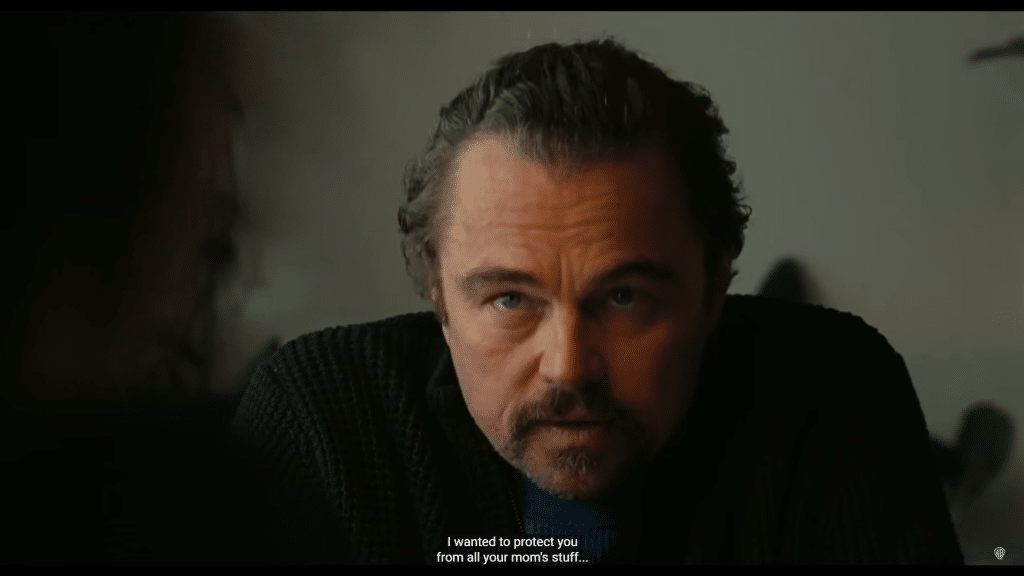
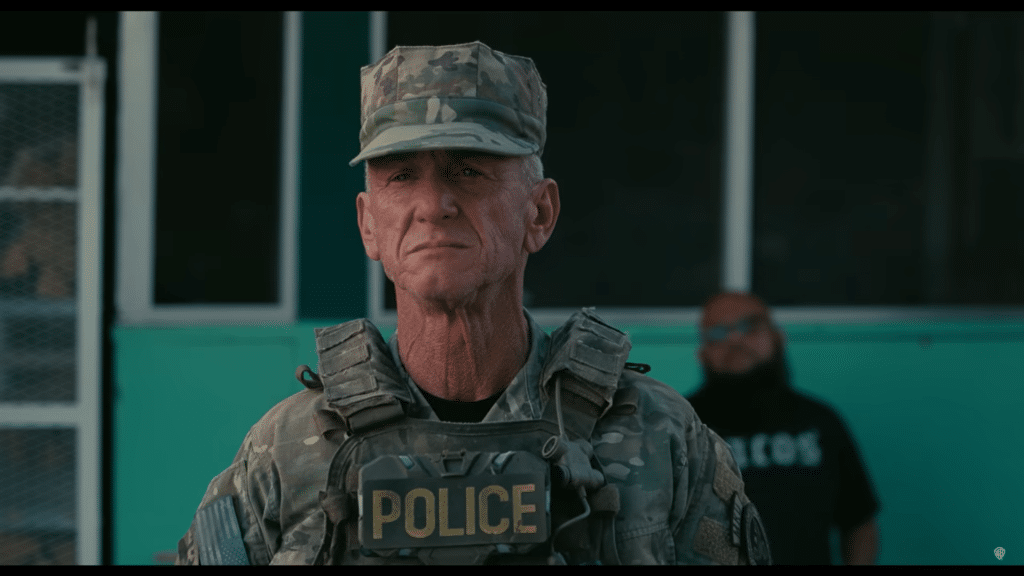
Hollywood goes full antifa with ‘One Battle After Another’ by Peter Gietl claims that Anderson’s film is propaganda; it itself is the propaganda. The article defends main villain and literal card-holding white supremacist Colonel Lockjaw, played by Sean Penn, as a mere border security aficionado.
I’ll be talking about why the film is, mostly, a fantastic one with a fantastic message and why the article is a prime example of putrid, propagandic journalism.
I’ll link the article again here for anyone who feels the need to check whatever claims I make about it, but I won’t encourage you to give far-right outlet The Blaze additional clicks.
Some spoilers ahead.
Where Hollywood goes
One Battle After Another opens near the US-Mexico border following a group of, yes, left-wing terrorists who attack an immigration detention center. After freeing the detainees, group leader Perfidia confronts the commanding officer in charge of the compound, Col. Lockjaw.

Perfidia subdues Lockjaw, who derives sexual pleasure from the experience. The feeling is mutual. After Perfidia and the rest of her group flee the compound, she and Lockjaw begin an affair. This is important for two reasons. Perfidia is black and Lockjaw a white supremacist.
Lockjaw’s white supremacy is not left for the audience to conjecture. Early in the film, he begins the application process to an explicitly white supremacist KKK-adjacent secret society. He does not drop out or repent.
The first chapter of the film comes to a close when, after her child is born, Perfidia walks out on both the child and on Bob. Soon after, she’s arrested, and Perfidia gives up information that compromises Bob. He flees with his daughter, Willa, and a new identity. Other members of the group are arrested. Some are shot and killed.
About 15 years later, Bob and a now-teenage Willa, played by Chase Infiniti, live in relative seclusion. Meanwhile, Lockjaw undergoes a background check while petitioning for membership in the white supremacist Christmas Adventurers Club.
The club’s investigation reveals that Willa might be Lockjaw’s. This does not please the Christmas Adventurers. Lockjaw renews his pursuit of Bob to prove that Willa is not his or to eliminate her.
Federal agents raid Bob’s home while Willa attends a school dance. Bob escapes, and Willa becomes a fugitive. Bob spends the remainder of the film searching for Willa, and Willa spends it evading Lockjaw. We learn that she’s Lockjaw’s daughter, and she’s able to escape him on her own.

Bob breaks out of his drug-fueled malaise and finds new meaning in fighting for his daughter rather than in service of militant activism.
Where Hollywood succeeds
This portion of the film is thrilling. The characters are strong and motivated, the performances are fantastic, and the action is superbly shot and edited.
The cinematography is award-worthy. Action aside, Anderson burdens the audience with the oppressive weight of Lockjaw’s federal agents. He employs heavy composition, his hiding protagonists weighing down the shots from the bottom of the frame as the agents pass by above.
I also appreciate how Bob didn’t need to save his daughter to find purpose. This choice subverts the damsel-in-distress trope and discourages results-based thinking. I believe this is an example of uniquely positive messaging for young women and self-critical individuals.
One Battle After Another is also a thematically rich film, but we’ll get into the nitty-gritties after briefly summarizing the Blaze article.
Where the blaze goes
Hollywood goes full antifa with ‘One Battle After Another’ opens with a passage decrying the alleged ubiquity of radical left-wing violence, entailing that this film is a part of the problem. I do have some criticisms of the film’s messaging, but to say it promotes terrorism is an objectively bad-faith claim.
As you might suspect from the people involved, this is more than the usual Hollywood slop. It’s an insidious piece of propaganda that speaks to the depravity of the left and, I fear, wanders into wholly new territory that portends truly dark times ahead.
Gietl
This is the main point Gietl tries to make. As evidence, it posits that “Lockjaw is evil [in the film] because he wants border security and has a Nazi haircut,” (Gietl) that bombing a senator’s office is meant to be interpreted as righteous, and that voting differently is “grounds for extermination.”
Let’s debate.
Putting out the fire
Q: Is Lockjaw evil because he wants border security and has a Nazi haircut?
A: No. Both of these are true of Lockjaw, but if bad haircuts constituted wickedness, Bob would be a twist villain. That said, the film does condemn what it perceives as excessive border control.
A secondary protagonist, Benicio del Toro’s Sergio, runs a shelter for undocumented immigrants, for whom the film is entirely compassionate.
However, Lockjaw is an open white supremacist who plots to murder his biracial daughter so he can join a social club. This is not a policy difference; it is evil.
Colonel Lockjaw is evil because he is a murderous racist.
Q: Is the bombing of a senator’s office meant to be interpreted as a righteous act?
A: No. Perfidia’s relationship with Lockjaw is a microcosm of her enmity with the United States’ political establishment. The film portrays her as a selfish character for this reason. The pleasure she receives from demeaning Lockjaw motivates her to cheat on Bob the same way that her personal investment in “the cause” motivates her to leave him and their child.
The self-external consequences of militant activism are clear. Namely, they are death and destruction. I don’t think it’s the movie’s responsibility to explicitly say in more or less words that “killing is bad, mkay.”
The consequences internal to one’s personal life are less obvious. The film chooses to dwell on the fact that terrorism is a morally degenerative act. Perfidia loses her family, and her family loses a partner and mother due to her commitment to terrorism. Yes, it’s harmful to others to commit acts of politically motivated violence. It’s also harmful to yourself and to those you love.
The Blaze claims that viewers are more likely to commit acts of terrorism after watching One Battle After Another. The film actually uses a pro-family angle that you’d think a conservative outlet like The Blaze would endorse to discourage such acts.
The bombing of the senator’s office is not righteous.
Q: Is voting differently a “grounds for extermination?”
A: No, not for extermination. As we’ve discussed, the film doesn’t endorse terrorism in any form. However, it doesn’t fairly characterize opposing viewpoints, structurally positioning them as untenable.
Though I speculate I almost entirely agree with Anderson’s politics based on this film, I believe that his use of the murderous, racist Christmas Adventurers Club as a stand-in for conservatives in the United States is an unfair straw man.
The film’s messaging on terrorism is prescient and smart, which makes it slightly disappointing that its characterization of conservatives runs the risk of alienating even moderates who hold a few slightly right-leaning beliefs.
One Battle After Another doesn’t unite, though this is less a fatal flaw and more a limitation. It’s intellectually honest, however, to point out that the film’s ideological reduction of conservatives runs an additional risk of undermining anti-terrorism by allowing for the supposition that all conservatives are impossible to negotiate with.
Final thought fire-sale
The film is way too nice to Perfidia. She neither earned nor deserved any favor from her letter to Willa at the end of the film.
The drunk driving stuff is weird, too.
One Battle After Another is a flawed, yet largely smart and wholly entertaining movie that is absolutely worth your time.
Hollywood goes full antifa with ‘One Battle After Another’ is, charitably, sloppy journalism, and, realistically, malicious propaganda that is not worth any further consideration.
Gietl (I’m linking the article again for convenience’s sake) is correct in asserting that the film is ‘antifa’ if by ‘antifa,’ he only means ‘anti-fascist.’ And there’s absolutely nothing wrong with anti-fascism.












Tim Harkey
December 23, 2025 at 11:25 pm
I consider myself conservative but I agree with all of this. I was expecting to see a three hour leftist manifesto but it’s much more complex than that. This was a good grounded review of the movie. It seems people on both sides are seeing in the movie whatever they want to see.