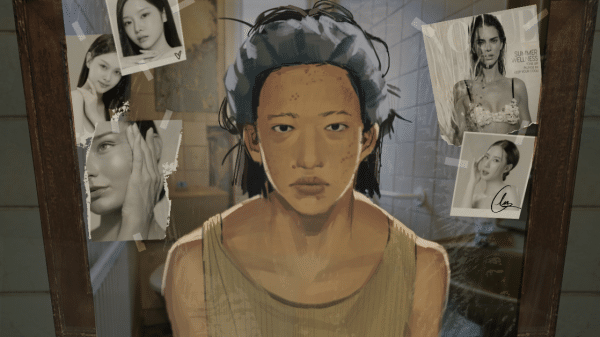
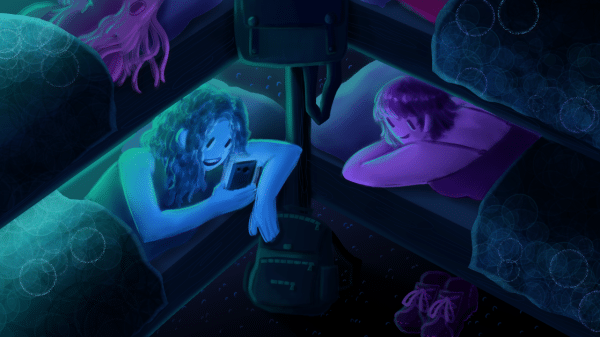
Have you ever stared at yourself in the mirror to the point of disconnection, only to find yourself in a toxic connection with others? That is, what they thought of your beauty and their behavior because of it.
The notorious idiom, “Beauty is in the eye of the beholder,” suggests that people’s opinions about what makes someone physically attractive differ, reflecting subjective personal preferences. But if beauty and the beholder are synonymous, and beauty cannot exist without its beholder (as the quote suggests), then it requires a deep dive into all that truly influences the beholder.
Influences such as psychology, mathematical measurements, cultural implications, personal experiences, and social media affect our behaviors and mental health. Such a vast topic might seem intimidating to unpack; that doesn’t mean we shouldn’t try to answer its begging questions:
What are the qualifications for measurements of beauty? Is trauma from the emotional toil of other people’s perception of us also synonymous with beauty and its beholders? If we reduce beauty to ‘attractiveness,’ then who, exactly, gets to do the reducing? Are we perpetuating beauty standards that aim to divide the nation? We must consider our individual roles in the broader discourse of beauty.
All questions in which I made my mission to try to answer, because in the face of beauty and its beholders, I found I had no face of my own.
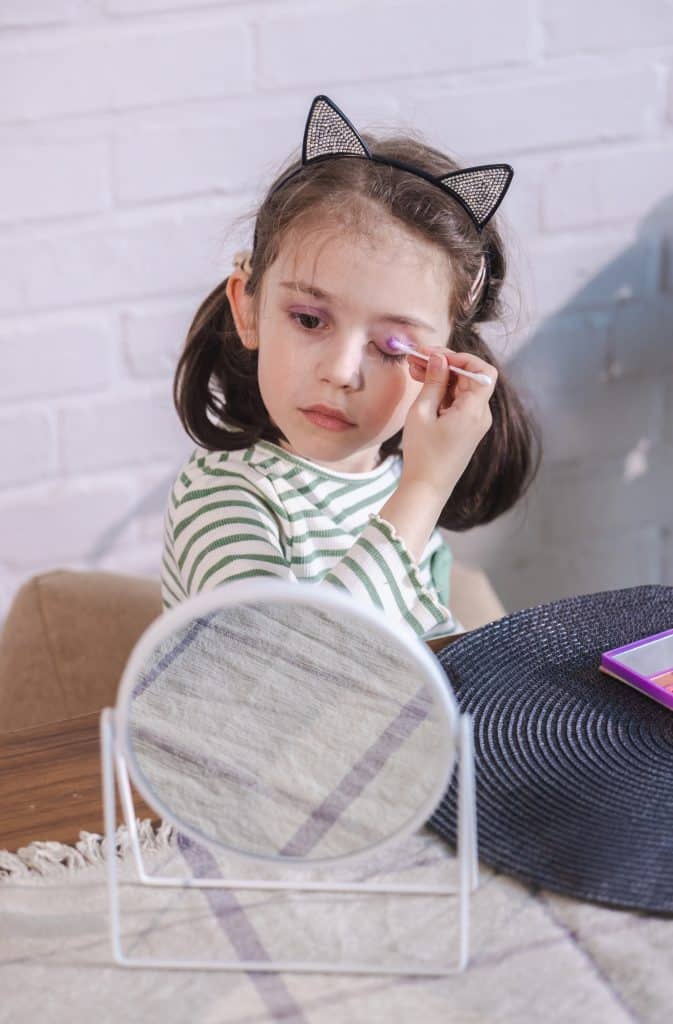
Little girl in the mirror
One fateful evening, I mustered up the courage to seek validation from the one person I’d never dare to…my mother. “Do you think I’m ugly?”
“No.”
“So then, why do some people think I am? Why do I feel so ugly?”

“Beauty is in the eye of the beholder, Aly.”
Those words felt like a sudden jolt broke through the ceiling and onto my spine. The situation disoriented me completely. The idea that beauty can only exist in someone else’s eyes made it feel both real and coincidental. Coincidental also meant unreachable—like it existed, but never for me.
I had grown used to blunt answers—either quick denial or harsh honesty, like when my aunt once told me, “You were ugly as a child, but now you’re good.”
I had no idea what to think of myself anymore.
Is beauty TRULY in the eye of the beholder? How does one’s beauty collide with the eyes of another? Can we ever separate our sense of beauty from how others perceive us?
What does beauty mean – different types of beauty
Visual beauty, by itself, refers to the rhetoric of abstract figures that appease all five senses. We perceive artistic, natural, or expressive beauty—like a painting or the view of a snowy mountain—only after we attach symbols and meanings to it. Those meanings are based on what’s going on in our personal inner worlds. That’s why a poem, or a painting, can have various interpretations.

I used to think of Shakespeare’s line, “Shall I compare thee to a summer’s day?” as the most beautiful compliment in the world. Summer indulges all five of my senses. I immerse myself in the sound of the House Sparrows humming as I take in the smell of sunflowers and feel the warm sunset on my skin. Whereas my little cousin took it as a reminder of every bad thing that happens to her during the summer. Breakups and the worsening of her sweat problem.
She heard the comparison to summer and took it as anything but a compliment. Beauty also reflects where we’re at in our lives, experimental and developmental. Now, at 22, I think, why the hell should anyone compare me to anything in the first place? That’s until I realized beauty isn’t that simple.
Visual beauty, specifically pertaining to someone’s appearance, heavily relies on our sight. It is far more complex than a matter of artistic/aesthetic preference. We hear things like “dress to impress,” “first impressions matter,” and “it was love at first sight,” ALL.THE.TIME. Our sight is a dog with a never-fulfilled appetite, ready to devour whatever it comes into contact with.
Child psychology – infants base attractiveness
I had internalized the phrase my mother had cursed the air with all the way until just last semester. During my junior year of undergraduate, I was sitting in the back of my Child Psychology class when my professor, Shai, said something that would inspire all the research in this article:
“Beauty is something we’re born with being able to distinguish.” At the time, his words left his mouth like poetry.
“It’s why babies and infants stare harder at beautiful people and look away from the ugly ones.” For once, he had my undivided attention (rare considering it was a 3-hour lecture).

We continued class, discussing the 2016 Infant Behavioral Study. Researchers tested sixty-four infants aged 12 to 24 months for visual facial preferences and found that these infants preferred to look at features that adults deemed attractive.
What are the attractive features to a baby? Symmetry and sexual dimorphism. These preferences are due to the simple fact that “symmetry is more digestible and easier to process as face-like” (Griffey and Little, 2016). The results were the same for infants as young as three days old and remained consistent throughout adulthood.
Babies stare at me all the time, hurray! Yet, my life didn’t fully add up to this theory. Why did every population beyond infancy call my appearance names that would suggest otherwise? Growing up, my appearance was a sign that read, Ridicule me. More specifically:
“Bird’s nose,” “droopy eyes,” “dirty mop of hair,” “crooked teeth,” “skin full of pimples, it’s like playing a game of connect the dots.”
People said statements like this so often that I began to notice a pattern. All the name-calling from my peers felt like a direct imitation of what my adult family would also say to me.
Beauty, then, must be more than inherent biological preferences but learned behavior from our adult counterparts. Adult counterparts that are cognitively and experimentally different at large. In infancy, we also tie every suggestion, behavior, and belief to our caregivers.
What is beauty, completely ignorant of childhood, merely in the hands of adults who’ve forgotten their unbiased judgements, bequeathed to the world around them?
Immediately after class, I began to do my own research on facial attractiveness in the adult population.
The golden ratio – quantifying beauty
During my research on facial attractiveness to adults, I found the golden ratio. Artists and architects during the European Renaissance developed this ratio to describe and map out their artisanal masterpieces. A 1.6 measurement quantifies beauty (of the five senses).

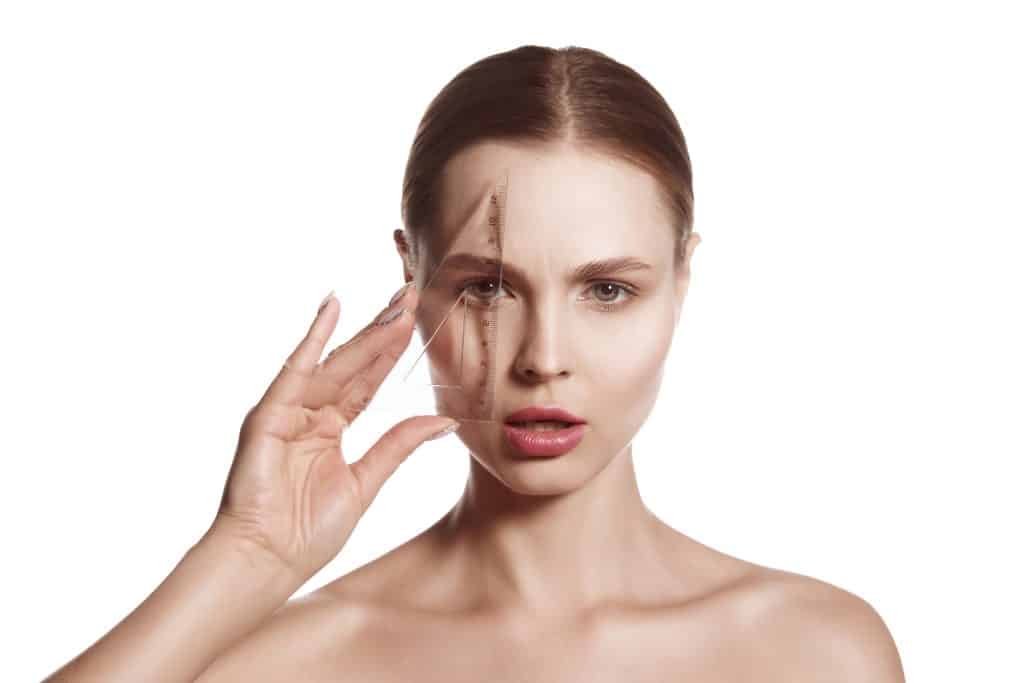
An assistant professor in biostatistics from Nebraska, Dr. Kendra Schmid, used the golden ratio to measure facial sex appeal. Shmid calculated the measurements on a scale of 1 to 10 based on three criteria.
First, the length and width measurements of the face. She divided the length of the face by its width. The results of this measurement dictated that a beautiful person’s face is one and a half times longer than its width.
Next, she took measurements from the forehead hairline to the middle of the eyes, between the eyes to the bottom of the nose, and from the chin to the bottom. All three measurements must be equal to be classified as beautiful.
Her last measurement was for symmetry. The length of the ear should be the same as the length of the nose, and the width of the eye should be an equal distance from each other.
These conclusions align with what an infant or child would consider beautiful, and support the notion that beauty is primarily based on an infant’s comfort level. It provided solace for past memories, but it also evoked conflicting feelings about my present. The absurdity of quantifying beauty was palpable. Are our faces just math problems to solve? I thought about all the times I’d been absurd about beauty.
When I reached high school, I was pulling ‘beauty hacks’ from every trend I found on YouTube. I bought Chinese eyelid tape to resemble a symmetrical cat-eye. If facial appeal was something as solvable and unchanging as a math problem, I would’ve passed calculus.
On the contrary
The Wilmer study of 2015 suggests that beauty is, in fact, in the eye of the beholder. The whispers of my mother returned, living rent-free in my mind. Despite infant processing and ratios, were the years of tape wearing all to no avail?
Wilmer and his colleague, Laura Germine, tested the preferences of 547 pairs of identical twins and 214 pairs of same-sex, non-identical twins by having them rate the attractiveness of 200 faces.
They found that the facial preferences of the identical twins were substantially different. The same as fraternal. The Researchers concluded that facial preferences stem from personal life experiences, ranging from the media we consumed growing up to the trauma we’ve endured. In other words, beauty may be subjective—but only through the lens of experience, not coincidence.
And despite most of my claims thus far, some people did find me beautiful and were very open about expressing it. A few people appreciated many of my distinct features, and maybe, before finishing this article, I could have learned to live with that and bid adieu to things like eyelid tape.
Cultural recognition
Almost ready to wrap beauty in a neat bow tie of infant judgment, measurements, and personal experience, I had the strangest encounter at the gas station.
Shhhh, I know what you’re thinking, why don’t Jerseyans fill up their own damn gas?! But that’s another article for a different time, my friend.

I digress; the encounter went nothing like the regular card exchange with minimal conversation (you’re lucky if you even get a hello). Instead, the gas attendant asked if I was Indian. I said no—was that supposed to be a compliment? He responded that it was indeed a compliment and that the women in his culture are beautiful. I agreed—Indian women are beautiful.
He continued to explain the resemblance of my features without naming which ones, and provided a brief history of the Indians who migrated to the DR during the colonization period. I felt embarrassed that I didn’t know this part of my own country’s history, and I was equally perplexed by his insistence that I must have some Indian in me to be pretty, even if it was only the ‘2%’ he claimed.
Could the idea of me being beautiful only be digestible if I were within his culture? Was beauty, then, also cultural?
When I got home, I went back to my Psychology notes and found that indeed, different cultures have different standards of beauty due to cultural traditions, rituals, and beliefs. These findings, however, were more based on fashion, accessories, and scents rather than features. I wonder if he could smell the Indian hair oil my friend from Kerala recommended to get my hair down my back.
Cross-culturally, most people still agree on what features are attractive and which ones aren’t. Some of those include: neonate qualities, raised eyebrows, symmetry, a full head of hair, a big smile, and physical beauty.
I hadn’t factored physical beauty (beauty of the whole body) into my research; instead, I stumbled on it by chance during this particular interaction. Actually, I’d like to think it stumbled upon me.
TikToker, Jaden Sadie, found that men in most societies place especially high expectations on female physical beauty. Features like bigger breasts (along with the facial features already discussed). Due to evolution, they indicate health, youth, and fertility.
Comments about my prepubescent body like “pancake ass,” “television breasts,” and “sack of bones,” suddenly made sense. Does that mean we could justify behavior, whether kind or cruel, through this lens?
Beauty as a weaponized social structure
I had met Beauty a long time ago, and she did not want to let go. Obsession, reaffirmed by another’s affirmation, was all I began to know. It was time to face the truth:
People have weaponized beauty as a social construct that shapes behavior, limits opportunities, controls access to resources, and influences mental health and inclusion. It has had its grip around the world since slavery and the European colonization of indigenous communities in America (Latin America included). Therefore, the idiom “Beauty is in the eye of the beholder” is dangerous, misleading, and too nuanced for its own good.
It overlooks the moments in history when injustice occurred, creating a perception that still divides the population. It’s a dynamic between colonizers and the groups they colonized and chained, both figuratively and literally.
Racism, colorism, and colonization have long set a standard for beauty impossible for the majority of the population to meet. European ideals reinforce the notion of European superiority and the desirability of European features (paler skin, thinner nose, longer/less coily hair, etc.). This does not align with the U.S. racial demographic.
If American school systems taught the truth about history, maybe 11-year-old me would’ve embraced the sun instead of hiding from it. Maybe she would’ve put the hair straightener and eyelid tape down.
“But if I gave up on being pretty, I wouldn’t know how to be alive.”
-Mitski
Social media and its million beholders
These impossible European standards weigh heavier on the Gen Z population than any other because of social media.
Social media is designed to be addictive, and it gives racist, outdated beauty standards the perfect place to keep resurfacing. This is done through our feeds, posts, stories, reels, explore pages, what’s trending, and algorithms!
The algorithms on platforms like TikTok, X, and Instagram encode human opinions because people with opinions create them. They’re also written so that the machine can adapt itself based on the data it collects from you, even detecting how long you look at a post without requiring any interaction from you.
The hit Netflix documentary The Social Dilemma explains why Instagram specifically is so damaging to the Gen Z population.

Gen Z is the first generation to have access to social media in high school and the first to maintain its momentum. This is a huge problem. Our thousand-year-old brains haven’t evolved to absorb the perceptions of so many people while simultaneously unloading our own onto everyone else. This occurs multiple times a day, every day.
Chances are, many of us are engaging with posts from our peers or influencers that meet beauty standards we wish we were born with. This could look like a black girl wishing she were born with straight hair or a Hispanic girl with hairy arms looking at a hairless cat looking model.
Girls are often more socially conditioned to compare themselves to other girls. This has never been easier to do with Instagram.
Depression has risen by 62% for teen girls and 189% for pre-teen girls. Suicide — the consequence of all this pressure — has risen by 70% for teen girls and 151% for preteen girls pre social media because of social media.
We confuse validation (likes, comments, story reshares) for real value and self-worth. With this in mind, it may be time, now more than ever, for us to start promoting engagement with content that genuinely aligns with our interests. Not unattainable ‘body goals’.
You cannot prove you are beautiful in the eyes of social media’s million beholders.
What remains: more questions
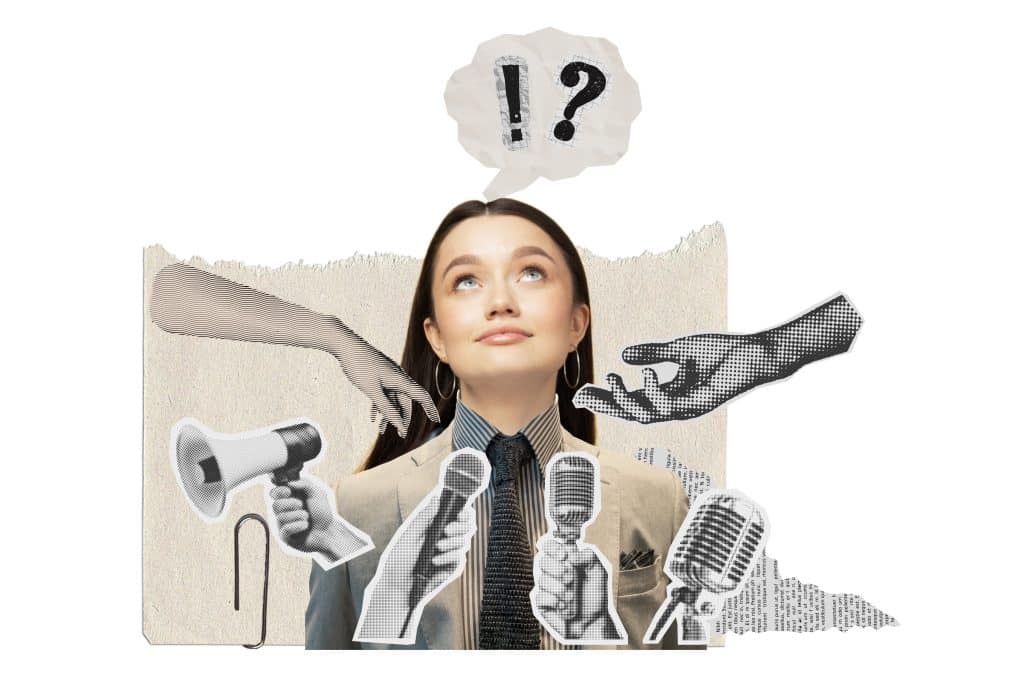
Beauty remains unsolved. (Shutterstock)
I will not lie; I find myself rejoining hands with this familiar waltz time and time again. Just today, my eyes dissociated with the mirror longer than they should have. In the wake of my findings, I’m left with what remains:
Can we put our preferential differences into a box, and can we put our preferential similarities into another box? What if the media had never been invented or remediated? What if racism didn’t exist? When does it become dangerous to talk about one aspect of beauty, and not the other? Can beauty excuse how we treat others? Is beauty TRULY in the eye of the beholder?
What if I tell you there are no definitive answers? Based on information presented, beauty lives in the eye of the collective beholder—shaped by biology, power, evolution, history, media, experience, and power. (along with reasons still untouched by human research/thought). All beyond subjective thought or coincidence.
That being said, I also recognize that this ongoing discourse won’t be resolved here or in any of the studies I’ve referenced. It is up to you, dear reader, to change the narrative. Destroy the mirror and learn to love the little girl reflected back in the broken glass. You’re the only beholder that matters.