Auntie Dyke is back, back, back again, and thrilled to have an armful of answers to your most pressing questions! Whether you’re afraid to use the word ‘dyke,’ have an aversion to sex, or simply don’t know how to differentiate between key labels, you’re welcome here — We’ll discuss it all!
To My Dear Queers,
Welcome back, and welcome in! I’ve missed you all, and even better: I’ve been delighted by your most recent questions.
This month, we’ll be going over “The D Word,” the nitty-gritty aspects of asexuality (and how it translates into relationships), and the historical implications of bisexuality. We’ll dive into some of your most intimate questions yet, and get to explore the roots of our labels, the modern reclamation of a slur, and our abilities to exist within partnerships regardless of our relationships with sex.
This last month has been madness, as you all surely know. Between Charlie Kirk’s assassination, late-night television decisions that hint at authoritarianism, and a recent EU report confirming that intersex people are facing rising violence and discrimination, we seem to be caught in a never-ending tumultuous window of existence.
Sometimes the best we can do is find sanity within our community.
So, in an effort to deepen my own connection and impact within our ever-growing queer network, let’s dive into your most recent queries!
And remember: You can always anonymously submit your own questions to me, and I’ll do my very best to answer them genuinely and thoroughly. Submit anonymously: here.

“Dyke”: Slur or symbol?
Dear AD,
I hope this isn’t offensive, but I was wondering… Am I allowed to call you Auntie Dyke? I always thought that ‘dyke’ was a slur, so I feel a little weird calling you that, especially as a straight person.
Hope this makes sense!
From,
Cautiously Curious
Dear C. Curious,
I deeply appreciate this question and hope you know that while asking questions such as these may not always be appropriate, with me, they are more than welcome. Kudos to you for approaching this topic gently!
Interestingly enough, you’ve tapped into an incredibly personal line of thought for me!
When taking on a moniker for this advice column, I spent a lot of time brainstorming names. “Auntie Dyke” was one of the first to come to me, but I worried about the phrasing. Would “dyke” come off as too harsh? Too taboo? Would the advice column be scrapped altogether due to it being headed by a historical slur?
I was anxious — both because I was so deeply drawn to “Auntie Dyke,” and simultaneously because the term could scare readers off.
In seeking the opportunity to build a safe space, would claiming a slur really feel inviting to non-queer individuals?
Sure, lesbians have worked to reclaim the word “dyke” plenty. But that reclamation doesn’t extend to non-lesbians, so where is the line drawn?
What does Dyke even mean?
Aside from the most tame definitions — basic geological terms: a dam, a ditch — the word ‘dyke’ carries a loaded history.
The word originally comes from the derogatory term “bulldyke,” coined in the late 1800s, and used to slander women who did not conform to the typical “feminine” roles of the time. This, of course, included women who did not obey the heterosexual agenda of the early late 19th century, and “bulldyke” quickly became an insulting word associated with lesbianism — particularly masculine-leaning sapphics.
You must understand that the word dyke is both currently and historically a slur. That said, while lesbians have traditionally rejected the word “dyke” altogether, we have since worked to reclaim the word for our own.
In fact, “dyke” has grown to describe many kinds of lesbians: Baby dykes, leather dykes, sporty dykes, diesel dykes, and so forth. Lesbians created groups sporting the term in their title, like Dykes on Bikes, and protest events such as the Dyke March to gain visibility and generate more dialogue surrounding the existence of lesbians. Clearly, lesbians are no longer quite so adverse to reclaiming the slur.
This is not to negate the word’s powerful weight in today’s day and age. The word “dyke” is still a slur. A non-lesbian using the word is almost always a red flag, and it certainly isn’t a term to use loosely. Lesbians may use it freely. Non-lesbians may not.
That said, if someone is openly identifying as a dyke, this may be their personal identification preference. If someone has self-identified as a dyke, you are far less likely to upset them by using the term. Remember: Intention matters.
A willingness to use the term in an effort to disparage or insult a lesbian is a firm no. But, if used considerately and consciously, the word can be used by non-lesbians without offense being taken.
So what do I think?
In my eyes, “Auntie Dyke” is a term of endearment. It comes from my love for my queer elders, respect for the lesbians who came before me, and my own fondness for reclaiming that which people may use against me.
In reference to me, you are always allowed to call me Auntie Dyke– that’s who I am, after all! A long-ago self-identified lesbian, here to create a safe space for anyone interested, and to educate as best as I can. “Auntie Dyke” is warm, familiar, and just bordering on rebellion, inspired by the many lesbians I’ve known, loved, and learned from.
In a way, I almost consider “Auntie Dyke” to be a sort of drag name. Think of drag queens such as Terra Hymen, Asia Consent, Tess Tickle, Izzy Uncut, Anna Bortion, Frieda Slaves, and Dixie Normous. All of these names are openly used — and play off of often taboo subjects. You can’t typically ask someone, “Is he uncut?” or comment on someone’s testicles, and yet these drag queens have intentionally created humorous plays off of unconventional topics, making them more palatable to those who may feel uncomfortable with them.
I see “Auntie Dyke” as something similar to this: The making comfortable of something uncomfortable, in an effort to love myself deeper, and promote the visibility of lesbians everywhere– Dykes included.
Thus, you may consider this my official written approval, C. Curious: You are absolutely welcome to call me Auntie Dyke, as is any other well-meaning reader of my column. Just don’t start using the word flippantly, or applying it to anyone who doesn’t claim it first. You may find yourself in trouble at that point, and I’ll have no inclination to come to your rescue.
Hope to hear more from you!
Here always,
AD
Three letters, and the bane of their existence: Sex.
Dear Auntie Dyke,
I need your help.
I didn’t have my first kiss until 19 years old, I didn’t even start dating until 20. Now, at 25, there’s a pattern in all of my relationships since breaking into the dating world.
Three letters, bane of my existence. Sex.
In my first relationship I was showered with love and intimacy, it was something I truly had never experienced before, but had always yearned for. So it was exciting for me! I was attracted to her in a way I’d never been attracted to another person before and it felt amazing. Then, a few months into our relationship she stopped showing me any attention entirely.
This proved to be a not so great foundation for my journey into my sexuality. Seeing as every relationship since has had some kind of issue in that particular department.
And I’m not blaming her! My childhood was rife with unrestricted access to the internet, and some pretty weird communities. So even then, I already had issues with the topic.
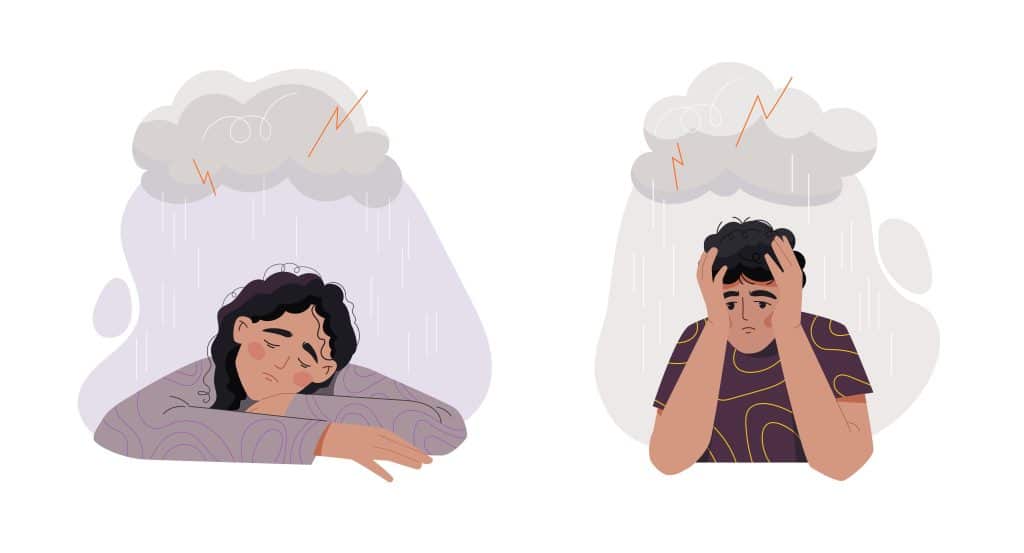
I don’t dislike it, but often times I can go without it. Every time I have sex, or do anything remotely sexual, I have an internal crisis. I immediately dissociate and feel disconnected from myself. Like someone else did all those things just now. Don’t get me wrong, I’ve had some pretty awesome sex, but most of the time I feel some sort of discomfort.
I don’t know if it’s my body dysphoria as a trans person, or if I’m somewhere on the asexual spectrum. I can’t figure it out!
How do I cope AD? I enjoy sex with my current partner who deals with similar issues, and I’m extremely attracted to them. I just never know how to initiate it or even decide if I like it or not. It seems to change on a dime.
Is this normal? I feel like a needle in a haystack and I have no idea how to get myself out.
Help me, please!
From,
Sexually Suspicious
Hi there S.S.,
Thank you for sending in such an intimate question. I know that topics around sex can feel difficult to confront — especially when you have an aversion to it already — and I appreciate you feeling safe enough here to reach out to me! Even better? I have much to say on this topic, so buckle in!
I think it’s important to lead with the reassurance that this is not abnormal. Sex can be a weird topic — even for the best of us. Whether you start exploring things like masturbation, sex, and pornography at a young age, or don’t have your first kiss until the age of 19, there is no correct timeline to follow when it comes to sexual discovery.
Even more important to understand is that this can be especially difficult for queer individuals. Most teens and young adults tend to struggle with typical heteronormative sexual issues. Queer individuals are, alternatively, forced to grapple with their sexual identity, gender labels, preferences, potential social lash back, and necessary self-awareness while attempting to navigate their way through this particularly intimate journey.
So please, don’t hold any ill regard for yourself for struggling with this topic. You asked and I’ll answer directly: This is normal!
Ultimately, the most valuable aspect of your question is your willingness to have the conversation despite the topic being so intimate. An openness to discussion and dissection is sometimes the perfect (and, arguably, only) remedy for identity issues, and this is the perfect place to start such a conversation!
So, without any further ado…
Let’s talk Asexuality.
I think you may be onto a key detail by considering your possible asexuality. Just remember: Asexuality is a spectrum!
For the sake of those reading who may not be well-versed in asexuality (heterosexual or not– this is a topic that has the habit of confusing queer and straight people alike!), allow me to elaborate:
Sexuality, much like gender, is a wide spectrum of labels, feelings, and comforts. Just as the gendered spectrum is varied, so are the numerous sexuality spectrums. One of the more complexly nuanced is the asexuality spectrum.
At their simplest, “an asexual person does not experience sexual attraction – they are not drawn to people sexually and do not desire to act upon attraction to others in a sexual way.”
That said, the asexuality umbrella is vast and addresses many variations in sexual attraction and tendencies.
One must note: Asexuality is not celibacy.
Celibacy is the conscious decision to abstain from sex, whereas asexuality is an intrinsic aversion or disinterest in intercourse. While celibacy is a choice, asexuality is not.
There are a number of different asexual labels one can adopt, including but not limited to:
Demisexual
Someone who only experiences sexual attraction or desire after an emotional bond has been formed with their person of interest.
Gray-Asexual (AKA: gray-sexual)
Someone who may identify somewhere in the gray area between asexual and sexual. Someone who identifies as gray-sexual may experience sexual desires under rare or specific circumstances, or the feeling of desire is so minimal that it is often unimportant to the individual. Oftentimes, gray-sexual individuals do not feel that sex is a necessary component of their romantic relationships.
Aegosexual
A term describing someone who has no desire to have partnered sex or sexual relationships, but still experiences sexual fantasies. They may feel attraction, desire, or even arousal, but feel removed from the experience as a whole.
“But my aversion to sex isn’t reflected by the other asexual people I know!”
Another aspect of asexuality that is often overlooked is the varying levels of sexual attraction that ace people may experience. There are three main categories used for identifying this scale: sex favorable, sex indifferent, and sex repulsed.
These terms are exactly as they sound: An asexual who leans sex-favorable may be open to sexual experiences, and even find them pleasurable at times.
Sex indifferent individuals may be open to sexual experiences, but also may not. They can find pleasure in these experiences, but may not. Regardless, they do not feel distressed by sex.
Sex repulsed individuals are entirely disinclined towards sex. They are not interested in the opportunity to have sex, and may feel distress at the idea or mention of sex altogether.
Again, it’s important to remember that there is fluctuation amongst each of these terms. Every individual is unique! These are very basic terms to help guide you into better understanding yourself and your nuances.
Let’s address the real kicker, though.
What does asexuality look like when you’re in a committed partnership?
Asexuality in a relationship
Here comes the confusing bit: Asexual individuals are still plenty capable of holding healthy and happy relationships. Many people are confused by this, as it’s typical to assume that relationships must entail sex. But the truth is that plenty of people who identify as asexual are in relationships– even with people who are allosexual (ie, not on the ace spectrum in the slightest; the “cisgender” to “transgender”).
Ultimately these relationships come down to the individual. There are some asexual folks that are in sexual relationships for the sake of their partner– Not because they feel pressured to have sex, but because they are either sex favorable or sex indifferent. It’s important to note that asexual people do not have to entirely abstain from sex to fall under the asexuality umbrella.
While asexuality does play a role in relationships, it does not have to determine your relationship status. Instead, it impacts the conversations you may have with your partner regarding sex, not your ability to maintain a partnership altogether.
What role does body dysmorphia have in this?
Here, we’re going to pivot a bit from my initial response.
While I’ve tried to be good about providing you basic information regarding asexuality, my commentary on body dysphoria in relation to asexuality comes from a place of personal experience and opinion, rather than clear-cut definitions and hard science.
It has been my personal experience that it is not necessarily uncommon for transgender people to go through a period of perceived asexuality. This can be a label that is upheld throughout their entire life. Other times, it is simply a symptom of their body dysphoria playing a role in their interpersonal relationships.
As I’m sure I do not have to explain to you, body dysphoria is an incredibly personal psychological journey for trans individuals. This emotional chasm that builds between transgender people and their physical body can be widened by any number of things: puberty, the addition of social norms, and even sexual experiences.
When having such intimate difficulties with one’s physical appearance and body, an aversion or anxiety surrounding sex makes sense. And admittedly, this is something I’ve noticed simply by observing my own transgender friends walk the path.
Some of them, with gender affirming surgery and care, have come to understand their relationship with sex to be entirely different than it was when they were in a body that they felt less “connected” to.
Other trans people realize that “asexual” is truly a label that they identify with, even following transitioning or obtaining gender reaffirming care.
Even still, some may not struggle with this at all (or, adversely, stray to the opposite spectrum of this conversation — a dialogue we can explore another time.)
The important detail
You do have a unique journey with asexuality before you in the face of a transgender identity. You are having a lot of thoughts and feelings around your body in a way that many people cannot relate to, and this can play a role in your sexual tendencies and desires. This doesn’t mean it has to.
For all intents and purposes, what you are explaining to me sounds like asexuality. Your discomfort, detachedness, and fluctuating feelings around sex points to signs of your identifying under the asexual umbrella.
That said, it is valuable to note that this could change as you continue on your journey regarding your gender. While you may identify with the asexual spectrum now, keep in mind that this may shift as your transgender journey expands.
You can’t make a wrong decision– ultimately this all comes down to what feels best to you!
Just remember: This is normal. You are not a “needle in a haystack.” What you are experiencing is a very familiar and common experience amongst queer individuals– especially trans ones. Be gentle with yourself. Grant yourself grace. Keep asking questions, and be open with your partner above all else!
Good luck, S.S.! You’ve got this!
Love,
AD
Differentiating the details
Hi Auntie!
I’ve always wondered what the difference between pansexuality and bisexuality is? I literally cannot wrap my head around it.
Thanks, Auntie!
From,
Learning Labels
Hiya Labels!
This question is a doozy, and not for the reasons one may expect.
At their most basic, the two sexualities are defined as such: Bisexuality is the attraction to two genders. Pansexuality is attraction to anyone regardless of gender.
So, the blandest explanation of the difference between the two is that bisexuality is based upon gender preference, and pansexuality ignores the idea of gender entirely when addressing attraction.
Seems simple enough, no?
Turns out? The two labels stumped me. Originally, I’d had no issue with them. They made perfect sense to me at a young age.
Yet, as I grew older, learned more about the queer community, and grew within it as a person, I began to consider the difference between the two terms quite differently.
With introspection, I came to realize… My definition of the two labels felt incredibly transphobic. What is “attraction to two genders?” Does this mean attraction to men and women? In which case, how is this different from pansexuality, which includes transgendered individuals more expansively?
Is bisexuality attraction to men and women, so long as they are not trans?
Or, alternatively, if you are willing to date transgender people, why are you identifying as bisexual? Shouldn’t pansexual be a more accurate descriptor, since it’s not about sex but gender?
Are nonbinary people excluded from the conversation entirely? Do they not count in the bisexual dating pool, if they aren’t “one of the two genders”?
The more I pondered, the more I realized that I could not differentiate between bisexuality and pansexuality without being inherently transphobic. If bisexual applies to “only men and women,” then the identifier between bisexuality and pansexuality boils down to excluding transgender people as “real” men or women, and nonbinary people get cut from the running completely. It pushes trans men and women into an “other” category that doesn’t really seem fair, coming from queer-forward individuals.
And yet… Not a single one of my (copious amounts of) bisexual friends was transphobic. They dated trans men, women, and anyone in between. So frankly– What the hell?
Let’s face it: I won’t always have the answers.
As a lesbian, I genuinely struggled to grapple with the difference between the two labels. I am only attracted to women, so I struggled to put myself in the mindset of a bisexual individual versus a pansexual one — I couldn’t make sense of it.
So, I outsourced the question and found myself the perfect solution: a member of my chosen family, and a bisexual individual who once identified as pansexual. Meet: my Bisexual Bestie — dedicated “mom friend,” raging bisexual, and a never-ending pool of knowledge to dip into.
It was by her that I was reminded of a simple, but revolutionary fact: Queer history matters, and we still have much to learn from queer elders as the “younger” generation within our community.
In asking her why she dropped the label of “pansexual,” she explained by enlightening me on the history of the term “bisexual”:
“As a former self-identified pansexual, I started using the term bi for myself after I learned that defining bisexuality as ‘attraction to men and women’ is an uninformed definition of bisexuality.
Bisexuality, as defined by bisexuals since before the 1990s, can boil down to attraction to “same” and “different” genders. Where pansexuality is attraction regardless of gender, bisexuals may have more nuance.
Bisexual Bestie
“Same” and “different” for me look like attraction to women and nonbinary people (same as me), and sometimes men (different from me). “Same” and “different” for someone else, though, could be attraction to nonbinary people and women, women and men, or attraction to their same gender in equal amount as their attraction to different genders. Identifying as bisexual is also an act of collective reclamation of the term that keeps the history of bisexuality alive, but that’s maybe a point for another discussion.
The simpler translation?
Bisexuality isn’t about ‘two’ genders—it’s about attraction to two or more genders, including both your own and others.
I decided to take a deeper plunge and asked a broader audience why they chose to identify as “bisexual” rather than “pansexual.” I was curious to understand the reasoning of others, as I couldn’t help but wonder if some transphobic rhetoric might be revealed with further discussion.
Instead, I found a striking similarity between those who answered… The majority of them privately identified with the term “pansexual,” but simply adopted “bisexual” because it was easier than explaining themselves every time someone asked, “Wait– What’s pansexual?” (Unfortunately, often followed by, “Are you, like…. Attracted to pans and plates?”)
As upsetting as that can be in many respects (I find no pleasure in hearing that queer people are changing their labels based upon the miseducation of cishet individuals), I found that most bisexual people that I spoke to actually identified quite clearly with the historical definition of ‘bisexuality’ without ever even realizing it!
So, in many ways, there is very limited difference between pansexuality and bisexuality. In fact, it simply boils down to: Bisexuality is the attraction to multiple genders — including one’s own — while pansexuality is regardless of gender.
Either way– Bisexuality has never been about being attracted to “only two” genders, but instead two or more. The original bisexual manifesto from the 1990s insists as much, and even specifies that bisexuality is inclusive of all genders, not just binary ones.
I hope that clears things up! Bisexuality versus Pansexuality is a complex topic, and acts as a prime example of some of the intricacies and nuances within the queer community.
Good luck on your pursuit of label-specific knowledge, friend! There is much to explore!
Best wishes,
A.D.
A Final Remark
Thank you again to everyone who has submitted an inquiry!
I feel so honored to be trusted with such intimate questions, and I can’t wait to see what you all have in store for me next time! Be gentle with yourself, and I’ll catch you in Edition Three!
Want to reach out to Auntie Dyke? Do you have any burning queer queries? Fill out an anonymous form here, and keep an eye out for Auntie Dyke’s next column for an answer!