


On August 18th, a viral video of South Korean influencer Tyongee ignited heated debate after she flashed a peace sign inside the historic Hagia Sophia Mosque in Istanbul, Turkey.
What she thought was a friendly gesture turned controversial when Turkish locals confronted her, accusing her of expressing political support for “terrorism”.
In much of the world, the two-fingered peace sign has an anti-war meaning. But in Turkey, it carries a very different connotation: it is widely associated with Kurdish liberation movements particularly with groups linked to the Kurdistan Workers’ Party (PKK), which Ankara and the US have long designated a terrorist organization.
This seemingly small misunderstanding reflects a larger and deeper conflict. Like the Sudanese Civil War, struggles like these shape the countries where they’re set for decades as well as influence the international scene.
The roots of the Kurdish question
The Kurdish issue stretches back to the founding of the Turkish Republic in 1923, following the collapse of the Ottoman Empire after World War I.
Turkey’s founding father, Mustafa Kemal Atatürk, envisioned a modern, secular, and unified nation-state. But in creating this vision, his government pursued aggressive assimilation policies toward the country’s diverse ethnic groups — including the Kurds, who make up about 18% of Turkey’s population.
Under early Turkish law, Kurds were officially labeled “Mountain Turks.” Their language was banned, their culture suppressed, and even Kurdish names were outlawed. This effort to erase Kurdish identity planted the seeds of long-term resentment, sparking waves of resistance and unrest across the decades.
The rise of the PKK
By the 1970s, Kurdish revolutionary movements were gaining strength. In 1978, Abdullah Öcalan founded the Kurdistan Workers’ Party (PKK), combining Marxist-Leninist ideology with the fight for Kurdish independence.

The PKK launched its armed insurgency in 1984, declaring war on the Turkish state. Over the following decades, Turkey faced a brutal low-intensity conflict that claimed tens of thousands of lives and displaced millions.
Initially, the PKK sought to establish an independent Kurdistan, drawing influence from global revolutionary movements and Cold War politics. By the 1990s, the PKK had emerged internationally as the face of Kurdish resistance.
Öcalan’s capture and ideological shift
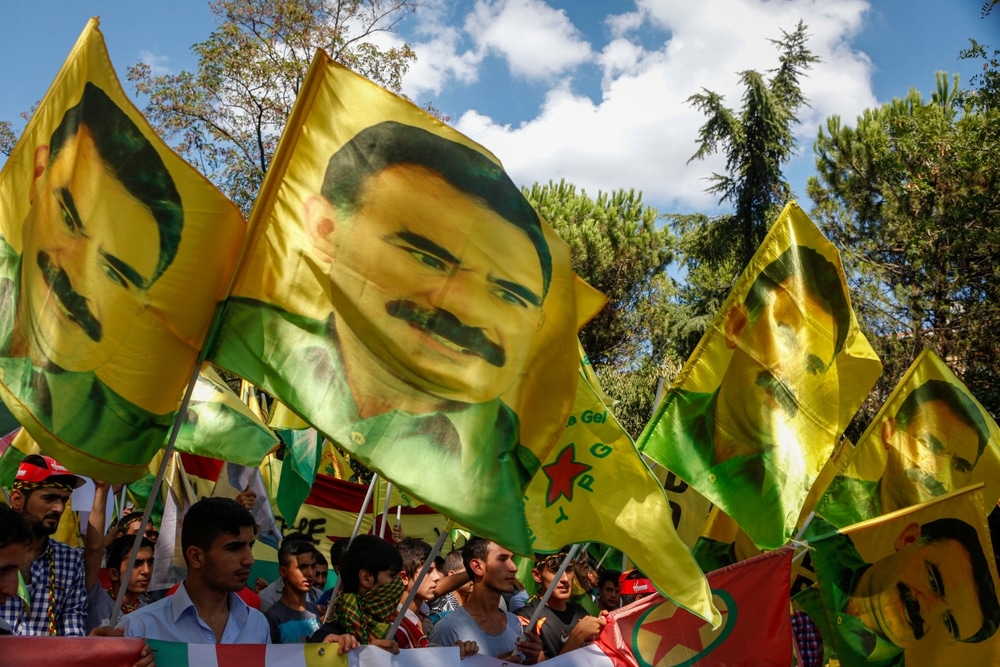
The turning point came in 1999, when Turkish intelligence, working with international allies, captured Abdullah Öcalan. His imprisonment fundamentally changed the PKK’s direction.
While in jail, Öcalan abandoned the goal of full independence, shifting instead toward “democratic confederalism” — a program focused on Kurdish rights, cultural autonomy, and local self-governance within Turkey, rather than outright secession.
This ideological transformation reframed the Kurdish struggle from an anti-state insurgency to a political and cultural movement, but it did not end the violence.
The regional dimension: Kurds beyond Turkey
The PKK insurgency is not confined to Turkey’s borders. Kurdish populations span Iraq, Iran, Syria, and Turkey, creating a conflict that spills across multiple nations.
In the 2010s, global attention returned to the Kurdish struggle during the Syrian Civil War. The Syrian Democratic Forces (SDF) — a Kurdish-led coalition allied with the PKK — played a pivotal role in the fight against the Islamic State (ISIS).
The SDF’s Women’s Protection Units (YPJ) gained international recognition for their heroism, becoming symbols of resistance worldwide. But their growing influence also intensified Turkey’s fears of a Kurdish state on its border, drawing Ankara deeper into military operations in northern Syria.
Peace talks and broken ceasefires
Despite decades of violence, Turkey and the PKK have made several attempts at peace:
- 1993: Öcalan declared a unilateral PKK ceasefire, demanding reforms on Kurdish cultural rights. Turkey rejected the terms, and fighting continued.
- 2013: A new peace process began, raising hopes for reconciliation.
- 2015: The truce collapsed after PKK fighters killed two Turkish police officers, claiming retaliation for Ankara’s alleged collaboration with ISIS in a bombing that killed 32 civilians.
Each failure deepened mistrust between the Turkish state and Kurdish communities, making subsequent negotiations harder to sustain.
2025: A turning point in the conflict
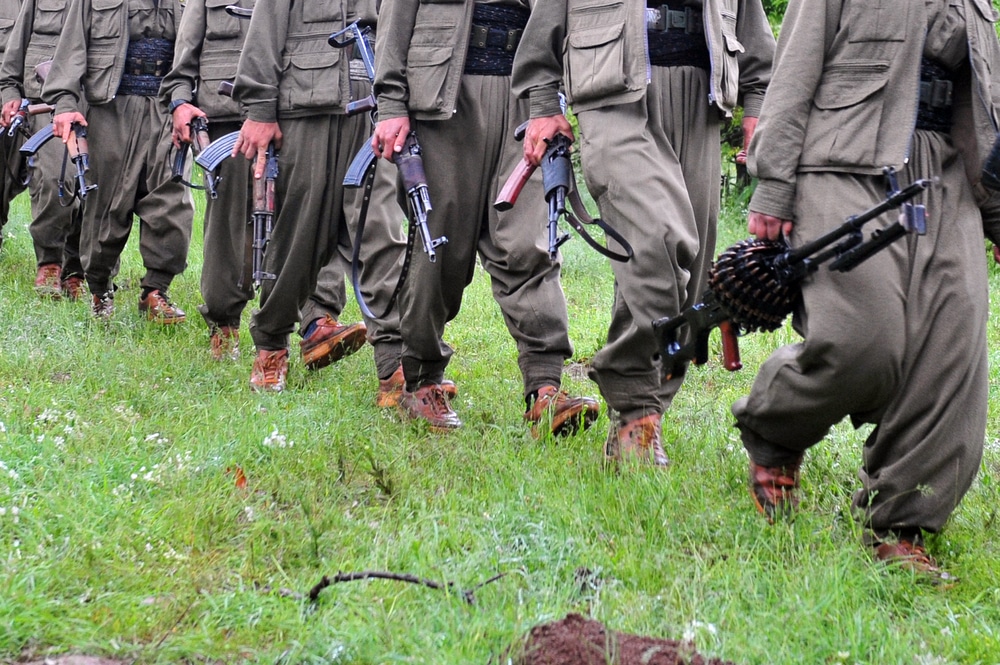
In March 2025, after 40 years of insurgency, the PKK announced that it would lay down its arms.
Imprisoned leader Abdullah Öcalan declared the start of a political solution to the “Kurdish question,” shifting the fight from battlefields to parliamentary negotiations. By July, PKK fighters symbolically burned their weapons in a historic gesture of cooperation.
This marked the most serious attempt at reconciliation in Turkey’s modern history.
Tensions remain high
Despite this breakthrough, peace remains fragile. On August 19th, a car was set on fire outside the Turkish Parliament, just hours before a commission overseeing PKK disarmament convened.
Though authorities later confirmed the act was unrelated to the negotiations, the symbolism was unavoidable, evoking painful memories of decades of violence. Some speculated it was a protest against reconciliation itself.
Political pathways forward
On August 28th, Turkey’s Peoples’ Equality and Freedom Party (DEM) — the country’s third-largest political party and a key voice for Kurdish rights — met with Abdullah Öcalan for a three-hour conference.
Öcalan called for a “democratic solution” that would allow Kurds meaningful cultural and political autonomy while maintaining Turkey territorial integrity. DEM lawmakers echoed his vision.
President Recep Tayyip Erdoğan declared that the PKK’s disarmament was now in the “final stretch.”
The “return home” policy
One of the most significant concessions in the peace framework is the “Return Home” policy.
This initiative would allow former PKK fighters to reintegrate into society, protecting them from reprisals and granting them access to political participation. Experts compare it to Colombia’s 2016 peace deal with the FARC guerrillas, which successfully transformed a decades-long insurgency into a political movement.
Regional fractures: The Syrian front
While Turkey moves toward internal peace, the situation in Syria remains unstable.
After the fall of the Ba’athist regime, the SDF agreed in March 2025 to merge with the new Syrian Army. Ankara, however, accused both the SDF and Israel of destabilizing the region, warning that Turkish forces could intervene militarily.
Defense Minister Yaşar Güler later downplayed these threats, stating that “no operations are currently on the table,” but tensions remain high along the border.
Global stakes and historical parallels
The Kurdish question is more than a domestic issue; it has profound regional and international implications.
“The Kurds are a massive stateless nation that exists across borders, and the liberal international order has not accommodated their needs,” says Bernard Brennan, Professor of Political Science at Johnson & Wales University.
Historical comparisons highlight both hope and risk. The Good Friday Agreement in Ireland shows that diplomacy can end decades of bloodshed, while the failed Oslo Accords between Israel and Palestine demonstrate how fragile peace can be when distrust persists.
A fragile but historic moment
For the first time in four decades, there is a real chance that Turkey and Kurds may trade bullets for ballots.
Whether this moment leads to lasting peace or a return to conflict will depend on Ankara’s willingness to grant meaningful rights, Kurdish political unity, and the ability of both sides to resist extremists seeking to derail the process.
The peace process represents Turkey’s best opportunity in generations to end a conflict that has shaped its modern identity — and, perhaps, the future of the entire region.










grace
September 9, 2025 at 8:44 pm
colonizers when 😱
Debra L. Johnson
September 10, 2025 at 1:44 am
Comprehensive history of a war many have stopped talking about! Thank you for your research and keeping this issue on the surface for others to understand!