


A junk journal is a book using recycled materials, everyday trash, and personal memories to stay mindful and present. This method of crafting makes room for creative expression and gives purpose to old materials that would otherwise be thrown away. But, is keeping your trash to stick in a book better than writing a quick diary entry?
On its surface, keeping a junk journal is cluttered way of using a traditional diary. Yet scrolling social media and seeing creative junk journal pages across my timeline left me wondering. Could junk journaling be a better way to keep track of memories and emotions than a diary?
After years of being told of keep a diary or journal in therapy, I never set out to find a way of keeping all of my emotions in one place that stayed consistent. I found it easy to get bored or overwhelmed by huge blocks of words expressing how I feel on paper. Plus, keeping a diary only meant that I wrote how I felt without anything to show for it.
During my first week of my third year of college, I decided that I had to create a junk journal page for each day of the academic week. The first days of school have the most activities, changes, and mental adjustments out of any other week. So, I decided to put junk journaling to the ultimate test.
Finding inspiration for my junk journal
The best place I found to find inspiration for my week of journaling was Pinterest. While there were tons of images of journals using emotion trackers and music playlists, being more specific helped me find more ideas than a broad journal search. For example, looking up junk journals or dream journals helped me find what I was looking for instead of searching “journal inspiration.”
TikTok is another place I searched when I was looking for things I wanted to include in my book. I kept in mind that the junk journal didn’t only need to consist of emotions. Creating what I liked was extremely important in this process.
A huge part in why diaries never worked for me was how dull they are. With this new style of unconventional journaling, I included anything I wanted. One of the goals I set when junk journal revolved around on doing what I felt like. This helped me avoid the feeling of boredom I usually get from a diary.
Daily memories played a huge role in how I journaled during the week. I focused on keeping as much stuff that I found as I could. Everyday trash turned into an opportunity for me. From receipts to stickers, all of it went into the journal. I suddenly became aware of how much packaging I would throw away. Instead of trashing it all, I threw it into my journal.

How my week went
Before starting my journey into journaling, I wanted to set a few rules for myself. First, I had to create at least one page a day (consistency is key!) Next, I did not let myself scrap any pages I made. Perfection isn’t the point of journaling. Keeping the journal in its natural state from when I wrote each page was important in my process.
For my next rule, I had to write a thought I had during the day. Unlike a traditional diary, I didn’t focus on only writing emotions. Thoughts from my day and things I collected throughout it were more important in awareness of my emotions.
Finally, I had to have fun. If I wasn’t in the mood to write, I didn’t. Forcing emotions out of me rather than writing what I thought in the moment would defeat the point of finding my diary alternative
Day one
For my first day of journaling., it was also my first day of classes. There were a lot of new things to do and see going on around me, which I found left me extremely tired and unmotivated by time I reached my dorm after class.
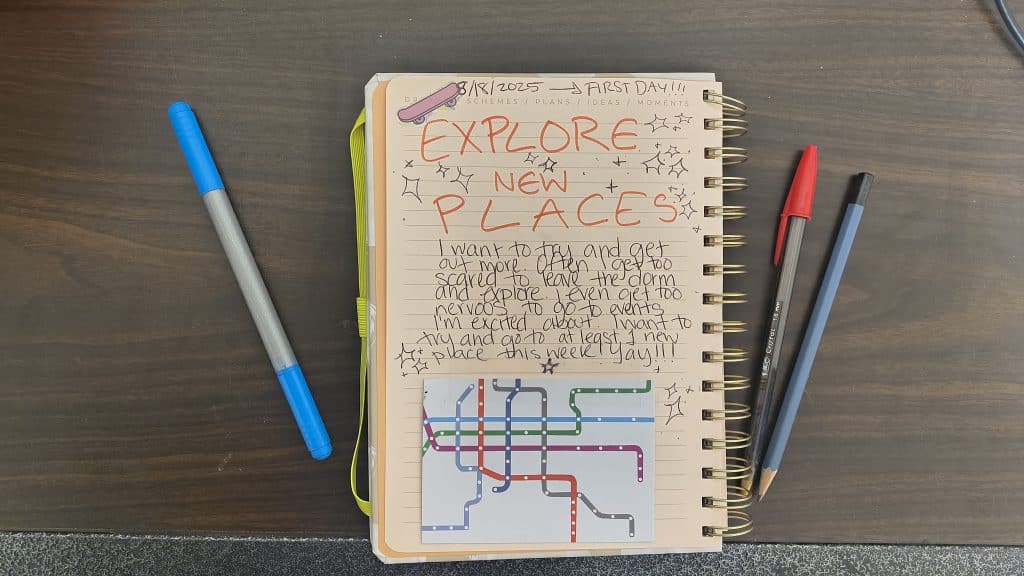
After giving myself time to rest following my first day, I sat at my desk to think about how it went. I noticed that I went straight from class to my dorm instead of attending any events. This thought is what inspired my first page. I created the goal for myself to explore new places on campus while I’m at school instead of focusing solely on academics.
Day two
My second day of journaling went in a different direction than the first. I felt like my first page was a good way to get into the groove, but it lacked inspiration. For my second day, I wanted to incorporate more of what I already had lying around.
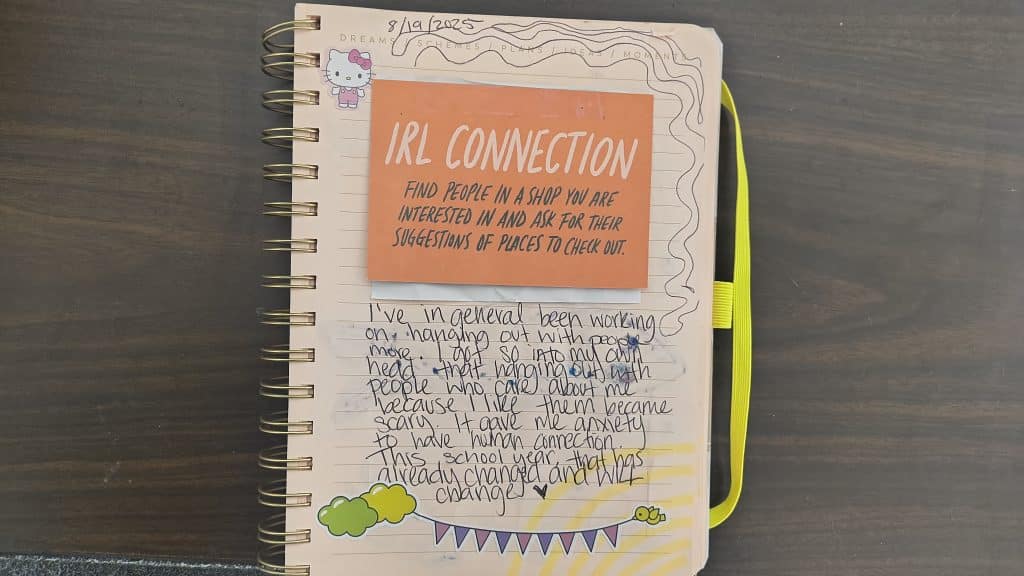
I felt like it was important for me to have a takeaway from the day or a way to remember what I did. So, I included a receipt from an on-campus dining spot I ate at that day.
I also realized that it was easier to remember the thoughts I had at random points in the day when I had something pasted in the journal to jog my memory. Not only did my receipt serve as a great way to add visual interest into my page, but also helped me write how I felt and what I thought in the present.
The remainder of the week
I kept up with my journaling each day until Friday, which came surprisingly easy for me. For each of the remaining days of my experiment, I tried a new technique my book. I was using this special time set aside at the end of the day to try out something new. I figured I could explore different things I could use in a junk journal.
My third and fourth day were spent trying out drawing, writing, and using stickers all at the same time to make fun pages. I tried to relate what I felt like drawing at the time to what I thought about during the day. I didn’t want to let my thoughts dictate everything I had to put into my book.
Journaling on the last day was used to make goals I want to keep for the rest of the book. I wanted longevity out of my junk journal, and creating goals was the best way to do that. Using my junk journal beyond this week of experimentation was the main goal.
Did keeping my journal change what I think?
Overall, my week of junk journaling solidified that I will keep using it. It gave me so much joy to see a finished page with things I collected every day. I never thought I found writing my emotions helpful until I started to include whatever I wanted, not just my emotions.
Junk journaling kept me mindful of what I was keeping to put into my journal instead of keeping or throwing away everything. It also kept my present in my thoughts. It allowed me to consider what I would write down at the end of each day instead of letting thoughts pass.
Struggling to write down what happens in my life was made so much easier by junk journaling. This style helped me stay engaged with each page I created. Everyone needs to try junk journaling, even just to keep as a scrapbook.