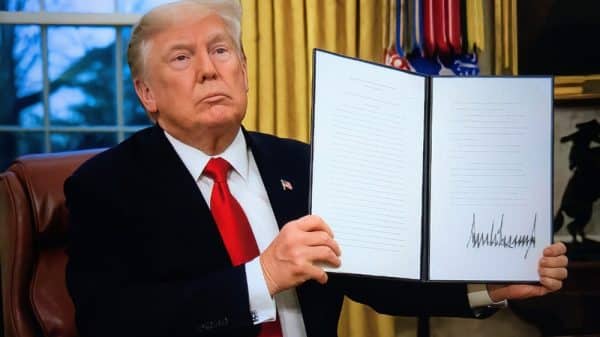
Of Texas’ 38 seats in the House of Representatives, the GOP holds 25. Democrats hold just 12, and one sits vacant. But Donald Trump wants five more Republican seats before the 2026 midterms, and he wants them now.
Trump told members of the Texas Republican congressional delegation that the state would redraw its congressional maps in favor of gaining five new seats for the GOP. The current map, which was drawn in 2020, would traditionally remain until the 2030 census. In keeping with the president’s characteristic uprooting of informal institutional norms, a successful Texas redraw could incentivize other states to do the same.
In anticipation of the GOP-controlled Texas Legislature holding a special legislative session, dozens of Texas Democrats fled the state in order to break the quorum needed to hold the vote. In their absence they faced civil arrest warrants, daily fines and threats of punitive removal from office by Republican lawmakers.
“We can’t win this fight from the House floor, and our loss will directly affect communities of color across the state,” Representative Trey Martinez wrote in an August 18 post on X.
California Gov. Gavin Newsom took a different retaliatory, or rather balancing, stance. Should Texas Republicans successfully gain five House seats in their strategic redraw, Newsom will use a special election to pursue five more seats for California Democrats. He proposes a new legislative package; Californians will vote on a new constitutional amendment, named the Election Rigging Response Act, in a proposed November special election.
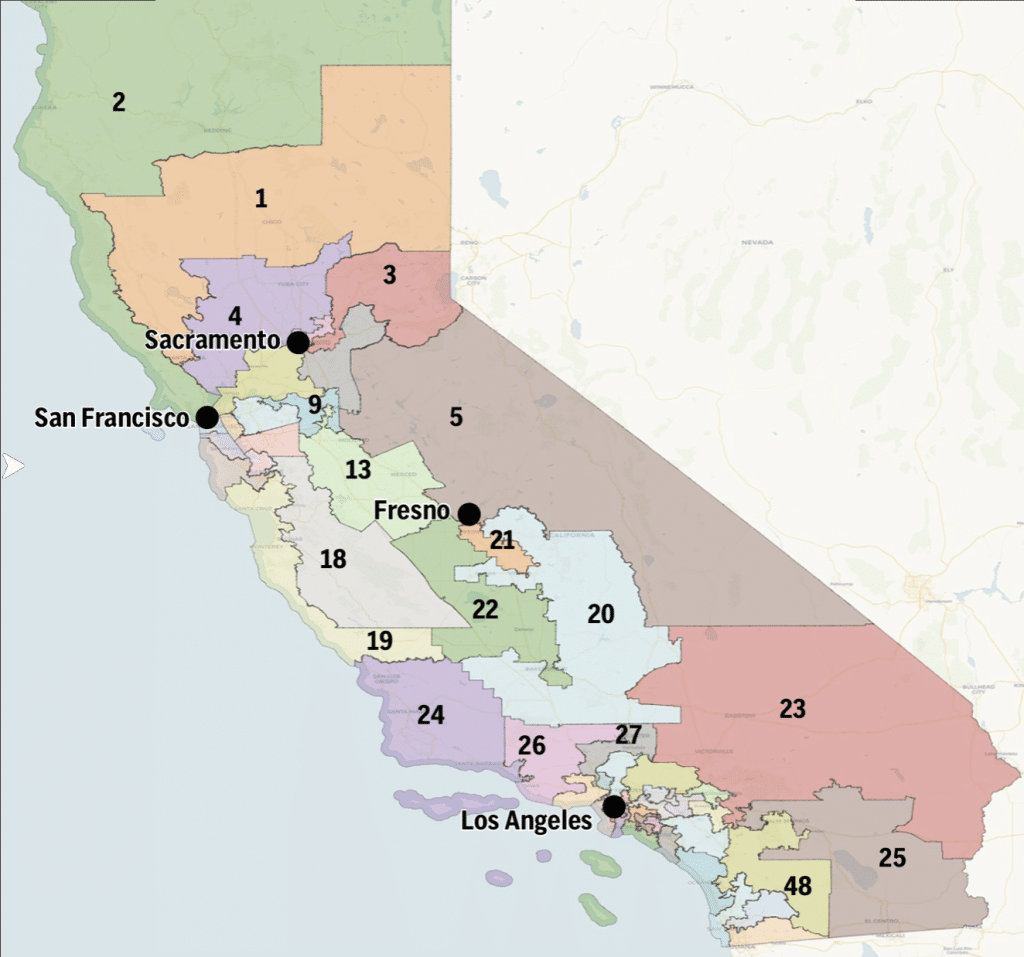
The Election Rigging Response Act keeps California’s current congressional maps — unless Texas or other states move forward with gerrymandered redraws, in which case California will temporarily adopt its own gerrymandered map through the year 2030.
Newsom is urging the Democrats to fight fire with fire, an unusual strategy for the party that often pledges its loyalty to the status quo. Amidst mocking the speech patterns of the president’s caps-locked, informal and often rambling Truth Social posts, the governor is doing much more than poke fun; he’s drawing national attention to Trump’s unconventional politics. He’s signaling that the Democrats, too, can play dirty when it comes to reapportionment. However gerrymandering strips power from the people, no matter who’s doing it, raising the question of whether Newsom picked the right battle.
Reapportionment at the hands of the states
Redistricting typically takes place in order to accommodate demographic shifts. After the census count at the beginning of each decade, it’s up to the states to redistrict as needed, reallocating seats in the House of Representatives based on updated population data. Redrawing falls at the discretion of the states, as long as they maintain roughly the same amount of people per district.

These new maps often face legal challenges, as the criteria for redrawing vary from state to state. Some overlapping principles have been adopted as “traditional” practice across a number of states. Core preservation, for example, refers to preserving the cores of each district from map to map, when practicable. Avoiding incumbent pairing means refraining from pitting multiple incumbents against one another within the same district. Some states have statutes that prohibit the use of both racial and partisan data in the redrawing process.
Federal standards, however, are listed in both the Constitution and the Voting Rights Act of 1965. The Constitution’s Apportionment Clause mandates that districts must be as close to equal in population as possible. The Voting Rights Act’s Equal Protection Clause prohibits both purposeful and inadvertent racial discrimination — vote dilution in the form of redistricting can minimize the votes of a particular minority.
Gerrymandering: A brief history
Redrawing toes the line of gerrymandering when district boundaries are purposefully manipulated, grouping the voting population in such a way that certain politicians are given a leg up. Lawmakers may use this tactic against the opposing political party, or to diminish the voting power of racial minorities.
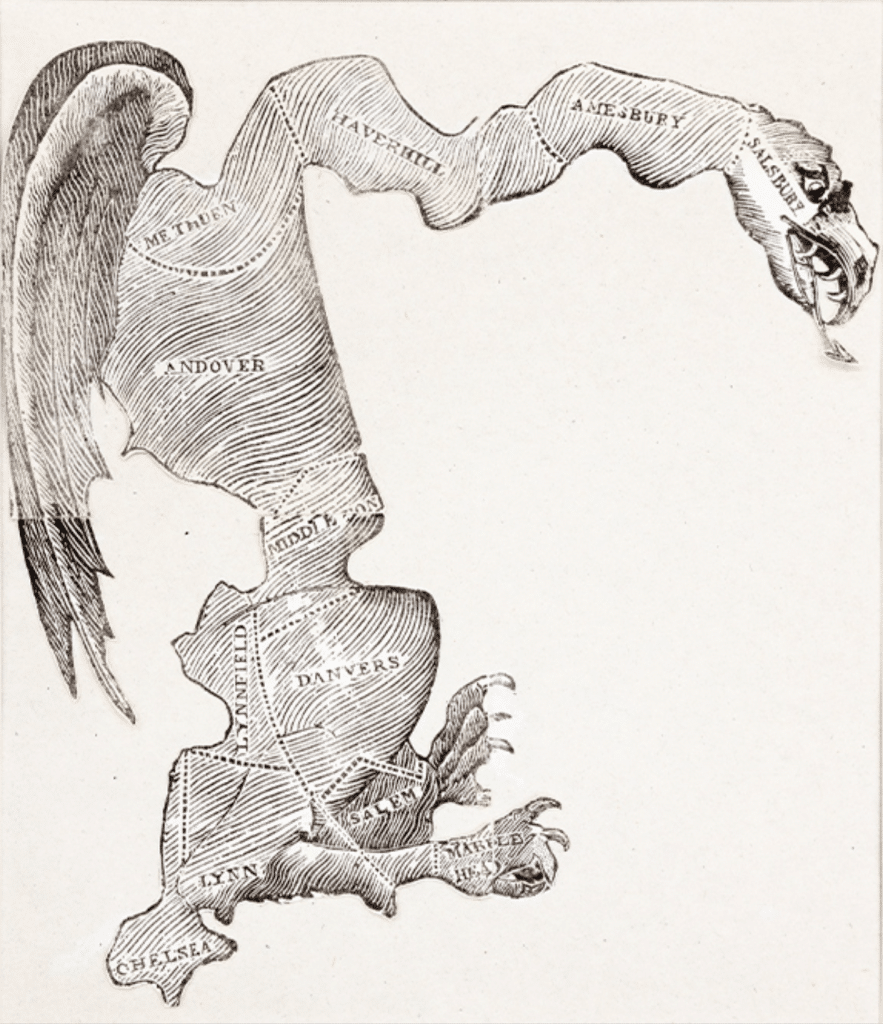
The term “gerrymandering” was first coined in 1812 in the Boston Gazette, when the Massachusetts state senate election districts were redrawn under the supervision of Gov. Elbridge Gerry. The misshapen Essex County district was mocked in a political cartoon for its resemblance to the body of a salamander. Consequently, the responsible Democratic-Republican Party later regained control of the legislature.
Gerrymandering comes in two forms: “packing” and “cracking.” Politicians can “pack” opposing voters into a small number of districts, intentionally minimizing their voting power regardless of population. Or, the redrawer can “crack” rival voters into many separate districts, effectively diluting their poll numbers.
North Carolina, the poster child for gerrymandering
Arguably, the most prevalent example of gerrymandering is the state of North Carolina. In 1991, the U.S. The Department of Justice (DOJ) rejected the state’s congressional map, declaring it to be in violation of the Voting Rights Act. The original plan had only one minority-majority district, which the DOJ determined to be an underrepresentation of the state’s Black population. As a solution, the 1992 redistricting proposal birthed a 12th district, composed predominantly of Black voters, and nicknamed the “I-85” for its long, narrow stretch parallel to the highway.
Republican lawmakers had proposed multiple versions of a map that included a new 12th district. The Democrat-controlled General Assembly reworked one of these plans to favor Democratic voters.
The nature of the 1992 map was challenged in court, and an appeal reached the Supreme Court in the Shaw v. Reno case. The court did not invalidate the proposal on the grounds of violating the Equal Protection Clause, as prompted by the plaintiffs. The majority instead ruled that apportionment, if solely on the grounds of race, is not always unconstitutional, but may be determined as such under certain circumstances. If “narrowly tailored to further a compelling governmental interest,” then racial grouping can be acceptable — in favor of contiguity or with respect for current political subdivisions, for instance.
But gerrymandering controversy in the Tar Heel State didn’t end in the 90s. Rather than being redrawn in succession to each decennial census, North Carolina has been reapportioned multiple times in the last decade alone.
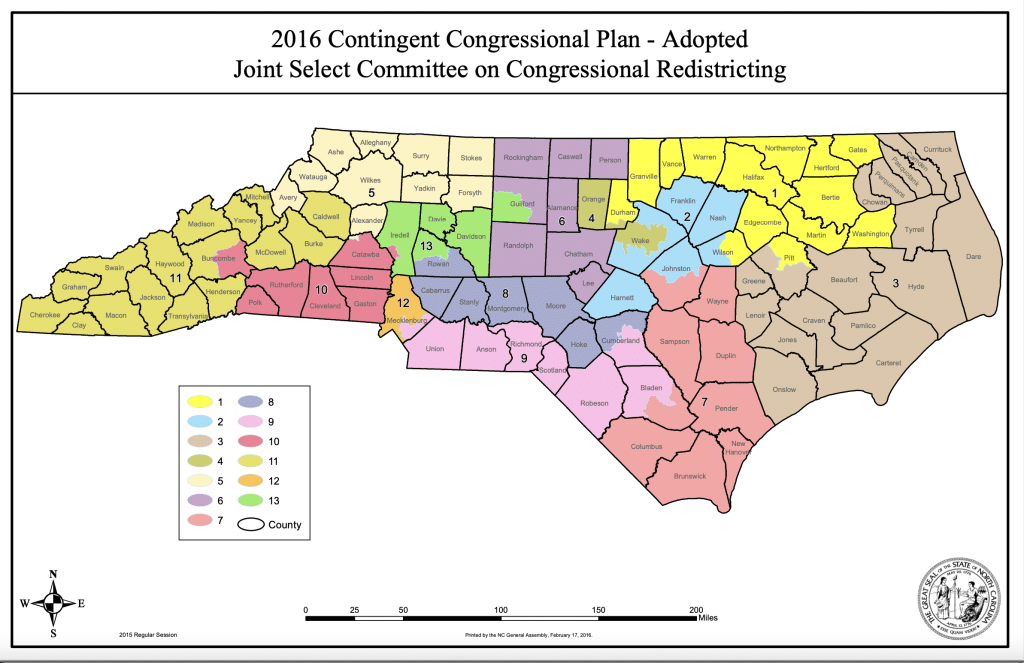
The Republican Party won control of the state’s General Assembly following the 2010 elections, leaving the then Democratic Governor with no veto power over the assembly’s redistricting plans. The Republican assembly then redrew the maps, leading to a 9-4 split in favor of republicans, which would later become a 10-3 split by 2015 — following a previously even split prior to the redistricting. The new map “packed” Democratic voters into the 1st, 4th and 12th Congressional Districts.
The Cooper v. Harris Supreme Court Ruling held the 1st and 12th Districts to be unconstitutional gerrymandering on the basis of race. The Republican General Assembly’s new map maintained the same partisan split as it had before, this time “cracking” the state’s more democratic counties across various districts.
Republican David Lewis, then a North Carolina Representative, said rather infamously, “I think electing Republicans is better than electing Democrats. So I drew this map to help foster what I think is better for the country.”
New maps became another legal battle in 2019, leading to a redraw that flipped two GOP-held seats blue in 2020. The technicalities of racial and partisan gerrymandering in the Tar Heel State have plagued the court system since then.
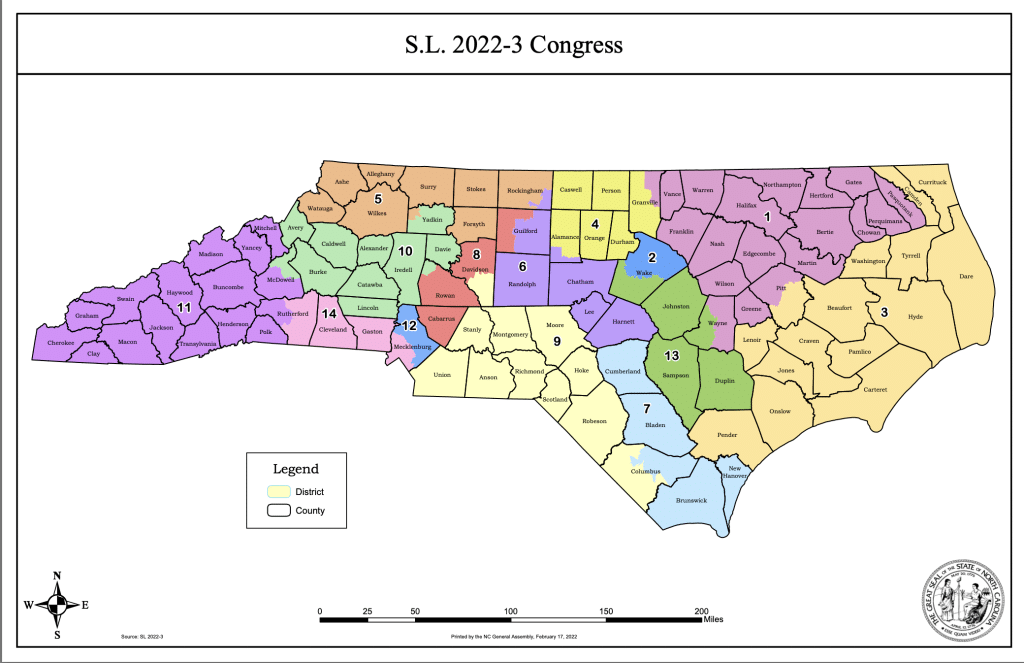
Multiple lawsuits filed in late 2023 accuse the Republican General Assembly of racial gerrymandering in the maps ultimately used in the 2024 election, where a 7-7 split shifted to a 10-4 GOP advantage. Both suits accuse the lawmakers of violating the Voting Rights Act by suppressing Black voting power and amplifying that of Whites.
Newsom’s proposal: Cunning, clever, or reckless?
North Carolina is the United States’ cautionary tale when it comes to gerrymandering. An unconstitutional map can change the outcome of elections long before it’s struck down in the courts. Politicians can’t choose their voters in a democracy—and yet they can, and do.
Is it ethical for Newsom to publicly and egregiously gerrymander California’s maps? At a superficial glance, the answer is no. But Democrats shouldn’t stand idly by while Texas becomes a larger, more consequential North Carolina at the behest of President Trump. Reapportionment is a constitutional power entrusted to the states, independent of the federal government. The executive branch has no place in the redistricting process, gerrymandered or not.
California’s special election is a step in the right direction as far as returning the power of reapportionment to the states and to the voters. Other Democratic leaders should follow in Newson’s footsteps in trying to even the scales in the face of blatant federal overreach.