When Claire Keegan’s political literary/historical fiction novella Small Things Like These was published in 2021, skeptics doubted that such a quiet, slim novella with a decidedly unflashy plot could grab attention. Despite this, the story went on to win the Orwell prize for political fiction in 2022, even getting a major TV adaptation two years later in 2024. It marked one of few times when literary fiction was in the spotlight.
However, Keegan’s novella certainly isn’t an outlier in the genre when it comes to quality. Literary fiction is full of underrated powerhouses that cut deeper than any algorithm-approved bestsellers. Yet too often, the public dismisses the genre as being too “slow,” “boring,” or worse, “pretentious.” Without further ado, we will show why such stereotypes are lazy.
These five new novels published in 2025 prove that literary fiction does not just consist of old classics to be read at school. It’s a dynamic genre that is evolving into an emotionally rich, infinitely flexible, and culturally urgent form of storytelling. If you’re an avid reader willing to be challenged, moved, or even entertained, here are five books you shouldn’t miss.
The Listeners by Maggie Stiefvater
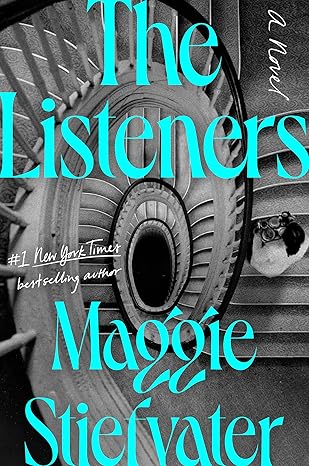
“Maggie Stiefvater has brought her magical prose with her to her first adult novel.” -Associated Press, US News
In The Listeners, Stiefvater strays from her usual forte of YA adventure tales and dives into the shadows of WWII-era America. It’s 1942, and June Porter Hudson, the local girl-turned-general manager, has taken charge of the Avallon Hotel & Spa. However, when her employer strikes a covert deal with the State Department, June becomes a hostess to a prison of Axis diplomats. She must walk the lines of danger, luxury, tension, and delight. All the while, FBI agent Tucker Minnick treads the marble hallways and lurks in the shadows to discover the Axis diplomats’ secrets. Will June be able to balance her loyalty to the state with her service to the hotel?
What makes The Listeners stand out is its magical prose. There’s something enchanting in the way Stiefvater spins a sentence, turning ration books and empty guest rooms into something haunted, holy, and impossibly alive. And while the world has seen, and will continue to see countless WWII stories, The Listeners leans into the quiet casualties. It captures just how intrusive war can be. Men are drafted, families are torn apart, and rations are enforced. This isn’t just history told from the outside in; it’s war as an invasion of the self.
The Listeners stands at the crossroads of historical and literary fiction. For readers drawn to that delicate blend, The Phoenix Pencil Company by Allison King is a must. King also tells a dramatic, tension-filled story where two women must survive the brutality of WWII. The Names by Florence Knapp is quieter but just as piercing, with a compelling tale of human conflict set in the hallways of history.
The River is Waiting by Wally Lamb
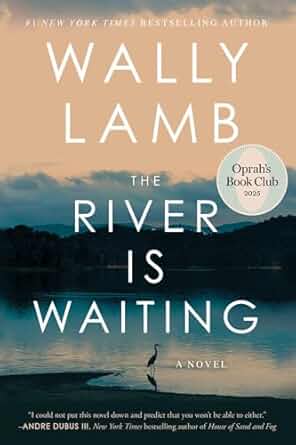
“Clearly, the story Lamb tells here is informed by his many years as a writing teacher in the York Correctional Institution in Niantic, Connecticut. He offers portraits of kind and thoughtful people both trapped and employed in these surreal realms.” -Ron Charles, The Washington Post
Corby Ledbetter had everything to lose, and he lost it all on one tragic night. A father hollowed out by a hidden addiction, he crosses an unforgivable line when he kills his own son. He then enters a prison where violence speaks louder than words. Or so he thinks. Yes, there are acts of unspeakable violence and brutality. However, he also finds peace in unexpected corners. A shared meal, a smuggled letter, or even a bruised hand offering comfort. Over time, Corby grapples with one crucial question: Can he ever seek redemption? The River is Waiting is an intimate portrait of ruin, reckoning, and amidst it all, a fragile thread of hope.
The novel doesn’t ask easy questions; it dares you to sit with unbearable debates. How much punishment is enough when the real sentence is living with yourself? Can a man rebuild anything from the ashes of that kind of ruin? Corby killed his son. But what comes after — every echo in the old prison walls, every hallway screaming with guilt — is the true core of the story.

If The River is Waiting left a mark, don’t miss The Bright Years by Sarah Damoff. Damoff, just like Lamb, weaves a quiet storm of memory, loss, and fractured family bonds. Then there’s The Correspondent by Virginia Evans, a haunting portrait of grief and guilt told through letters never meant to be read. Heavy, human, and unforgettable, these stories belong on the same shelf.
The Poppy Fields by Nikki Erlick
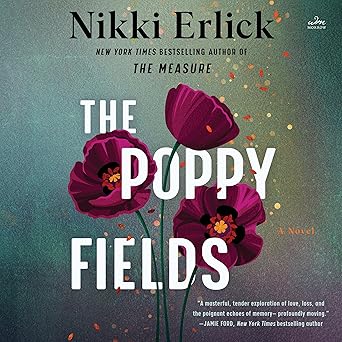
“This is the kind of book that makes readers speculate what they might do if given such a choice. Like The Measure, The Poppy Fields is more about the human condition and less about science.” –Jim Alkon, BookTrib
The Poppy Fields is an enchanting concoction of speculative fiction and raw human truth. The line between cure and curse is never quite clear — both for the readers and the characters. In the blistering silence of the California desert, The Poppy Fields blooms with an uneasy promise. Five strangers, each with a different unspeakable pain, find a home at a new healing center: Ava (a book illustrator), Ray (a fireman), Sasha (an occupational therapist), Sky (a free spirit), and PJ (a pup). Their paths intertwine, and all of them must answer the question: How far will you go to stop hurting? Within the sun-drenched walls of the center, they must decide if the treatment that the facility offers is mercy or cruelty.
The Poppy Fields doesn’t shout sci-fi; it hums it. The premise — the high-concept future tech and the experiments that follow — aren’t the Erlick’s interests. It’s the human experience that accompanies it. Ava, Ray, Sasha, and Sky’s stories unravel and bloom like the flowers in the Californian desert, and it’s the small scars, small moments, and small anecdotes that pull readers in.
If you love melancholy tales of loss and tragedy, try The Poppy Fields, as well as Between the Devil and the Deep Blue Sea by Jessica Guerrieri and Forever and Back by Ashley Manley. Guerrieri’s novel peels back grief with a woman’s regret of motherhood and mourning for lost dreams. On a similar note, Manley’s novel is a brewing storm of memory, remorse, and the ache of what might have been.
What Kind of Paradise by Janelle Brown
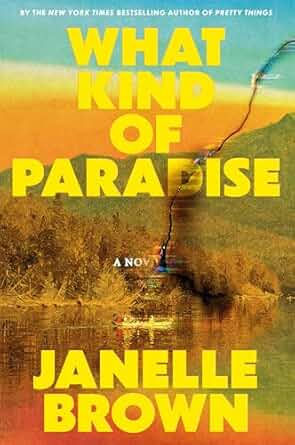
“What Kind of Paradise is a brilliant, thought-provoking literary tour de force that kept me questioning until the very end.” –Suzannah Bentley, Book of the Month
At the surface, the story of What Kind of Paradise appears to be a typical teen drama. Jane, seventeen, angry and trapped, bolts from her father’s rigid Montana ranch to her mother’s chaotic life in San Francisco. She chases freedom and searches for her true self in a typical tale of self discovery. But the truth is, Jane isn’t just running away from abstract things like teen problems. Rather, she’s running away from something — and that something is actively dangerous. Something hidden in the silence of her childhood, in the way her father watches her, in the lies no one ever dared to question. As her cross-country journey unfolds, fragments of the past resurface — unnerving, dangerous and impossible to ignore. What Kind of Paradise, is in fact no paradise. It’s a reckoning, and once Jane starts asking questions, there’s no going back.
What Kind of Paradise lures readers in with the restless pulse of the mid-90s: the sun-faded denim, the mixtapes, the smell of summer sweat, and the payphone static. Jane’s journey feels like a road trip movie — until it doesn’t. The past creeps in and leaves fingerprints on everything that Jane touches. The setting isn’t a mere backdrop; it’s a crucial character that feels alive; a pre-digital America, where secrets linger in locked drawers and banished memories.
If What Kind of Paradise left you reeling, don’t stop there. Julie Clark’s The Ghost Writer spins a web of deceit where truth is a weapon and every page cuts deeper than the last. Try Alex North’s The Man Made of Smoke next. It digs into trauma, legacy, and the horrors we inherit. Both books, like Brown’s, don’t just reveal darkness — they drag you through it.
The Stolen Life of Colette Marceau by Kristin Harmel
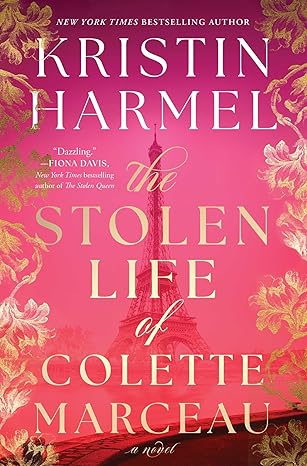
“As in her other popular World War II–set reads, Harmel (The Paris Daughter) ultimately delivers an emotional tale with likable characters and a feel-good ending.” –Mara Bandy Fass, Library Journal
Like The Listener, The Stolen Life of Colette Marceau circles WWII, but Harmel probes its shadows instead of the actual event. Colette Marceau lost all her family in 1942. The wave of German arrests seizes her family from her side, leaving her lonelier than she’s ever been. Seventy years later, she believes that the past is done. She’s wrong. When the same jewels turn up in a Boston museum exhibit, her life is completely upended. Old wounds are ripped open, and a search ignites. She is pulled into the labyrinths of memory, betrayal, and silence. What really happened that night? Who betrayed whom? And what price must be paid for answers?
The Stolen Life of Colette Marceau doesn’t march through war; it lingers in the shadows. The setting isn’t defined by the loud gunshots that pierce the skies. Its about what happens when the dust settles. The result? A novel that speaks louder in whispers than most do in warfare. Readers are drawn in by the dual timelines, yes, but they stay for the emotional excavation. For the quiet moments that sting more than any explosion.
Fans of historical literary fiction will find more to love beyond Colette’s story. Mary Alice Monroe’s Where the Rivers Merge follows the tale of multiple generations, their lives reshaped by the weight of memory in a post-war American South. Claire Keegan’s Small Things Like These (as previously mentioned) is a gut-wrenching look at buried truths in 1980s Ireland, where the past haunts the present. Both stories, like Harmel’s, investigate what happens after the history books close.
Why literary fiction still matters perhaps more than ever
When done right, literary fiction is a poignant genre that adapts to different emotions, furthers empathy, and enriches the human experience. It entreats readers to enjoy life instead of racing through it. In an age of fast-paced social media content, that’s no easy task.
Most importantly, the genre keeps on thriving. The current wave includes historical fiction that links personal drama to grand, landmark moments in textbooks. Autofiction that blurs life and art. Diasporic narratives that resist easy assimilation stories. Such trends confirm that the genre isn’t fading; it is proudly keeping its foot planted in a constantly shifting world.
Don’t just stick to these five books or the bestsellers. Take the time to slowly stroll across the genre’s catalog. After all, isn’t that what literacy fiction is about?