Dracula Daily is a free Substack subscription that emails the classic novel Dracula to subscribers “in real time.” Sounds simple enough. But why does it have such mass appeal for its over 240,000 subscribers? And why have people kept reading year after year?
To begin with, let’s talk Dracula. Even if you haven’t read it, you likely already have a vague idea about Bram Stoker’s classic story and its whole deal. Dracula is the most recognizable piece of vampire fiction of all time, after all. Most of our modern conceptions and myths about vampires come from this book (and its numerous film adaptations).
But one thing you may not know if you haven’t read the original story is that Dracula is an epistolary novel. Basically, the whole plot is told through a series of letters and journal entries. And each of these entries takes place on a specific date between May 3rd and November 7th — the timeframe of Dracula‘s plot. So, you could, in theory, experience the story “in real time” by reading each fictional journal entry on the actual day that it occurs.
Dracula Daily: Origins
This was the exact thinking of Dracula Daily’s creator, Matt Kirkland. Devised in 2021, the email newsletter version of the novel was inspired by a similar reading activity that Kirkland did with his daughter. From there, the online book club grew in numbers.
2022, the second year of Dracula Daily, saw a dramatic increase in newsletter participation. This was all thanks to Tumblr, the origin for many a niche internet trend. From 1,600 Dracula readers in 2021 to 200,000 the next year, the introduction of Kirkland’s project to Tumblr users was all it took to create a uniquely gothic cultural moment. From there, Dracula Daily took off on other social media platforms (such as Twitter and Reddit), though Tumblr was always home to its most dedicated fanbase.
Emails From Jonathan
One of the many instant appeals of the Dracula newsletter was its personal feel. Getting emails was suddenly fun (instead of tedious) when they came from Jonathan Harker, the protagonist of the novel.
For individuals who had never read the book before, the initial emails felt very much like an entertaining personal correspondence from Jonathan. Of course, there was a great deal of hilarity that came along with that. Because Dracula is such a cultural powerhouse of horror fiction, readers knew that something was definitely going to go wrong for Jonathan on his trip to Transylvania. Perhaps something involving his totally-not-suspicious new friend Count Dracula?
However, because this was myriad readers’ first time with the actual novel, there was still a sense of mystery regarding the plot. Of course, everyone knows Count Dracula is a vampire. But how do the characters find out? Who survives the story? And do our heroes defeat the Count, or does he defeat them? Dracula Daily revealed that, while most people have a passing familiarity with the story, there are several elements of the plot that pop culture overlooks.

For example: Did you know one of the secondary protagonists is a cowboy from Texas? I bet you didn’t.
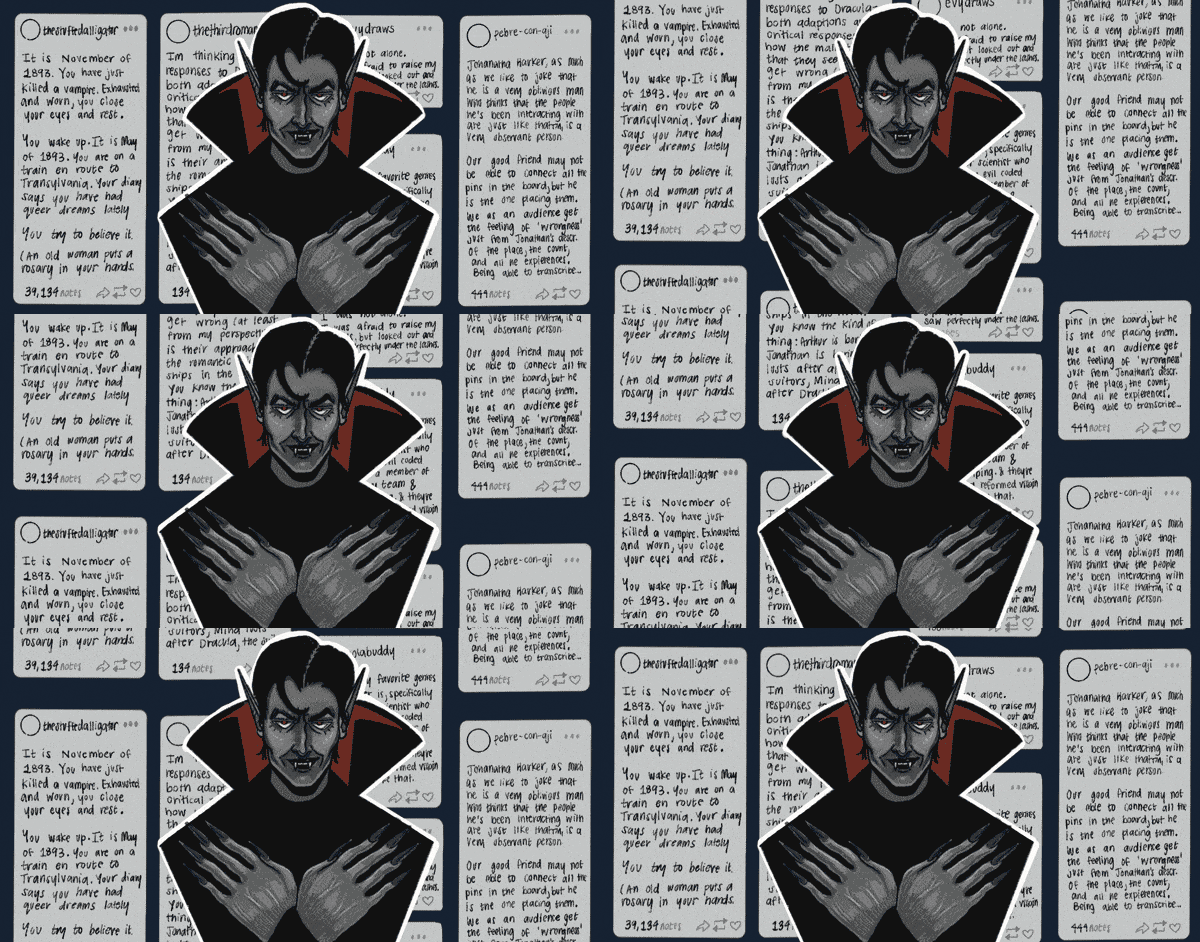
The suspense created by daily (or longer) gaps between sections of the story also kept readers engaged long-term. Because the emails themselves are pretty short, reading Dracula at this pace doesn’t feel like reading an entire novel. It feels, as many people on social media pointed out (see the Tumblr post above), like getting updates from a pen pal.
A Long-Term Fandom
In 2022, with every new Dracula email came a flurry of memes, fanart, and literary analysis online. A sense of community (and a strict no-spoilers rule) miraculously developed around a novel that came out 125 years ago.
After Dracula Daily’s pop-culture boom in its second year, an abundance of readers returned to experience the story again in 2023. Though consecutive runs of these yearly Dracula emails didn’t garner quite as much social media buzz as the 2022 run, Dracula Daily had now secured a loyal group of fans willing to return time and time again. (I myself am reading about Jonathan Harker’s journey for the fourth time in 2025.)
The communal aspect of the Dracula experience certainly hasn’t gone away in the past few years. Between May and November, on days that have Dracula updates, you can still reliably find fans discussing, drawing, and joking about that day’s events on Twitter and Tumblr. So if you’re thinking about trying the newsletter out for yourself, you’ll still get that internet book-club experience.
May 24: Our Miss Lucy Westenra is quite popular#Dracula #draculadaily pic.twitter.com/qsvqLBg7ky
— Keefers🦌 (@keeferonies_art) May 24, 2025
The Best of Dracula Daily
Thanks to Matt Kirkland, a lot of great supplementary content surrounding Dracula has been created in the past few years. Here are some of the highlights:
Podcast Edition
If reading emails isn’t your thing, never fear! You can experience Dracula Daily as a podcast too. Re: Dracula is an audio drama featuring performances by a stellar cast. It follows the same format as Dracula Daily, releasing short episodes on days that have Dracula entries. It also includes original songs like “Bite” by Newton Schottelkotte.
Louie Zong’s “Oh, Dracula.”
Speaking of songs, in 2022, illustrator and musician Louie Zong (known for quirky lo-fi tunes such as “Ghost Duet“) released a Dracula-themed piece in celebration of Kirkland’s newsletter. Though “Oh, Dracula” is only available on Tumblr, it’s definitely worth a listen. It combines the best of Zong’s signature style with humorous references to the initial chapters of Stoker’s novel.
Print Copy: Memes Included!
In 2023, Matt Kirkland released a printed version of Dracula Daily. The text of the novel is arranged in the chronological format of the original emails, but that’s not all. This physical edition incorporates “commentary by the internet,” meaning that the very best of initial fan reactions, jokes, and art from social media can be found in one place — as annotations throughout the book.
Fan Analysis and Creative Reinterpretation
Of course, fans are still constantly generating content surrounding both the story and the newsletter. You never know how readers will next choose to interact with a work of fiction. For example, in a popular Tumblr thread from 2024, Dracula Daily readers reimagined the story as a time-loop, inspired by the annual repetition of this digital book club.
Dracula is a tale that has been told time and time again. But as shown here, there truly are infinite ways to reinvent a classic.
Should you sign up?
2025’s Dracula Daily has already been going for a month now, but it’s never too late to jump in. I’d personally recommend the aforementioned Re: Dracula podcast as an easy way to get caught up on the story so far. So don’t be shy, join the book club!