


Esperanto–spoken by about two million people–is arguably the most successful artificial language in the world. The language-learning platform Duolingo, Internet communities, and various organizations are contributing to its accessibility and popularity.
How Esperanto Came to Life
In 1887, a young Polish-Jewish medical doctor, Ludwik Lazar Zamenhof, published a Russian-language booklet in Warsaw, Poland, that contained some guidelines for an international language that he invented.
From the beginning, Esperanto was a truly global language. A polyglot, Zamenhof spoke Yiddish (which he attempted to standardize), Polish, German, and Russian since his childhood, and also learned several other languages over the course of his life. Zamenhof intended to develop a language that would be universal. Yiddish and Esperanto, for example, share many traits: various grammar, vocabulary, and style aspects from European languages. Moreover, both of them were hybrid languages and lingua francas — Yiddish as the language of Ashkenazi Jews who live all across the world, Esperanto as a language constructed for international use. The first Esperanto textbook for Yiddish speakers was released only a year after Zamenhof’s publication.
The Simpler the Better: the Structure of Esperanto
Esperanto was invented to be simple. It uses the Latin script, which contains special letters with diacritical marks (such as ĝ). Pronunciation and spelling are the same. The roots of its vocabulary, which is largely based on Romance languages, are present in many tongues. That is why English speakers can recognize words such as universitato (university), teatro (theater), or telefono (telephone).
The similar characteristic word endings for nouns, verbs of different tenses, and adjectives. As we’ve already seen, nouns generally end with -o and have no gender. All verbs are regular and not inflected by person or number (mi dormas — I sleep, ili dormas — they sleep).
Linguistic Justice and Eurocentrism
The Universal Esperanto Association (UEA) advocates learning two, three, or four languages, the fourth being Esperanto — a language “that does not belong to any nation“. In this framework, Esperanto is considered a means of linguistic justice.
– UEA
While the methods of Esperanto could help minority languages stay obscure, linguistic justice and ethnic neutrality remain at the heart of the movement. Zamenhof stated that Esperanto belongs to all humanity.
Esperanto, with its vocabulary largely based on European languages, has been criticized for Eurocentrism. While this concern is reasonable, the grammatical structure of Esperanto has similarities with Swahili, Turkic languages, and Japanese. An example of this is the presence of the accusative case in the language.

In the twentieth century, Esperanto was also welcomed on the African continent. It was seen as a better alternative to the languages of the European colonizers. It also reflected the hopes of post-independence Africans for an end to linguistic and societal divisions across the continent.
Censorship and Decline
Totalitarian regimes of Stalin’s Soviet Union and Nazi Germany prohibited Esperanto. Afterwards, it became popular in post-war China and Eastern Europe: the governments recognized the need for mutual understanding, but exercised caution toward English, which, in their eyes, could promote American ideology.
Although Esperanto did not become the world language as Zamenhof hoped, its rich history and strong communities still attract language learners. In modern times, various associations of Esperantists keep their doors open to the general public.
An Equal Culture?
Artists from all over the world embraced Esperanto, leaning into the creative freedom it brings. While English became the world’s dominant language, Esperanto offered a space free of judgement: most of the speakers are non-natives, and everyone speaks it with an accent. At the same time, inequalities are not entirely foreign to the Esperanto movement. For instance, women remain underrepresented in historical records despite their large contributions to the movement.
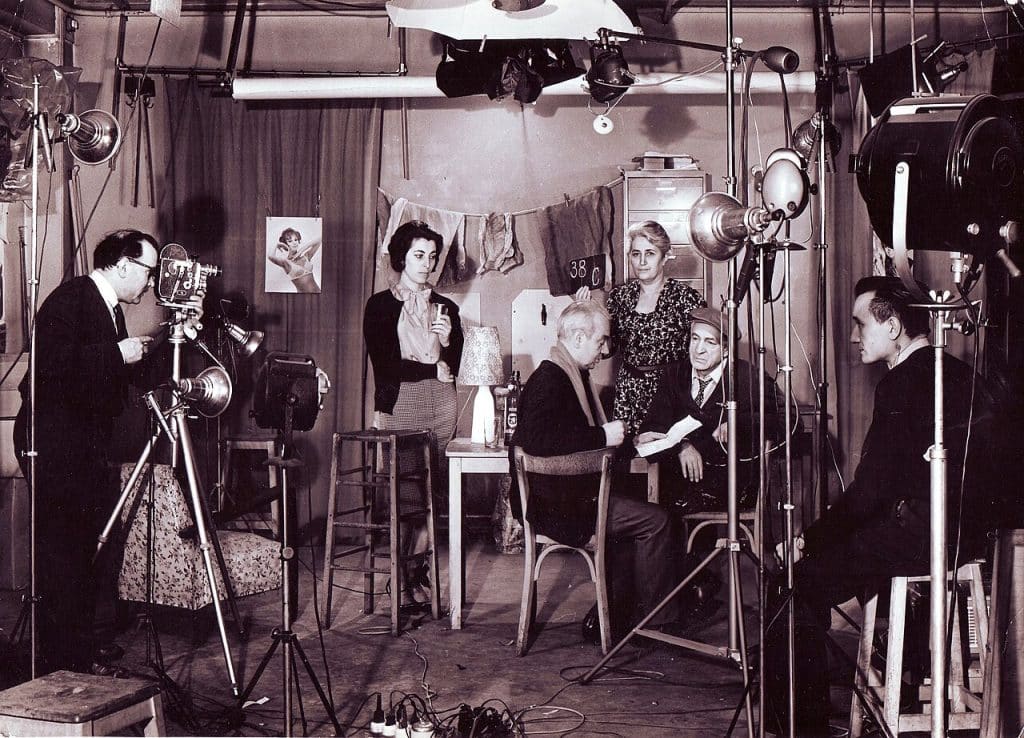
The first movie produced in Esperanto came out in 1964. The title, Angoroj, translates as “Agonies”. It is a crime story written and directed by a French filmmaker, Jacques-Louis Mahé. The film is set near Paris, where an unexpected murder happens.
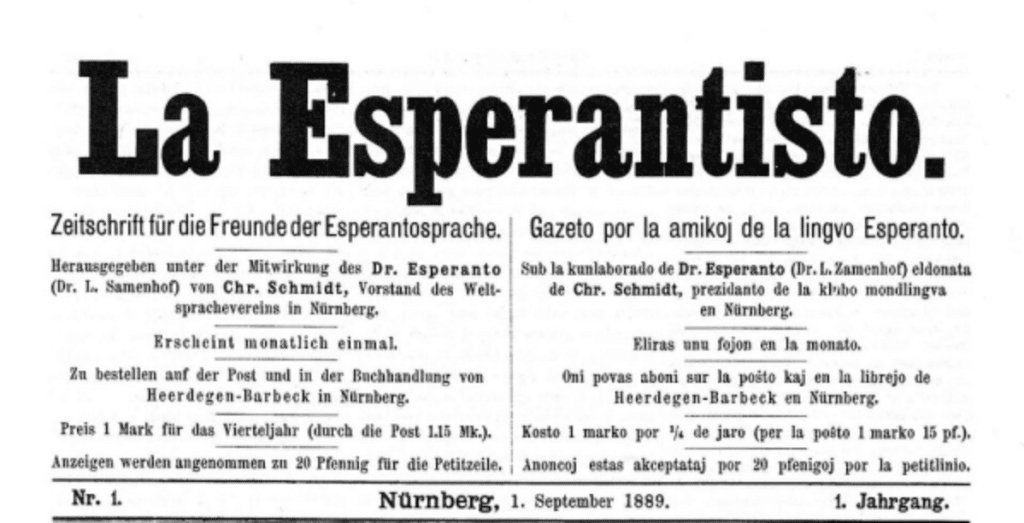
In addition, media and magazines are published in the language. The first periodical, La Esperantisto, was published from 1889 to 1895. Today, Esperanto Associations and enthusiasts produce various media for regional and international audiences.
Esperanto Literature
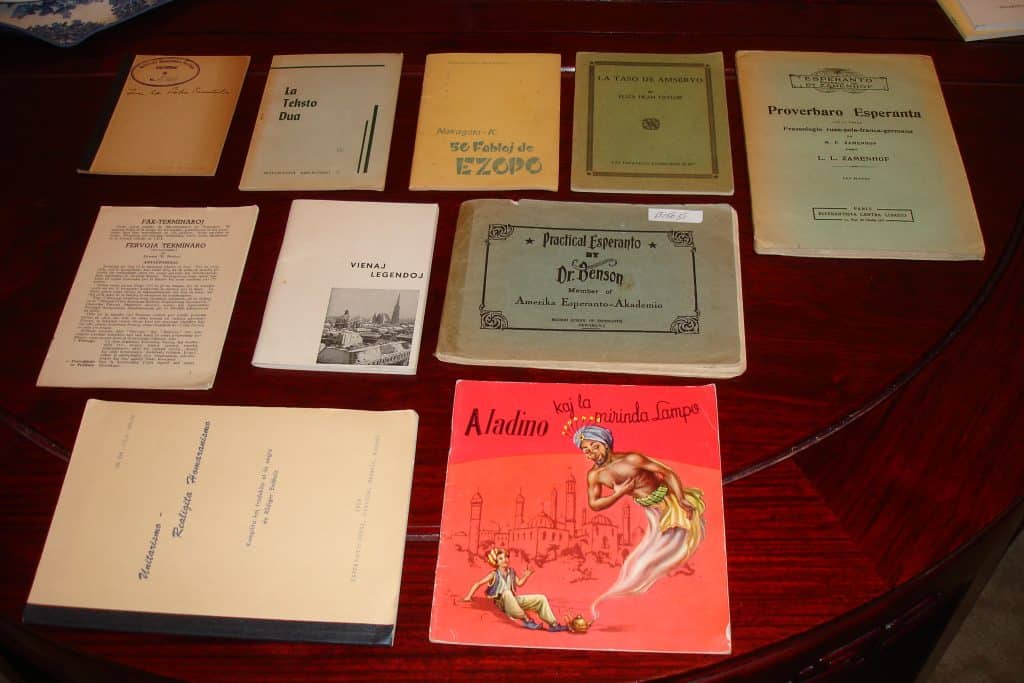
According to Ulrich Becker, the editor at Mondial, Esperanto literature is not too different from national literatures. However, Esperanto authors need to have “the entire world in mind“, bringing in more context to help people from all across the globe to understand their writing. Moreover, Esperanto authors use Esperanto as their second language, which requires “a lot more linguistic effort” on their behalf — “A lot of looking up in the dictionaries, a lot of consultations with others to make sure it is really perfect Esperanto what you are writing.”
Reading in Esperanto made him discover books from smaller countries such as Hungary, Poland, or South Korea, as “the number of Esperanto books is relatively limited in comparison with national literatures“.
A Few Misconceptions
Becker explained that, contrary to the widespread stereotype, it is not true that all Esperanto speakers have the same worldview. He said “a lot of political discussions” existed in the Esperanto world, but the main difference lay in the fact that people learn Esperanto to speak with foreigners: “Nobody learns Esperanto because he hates immigrants or foreigners; that doesn’t exist. That is one group of
people that does not exist in the world of Esperanto. And that is also reflected in the literature. It tends to be more centrist or leftist in general“.
However, he also admitted that ideological pressure exists in the world of Esperanto. There are some “definitions of what the soul of Esperanto is the meaning and the purpose of Esperanto… But at the end of the day, every Esperanto speaker has his or her own life experience and looks at the language differently and uses it for different purposes. But the global aspect and the desire to have contact with other cultures all the time, that is generally common with everyone“.
Lost in Translation
As Becker explained, “The big misconception is that Esperanto, because it’s artificial, cannot be as expressive as national languages. But I completely disagree”.
The notion that it’s an artificial language, or was an artificial language at the beginning, makes people think that the quality of […] literary texts cannot be as good as [that of] national literatures. And that was probably true for the first few decades of Esperanto, but you can express things in Esperanto that would be very hard to translate into any other language.
– Ulrich Becker
An example of an expression only used in Esperanto that Becker gave is “ne krokodilu” (roughly translated as “stop speaking your crocodile language”), used to lightly tease the people who are speaking their native language in Esperanto settings.
He also mentioned that hundreds of proverbs and sayings exist in Esperanto, many of which were initially translated from other languages by Zamenhof.
Becker emphasized that the way a person feels when reading in the language depends on their level of Esperanto. As a very experienced Esperanto speaker, he feels no difference between speaking it and the other languages he uses in his daily life.
“It is true that if you write in Esperanto, if you publish in Esperanto, you don’t do it
for the money“, he said. He explained that the process of publishing literature in Esperanto is similar to the publishing process of books in other languages. However, there is an exception, since manuscripts need to be read by an Esperanto speaker who does not share the author’s and editor’s cultural and linguistic background “for international understanding“.
Achieving Mastery
Becker also admitted that there are many bad translations in Esperanto. “Many people who learn Esperanto, after six months, think they can now translate. That is, of course… it’s a good exercise if you do it, but it is not publishable“.
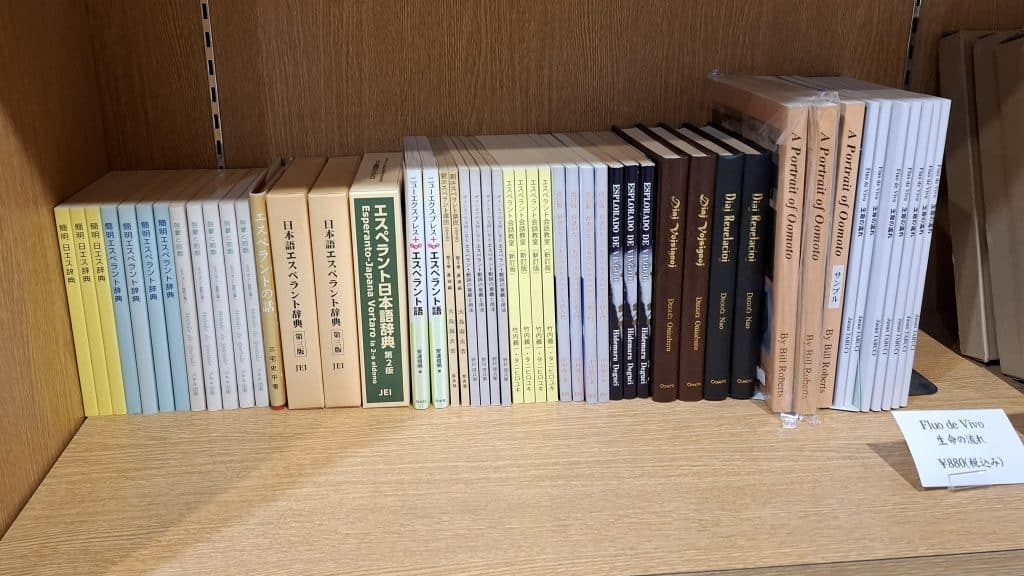
In Mondial, the books that sell the most are dictionaries and Esperanto textbooks. A short 100-word storybook was popular, as well. “I think the success of this book is mostly because many people have problems reading long, complicated texts in Esperanto just like in all other languages“, Becker said. “You have to keep studying Esperanto […] to become really fluent and know your vocabulary”.
Another Esperanto book that sold well is a comic book. Becker expressed that many people who learned Esperanto might struggle with reading since learners need years of practice to truly master the language.
“It takes just as big as an effort to study Esperanto in a deep way like other languages. Except that the grammar is easier”.