“Obsession” and “Backrooms” have both proved hugely successful, but what specifically can their popularity be attributed to? In what ways did these films speak to Gen Z enough to get them to theaters, and what can future movies learn from these new directors?
While these movies explore different themes, aesthetics, and scare tactics, they bear many similarities. Both are low budget projects with very young directors, and both explore horror through unique lenses. Each of these films presented audiences with something that felt creative, bold, and new – traits that drove Gen Z to theaters, despite concerns that this generation prefers to stream movies at home.
To understand it, we’ll take a look at four important aspects that I believe made these movies huge hits – starting with the people who created them.
1) Gen Z Directors
“The Backrooms” is an idea that most of Gen Z is familiar with to some degree. A story built from an accumulation of internet lore, it explores the idea of an endless maze of liminal spaces dominated by faded wallpaper, buzzing fluorescents, and an abandoned corporate feel.
“If you’re not careful and you no-clip out of reality in the wrong areas, you’ll end up in the Backrooms, where it’s nothing but the stink of old moist carpet, the madness of the mono-yellow, the endless background noise of the fluorescent-yellow lights, at maximum hum-buzz, and approximately six hundred million square miles of randomly segmented empty rooms to be trapped in.”
– Anonymous 4chan user describing the “Backrooms”
The story originated from a 4chan post made in 2019 that shows an ominous yellow room with an odd layout that extends out of sight.
From this one post, people began expanding on the lore. One of these creators was Kane Parsons, a teenage YouTuber who started making videos about the backrooms. Now, having just turned 21 years old, he is the director of a full-length movie on the topic.

(Between Parson’s contribution and the more general internet lore, there’s a lot of context. If you’re looking for a deep dive, check out our more extensive article about the backrooms here.)
Curry Barker, just five years older, is the creator of “Obsession.” Like Parsons, he had plenty of experience creating content to post online. Barker and his friend Cooper Tomlinson (who plays Ian in “Obsession”) created YouTube videos for their account @thats_a_bad_idea, as well as shorter comedy skits on TikTok.
“Obsession” first premiered last year at the Toronto International Film Festival and was later bought by Focus Features for $15 million. After hitting theaters, it did even better in its second week than its first – a rare feat.
Neither of these directors had any prior experience directing movies. What they did have was a good grasp on how to hook audiences, present compelling narratives, and push ideas to new and interesting extremes.
Because of their passion and creativity, they built a dedicated audience of fans who were invested in their work. So, despite being first-time directors, they were already known by many of the people who bought tickets to see their films.
But Parsons and Barker weren’t the only new faces in these movies. Another aspect that I believe contributed to the success of “Backrooms” and “Obsession” was their casts.
2) The Cast
While it might have been “safe” to cast actors like Jenna Ortega or Mia Goth, who are well established in the horror genre, it was refreshing to see lesser known faces on screen.
Chiwetel Ejiofor
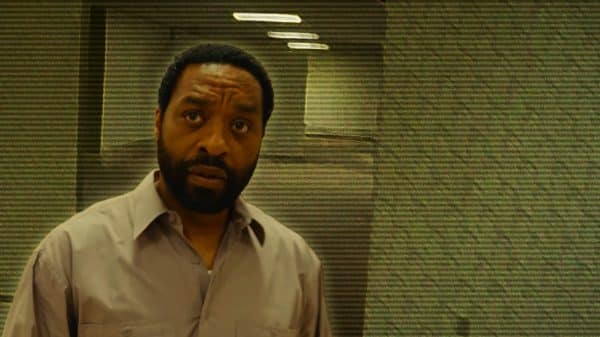
Ejiofor, who plays furniture store owner Clark in the Backrooms, is best known for his role in 12 Years a Slave. His performance led him to a BAFTA win and an Academy Award nomination. While he has been in some sci-fi and dystopian films before, this is his first real step into the horror genre.
Renate Reinsve
Reinsve plays the therapist Dr. Mary Kline, who ends up on a mission to try and save Clark from his own self-inflicted misery. Like Ejiofor, she’d been in a handful of films before, but none horror related.
Her exceptional talent in “Backrooms” shows why she is the first Norwegian performer to win the Cannes Best Actress award for her role in Worst Person in the World in 2021.
Inde Navarrette
Navarrette, who played Nikki in “Obsession,” had very little acting experience prior to this film. Even after her role as Nikki, a long 18 months passed before she landed another acting job. She spent the time walking dogs and streaming video games to provide a source of income.
Michael Johnston
While having some on-screen acting experience (such as Teen Wolf, Slash, S.W.A.T. and more), a lot of Johnston’s work includes voice acting for video games. He does an incredible job playing Bear in “Obsession” and while he seems shy and chill toward the start of the movie, you soon realize that his quiet is not to be mistaken for self-reflection.
3) Realistic fears
Bear’s quiet demeanor was one of the first things I noticed about him while watching the film. He initially comes off as very reserved, self-conscious, and shy. Watching the film in theaters with my friend, I remember whispering to her that Bear reminded me of another mutual friend we have. (As the movie progressed, it became clear that Bear isn’t actually like this friend at all – thank goodness.)
In “Obsession”: Lack of autonomy
Crushes are only natural, but “Obsession” explores what happens when this sort of infatuation mixes with a strong sense of entitlement and lack of respect for how the other person feels.
When Bear uses a “One-Wish-Willow” to make Nikki – his friend, co-worker, and crush – fall in love with him, he strips her of all autonomy. At times we see the real Nikki through the cracks… but no matter how many times she begs Bear to stop, he doesn’t.
This leads to Bear using Nikki almost like a doll – pretty to have around, but lacking in free will. Because the “love” she feels for him isn’t real, and she’s completely trapped by the situation, she doesn’t act the way she normally would. She injures herself, behaves in extremely abnormal ways, expresses jealousy of other girls, and is overbearingly clingy to Bear.
This alarms him, so when the opportunity arises to sneak out at night and meet up with another girl in a park, that’s exactly what he does. In short, Nikki is not only trapped, stripped of her own autonomy (and assaulted because of it), but abandoned as well once Bear realizes that this isn’t what he wanted.
In “Obsession”: Abusive relationships
When Bear’s selfishness ultimately ends in the destruction of himself and all his former friends but Nikki, she is all that’s left to pick up the pieces of the horrific damage that has been done. This isn’t unlike the experiences of many people who leave extremely abusive situations, then find themselves stuck with the very real horror of their own trauma, as well as the burden of putting their lives back together again.
The idea of seeing a guy you know mirrored like that on screen is exactly what makes “Obsession” so terrifying. While it is unlikely that I will struggle at some point in the future with clowns in sewers, death by chainsaw, or becoming possessed by some supernatural entity, romantic obsession is not an irrational fear for many people.
Oliver Grzesinski is the founder of The Last Tape, a horror cinema platform that catalogs movies and series in terms of availability, editions, and more. In his eyes, Bear’s ending is an important part of “Obsession”’s success:
“The lack of redemption in Bear is another smart choice that runs counter to typical studio horror. There are only a handful of examples of films where the protagonist doesn’t receive any kind of redemption, and this is one of the most powerful. It has stayed within audiences well after the credits rolled, and the film grew 39% in its second weekend as people fought about whether Bear deserved what happened to him.”
– Oliver Grzesinski
“Backrooms” explores a very different theme than “Obsession,” but is similar in its exploration of real fears that Gen Z can relate to (although in “Backrooms,” it’s a bit more abstracted).
In “Backrooms”
When I asked film critics what “Obsession” and “Backrooms” got right in terms of theme, screenwriter and story coach Neil Chase had this to say:
“Both films understand that strong horror is about more than weird imagery or shock value. Obsession taps into insecurity, longing, and the danger of wanting love without vulnerability – which makes it particularly relatable for younger audiences, even inside a supernatural premise. Backrooms, on the other hand, turns liminal fear, isolation, and modern unease into an experience that feels both unsettling and cinematic.”
“Backrooms” can be symbolic of a lot of things, but the theory that seems most prominent is that it’s a physical representation of being trapped in your own mind. The more times you remember something, the further it is from the truth, creating several variations of the same event – just like how the backrooms create several replicas of the same space, each looking stranger than the last.
@user1272326627004 This back room transition is really cool.😍#backrooms #fyp
♬ sonido original – Puppet
Like “Obsession,” the film features a main character who constantly self-sabotages, and feels that other people owe it to him to help him feel better. He does this without offering anything in return or trying to improve his own situation.
Like Bear, there is no happy ending for him. Clark ends up digging his own grave in a similar way. In the end, the person who’d set out to save him admits that it may be best for him to stay in the strange world of the backrooms.
In short, “Backrooms” scares us because we don’t understand it. “Obsession” scares us because we do.
Creative passion
Perhaps the reason the themes of both movies felt so bold and new was because both Parsons and Barker are so passionate about what they were working on.
Parsons had fully dived into the lore of the backrooms, explored its possibilities, and received reactions to it from his fans, all before the creation of the movie. Barker already had experience using horror and humor together, so he was able to present Nikki and Bear’s story in a way that really connected with audiences, despite being so horrific.
I didn’t go to the theater to see these films because they were another Marvel movie – I went to see them because there was something unique and intriguing about them.
“What I also think is important is that neither film feels like it came from a committee. They feel specific, each one with a clear singular voice. They take risks and feel original. They trust the audience. And in a movie landscape that’s been overloaded with safe, overly processed storytelling, that kind of clarity and conviction stands out fast.”
– Neil Chase
Because Parsons and Barker were both so invested in the stories they were telling, both films have an extremely strong sense of worldbuilding. This is especially true in the case of “Backrooms,” which does an excellent job of letting viewers explore the space along with Clark, rather than over-explaining something that is creepy BECAUSE it’s mysterious.
Both directors trust that the audience will be able to pick up on what they’re laying down – and this leaves room to include details to expand upon what people already understand.
Roll the credits!
All in all, it’s been an excellent summer for movies – and if you haven’t seen either of these films, I highly suggest you do so. (My sister isn’t a “scary movie” person by any means, but still hasn’t stopped talking about “Backrooms.”)
It’s refreshing to watch something that feels like it was made with the same passion and creative drive as kids with an old iPhone, yet the skill, story-telling abilities, and attention to detail that will most likely keep people coming to theaters for films by the same creators in the future. (“Anything But Ghosts,” directed by Curry Barker, is already in the works!)
If there’s one thing Hollywood can take away from all this, it’s that people want something that feels creative, genuine, and daring. People aren’t anti-theater – they just want to see something that feels like it’s made for them, not for a paycheck.