Whimsy has a way of slipping through the cracks of the present moment. It appears as a lopsided doodle tucked into the corner of a post, a caption that drifts rather than lands, a carefully composed softness that feels at once ironic and entirely sincere. Online, it accumulates in fragments—pastel palettes, surreal jokes, gestures of gentleness that seem to resist explanation. It is easy to scroll past, easier still to misunderstand.
People often treat whimsy as an aesthetic indulgence—a decorative excess in a culture that increasingly demands purpose. They read it as unserious, even evasive; as a way of sidestepping the weight of things rather than confronting them.
Within a broader economy that rewards urgency, coherence, and critique, playfulness can feel out of step. Its lightness misread as a lack of substance. To dismiss whimsy as decorative is to overlook how deeply aesthetics structure political life.
Systems that privilege efficiency over ambiguity, proprietary over excess, and resolution over drift shape public feeling. They influence what people can share, what they can enjoy, and what expressions appear “mature.”
The case for whimsy as method
One place where whimsy starts to feel less like an indulgence and more like a method is in For Pleasure, where Rachel Jane Carroll spends time with Yoko Ono’s conceptual book Grapefruit.
The first page doesn’t explain itself so much as avoid explanation entirely. Instead, it offers a loosely drawn “synopsis” box instructing readers to “write your own,” beside a small, slightly absurd humanoid figure. Beneath that is a barebones identification form—“Name,” “Weight,” “Sex,” “Color”—that simultaneously feels official and strangely out of place.
It’s not immediately clear what you’re meant to do with the introduction. Are you summarizing the book? The drawing? Yourself? The page folds those possibilities into each other so casually that the distinction starts to feel beside the point. What looks simple, almost childlike, becomes more disorienting the longer you sit with it. It invites the impulse to categorize, before quietly frustrating it.
What Carroll notices here is that this kind of play isn’t a distraction from meaning, but a different way of producing it. Ono’s whimsy does not avoid interpretation; it keeps it open, slightly unstable, and resistant to being quickly pinned down.
The joke, if there is one, is that the tools we reach for to make sense of things—summary, identification, neat description—end up revealing their own limits. This is how whimsy expands beyond ornamentation into something more durable, transforming from a flourish at the edges to a hinge that the entire work turns on. In Carroll’s reading, it acquires a kind of legitimacy not by becoming more serious, but by showing it never needed to be.

When lightness becomes suspicion
In a cultural climate that prizes articulation, with visibility demanding legibility and legibility demanding purpose, people often dismiss whimsy as aesthetic indulgence. It is treated as too soft to be taken seriously, or too playful to be considered useful. Almost instinctively, they reduce it to decoration: something that sits adjacent to meaning rather than at its center.
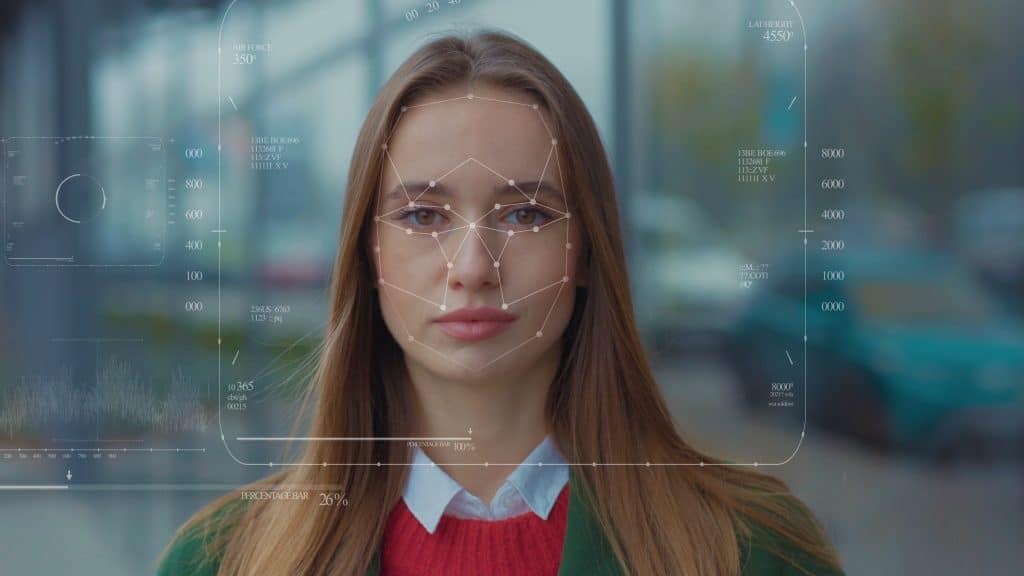
Structured conditions shape the way that whimsy is circulating online. In The Age of Surveillance Capitalism, Shoshana Zuboff describes a digital economy that treats everyday behavior—clicks, pauses, gestures—as extractable data. Platforms increasingly process, measure, and capitalize on expression, rewarding channels of visibility that people can easily read, categorize, and circulate.
This assumption rests on a narrower idea of what “seriousness” looks like and who is permitted to embody it. To be recognized as engaged, politically aware, or culturally meaningful is still to perform a certain kind of labor—to signal awareness through gravity and demonstrate care through intensity. In such a landscape, there is little room for expression that lacks clarity. Ambiguity begins to look like avoidance. Softness begins to look like retreat.
Whimsy moves differently. It drifts rather than declares, defies clean interpretation, and often avoids settling into a single, stable meaning. By the prevailing standards shaping online visibility, this makes it inefficient. In this context, inefficiency begins to function as a quiet form of resistance: Systems struggle to optimize what they cannot easily categorize, and they cannot fully absorb what resists optimization–at least not immediately.
The politics of lightness
Why, then, does it seem so absurd to consider whimsy as defiance?
Whimsy tends to register as a minor glitch within that system. It sits slightly out of step with the emotional grammar of usefulness. During moments of urgency, people often treat playfulness or softness in cultures obsessed with efficiency as a misjudgment of the situation.
Sara Ahmed’s writing on emotion is useful here because it shifts the focus away from feelings as internal states and toward emotion as something that circulates. Emotions have been used to feminize, racialize, and infantilize certain kinds of embodied life, positioning them as closer to “nature” and therefore further from the imagined ideal of rational, self-possessing subjecthood.

Even the language of evolution she cites, where emotion is treated as a sign of a “lower and animal-like condition,” reveals how quickly we turn feeling into a marker of temporal backwardness–something we are supposed to have outgrown. In this light, whimsy does not appear as a light aesthetic preference so much as a troubling category within an established hierarchy of value.
Modern subjectivity has historically trained people to regulate forms of emotional excess, and whimsy sits uncomfortably close to them. Emotions are not only dismissed as unserious; they are deemed to threaten the boundaries of emotional control that modern culture works to maintain.
Whimsy as an everyday practice
Because whimsy is so adept at changing shape–appearing one moment as mischief, the next as elegance, then vanishing altogether like a will-o’-the-wisp–it becomes even more animated in the presence of someone willing to engage with it.
Consider the slew of articles attempting to diagnose, contain, or commodify whimsy as though it were a fleeting cultural pathology rather than a durable human impulse. What these pieces tend to overlook is that whimsy resists abstraction. It does not survive particularly well as an aesthetic taxonomy or subject of trend forecasting. Its vitality depends upon embodiment.
People usually turn to whimsy as a means of resistance precisely in moments when culture expects them to perform despair most visibly. These include moments of political exhaustion, economic instability, or cultural pessimism, as small acts of absurdity proliferate online: elaborate memes built from nonsense, intentionally overdecorated personal spaces, hyper-feminine crafting cultures, surreal TikTok edits, and tiny rituals of beauty performed without irony or productivity attached to them.
At first glance, such gestures can appear frivolous or even detached from reality. But their persistence suggests something else: They create fleeting spaces where people can experience delight without first “earning” it through usefulness, suffering, or moral seriousness.
In a culture that prioritizes hardness, choosing softness or ornament can help us reclaim emotional autonomy. This doesn’t happen because happiness erases structural violence, but because choosing to feel pleasure anyway flouts the expectation that crisis should permanently flatten us.
Whimsy as a form of productivity
Part of what makes whimsy difficult to reconcile with contemporary culture is that it refuses to justify itself. It does not always produce an obvious takeaway, a measurable outcome, or a clear moral instruction. As social environments increasingly organize themselves around optimization—turning hobbies into side hustles, identities into brands, and rest into preparation for future productivity—whimsy interrupts the norm that every gesture must serve a useful purpose.
Its value lies partly in this refusal.
A strange caption, an impractical collage, a joke that dissolves before reaching a punchline–these forms of expression withstand the pressure to convert experience into something efficient or marketable. They linger in uncertainty, excess, and delight. Not because they are politically pure or exist outside systems of commodification, but because they briefly loosen the grip of those systems on everyday life.
Whimsy does not overthrow structures of power. Its interventions are smaller than that–quieter and harder to measure. But that is precisely why the concept matters. By creating room for feelings outside of optimization culture and the strict logic of usefulness, whimsy allows people to relate to one another in meaningful, fundamentally human ways.