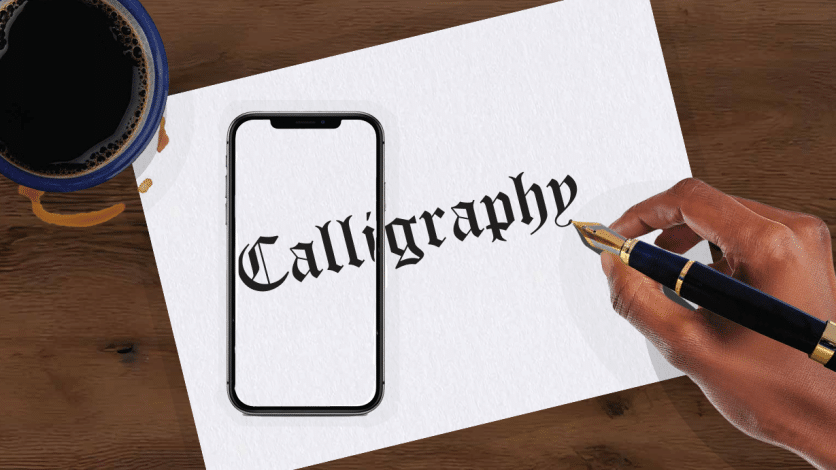
As Gen Z is trying to limit their screentime and pursue so-called “analog” hobbies, calligraphy seems to be experiencing a new wave of popularity. Ironically, social media and other digital technologies are positively affecting its revival.
Although an ancient art, calligraphy is adapting to the challenges presented by new technologies. These days, there are about 14,000 calligraphers in the US alone. According to Future Data Stats, the global calligraphy market reached $ 1.8 billion last year. It is forecasted to reach 3.5 billion dollars by 2033.
The #calligraphy tag on TikTok currently has more than 1.5 million posts, reflecting our renewed fascination with the art.
Calligraphy Lettering and Arts Society in London is a charity seeking to ensure that calligraphy remains a living practice. They support calligraphy beginners, professionals, teachers, and researchers. The various members have each discovered their passions for this art form differently: some through formal studies and others through design, book arts, or a fascination with historical manuscripts.
Lenka Snook, social media officer at CLAS, said there were clear indicators of a renewed interest in calligraphy. The society has seen an increased engagement in exhibitions, demonstrations, and educational events. Calligraphy also fits into the trend of craft literacy, sparking human curiosity about the process of how these artworks are made.
As traditional crafts help Gen-Z form meaningful connections and experience the feeling of belonging, calligraphy proves equally attractive because of its mental health benefits. Calligraphy allows young people to foster focus with movement and enter the state of flow, cultivating a greater peace of mind. It offers an escape from anxiety as well as room for imagination and conveying emotion. Moreover, calligraphy embodies a pursuit of mastery and self-improvement. The Chinese culture is a magnificent example of this connection.
More global than ever
Nowadays, calligraphy is a truly global practice that benefits from cultural exchanges. Snook described how cultural influences shaped calligraphy for centuries: “Western calligraphy has always evolved through exchange. Renaissance scribes absorbed classical proportion. Twentieth-century calligraphers engaged with modernism and abstraction. Today, we see dialogue with typography, graphic design, street art, textile practice, and bookbinding. Globalization has also broadened its influence. Practitioners study Arabic, East Asian, and contemporary lettering traditions with greater access than ever before. Technology accelerates exposure, and it allows artists to learn new movements instantly.”
Jackson Alves, a Brazilian calligrapher based in Orlando, fell in love with the craft after taking a lettering workshop with a friend from college. Before that, he had been working as a graphic designer for about ten years. “While studying typography through books, I discovered that letters originate from calligraphy, which naturally led me to start practicing it as well,” he reflected. “It’s a fascinating and almost addictive practice.”

He offered a similar point of view on globalization: “With the rise of the internet and social media, techniques and references are shared much more quickly than before. This creates a mix of cultural influences that in the past might have taken decades to spread, or perhaps never happened at all.”
Social media: friend or foe?
As Snook explained, digital tools also allowed calligraphers to research historic scripts, attend online workshops, and share work instantly. “Social media is a meeting point,” she said. “It enables a student in Dorset to see the work of a practitioner in Tokyo within seconds. CLAS in-person events and exhibitions create tangible relationships, where people sit side by side, compare tools, and debate spacing and proportion. These are not artificial exchanges. The community is built in person, through shared practice and shared standards.”
Alves stressed the importance of not succumbing to the social media algorithm. “My social media might have many more followers today if I had focused on trends, but I prefer not to let algorithms dictate my creative process,” he said.
But he added that social media has played a key role in building his career: “It helped my work reach a global audience and connect me with clients from many parts of the world. Even my early learning process was influenced by the internet, since I started studying calligraphy through YouTube. So while I don’t let it guide my creativity, it has definitely been essential for sharing my work.”
Balance might be fragile
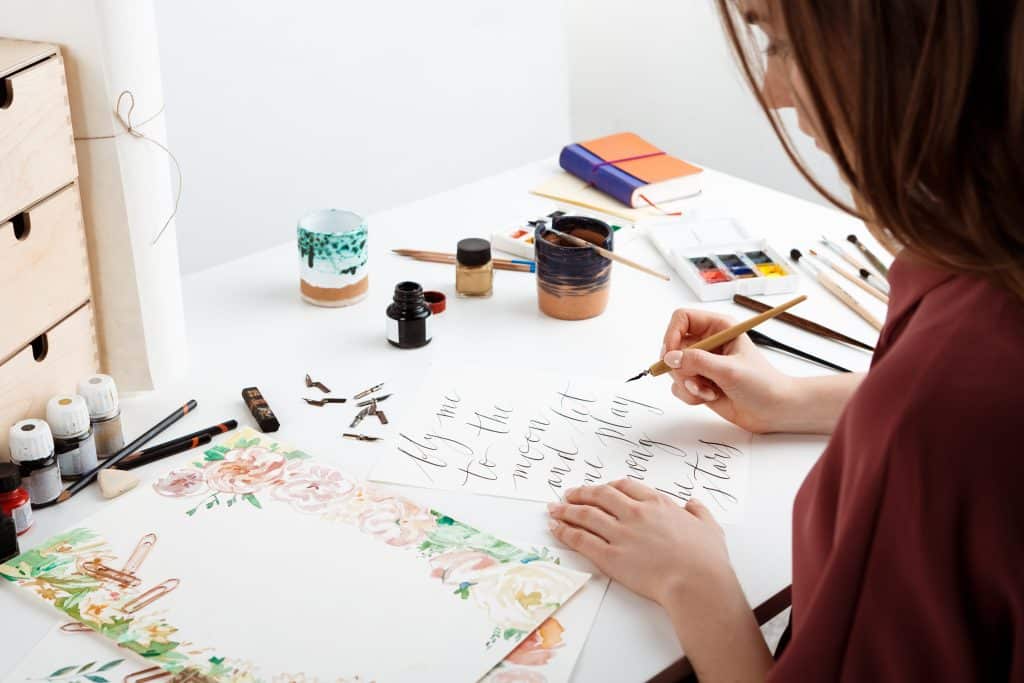
According to Snook, technology can still be detrimental, since it tends to encourage speed over substance: “Calligraphy is a physical practice. It depends on pressure, ink flow, paper resistance, and muscle memory. These cannot be replicated by shortcuts. The most successful practitioners use technology to support, not replace their skill.”
Alves sees the digital tools as an extension of traditional calligraphy and noted that one practice can naturally lead to the other: “If someone starts with traditional calligraphy, they often become curious about digital tools. And if they begin with digital calligraphy, many eventually feel the desire to experience the craft on paper as well.”
“I believe any form of handmade work is special precisely because it is unique, no matter the discipline. Calligraphy on paper has a particular charm, like any craft created by hand,” he continued. “What makes digital calligraphy unique is the flexibility that comes with digital tools. You can revise, redo, and reorganize your work without the risk of losing a finished piece. In that sense, the process can become more forgiving and sometimes more efficient.”
Could AI be a menace for calligraphers?
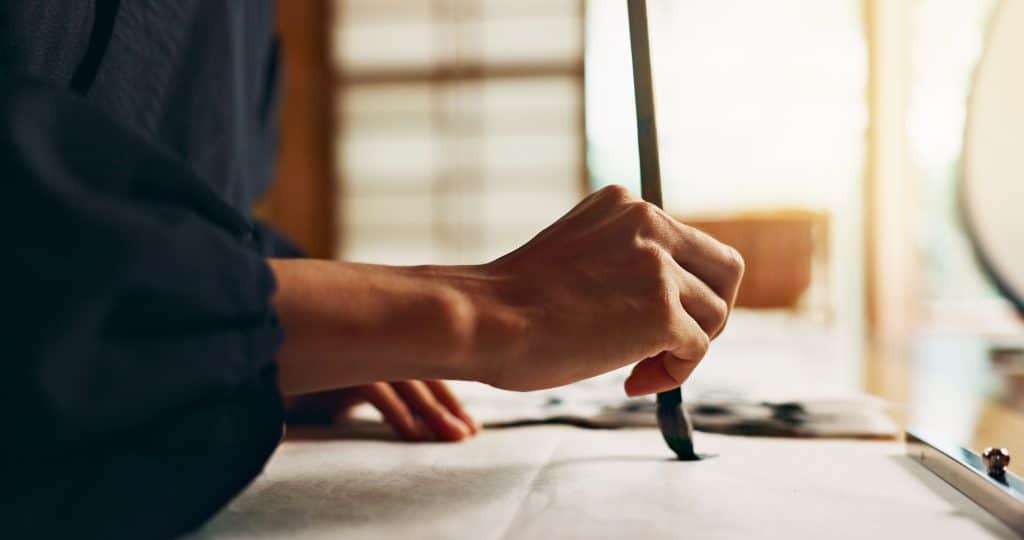
As new pieces of artwork are generated with artificial intelligence tools, artists’ revenues are falling because of the new technology. Some artists are even growing worried that they will be replaced.
Artificial intelligence can be used to restore lost or damaged digital calligraphy artworks, although it cannot replicate the personal touch in the calligrapher’s strokes nor the cultural meanings underlying the works. AI calligraphy tools and tutorials frequently surface on the Internet.
“AI can generate letter-like forms quickly, analyze styles, and produce convincing simulations,” Snook said. “What it cannot do is hold a pen. Calligraphy is rooted in embodied knowledge. It reflects the hand and the decision-making of the individual. AI may influence visual trends or offer new starting points for experimentation, but it does not replace the discipline behind mastery. We expect practitioners to become even more deliberate. The value of authenticity increases when imitation becomes effortless. Hand skill, discernment, and historical understanding will matter more, not less.”
The beauty of humanity
“When you receive a handwritten letter, the magic comes from knowing that someone took the time to pick up a pen and translate their thoughts onto paper. The same applies to a calligraphic artwork. Even when I create pieces digitally, what makes them meaningful is the human gesture behind the marks. People are often fascinated not only by the final result, but by the fact that a person made it,” Alves asserted.
He then elaborated on his view of AI: “AI can be useful for exploring ideas, compositions, or visual directions, but it cannot replace the core process of calligraphy, which is writing. In a moment when AI can generate technically perfect images, I believe the value of handmade work will become even greater. After all, we have had faster ways to write for decades through computers and digital fonts, yet calligraphy continues to exist because it is an art form rooted in human expression.”
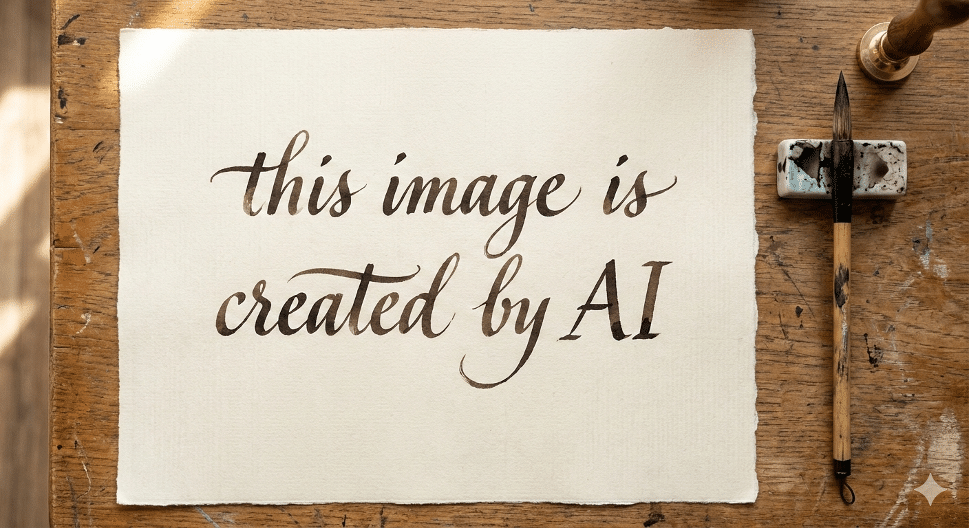
Alves uses artificial intelligence for administrative work. He also turns to it from time to time for refining ideas, brainstorming themes, and organizing concepts for future collections. “But when it comes to sketching, drawing, or painting, I prefer to create everything by hand,” he said. “Asking AI to generate a piece and then simply painting over it would remove the essence of the craft. For me, the magic lies in the human process behind the work.”
Teaching is an exchange
Alves acknowledged that it’s likely possible for artificial intelligence to teach calligraphy, since a person could ask it about a style and receive instructions. “In that sense, it could work similarly to watching a tutorial on YouTube and trying to practice at home,” he said.
On the other hand, he expressed that the essence of learning calligraphy is an exchange with a teacher: “Even if you start learning on your own, as I did, at some point you feel the need to talk with someone more experienced, ask questions about how to hold the pen, and observe how another calligrapher works in real time. That human interaction helps you develop your own method…From that perspective, I find it difficult to imagine AI truly replacing that part of the learning process. The fundamentals might be learned through digital tools, but deeper learning usually requires a human exchange between teacher and student.”
Research shows that AI can help teachers organize effective resources on calligraphy by managing large data sets. It can also enhance teaching by analyzing the visual nuances in artworks and providing insights into the strength, speed, and rhythm of strokes.
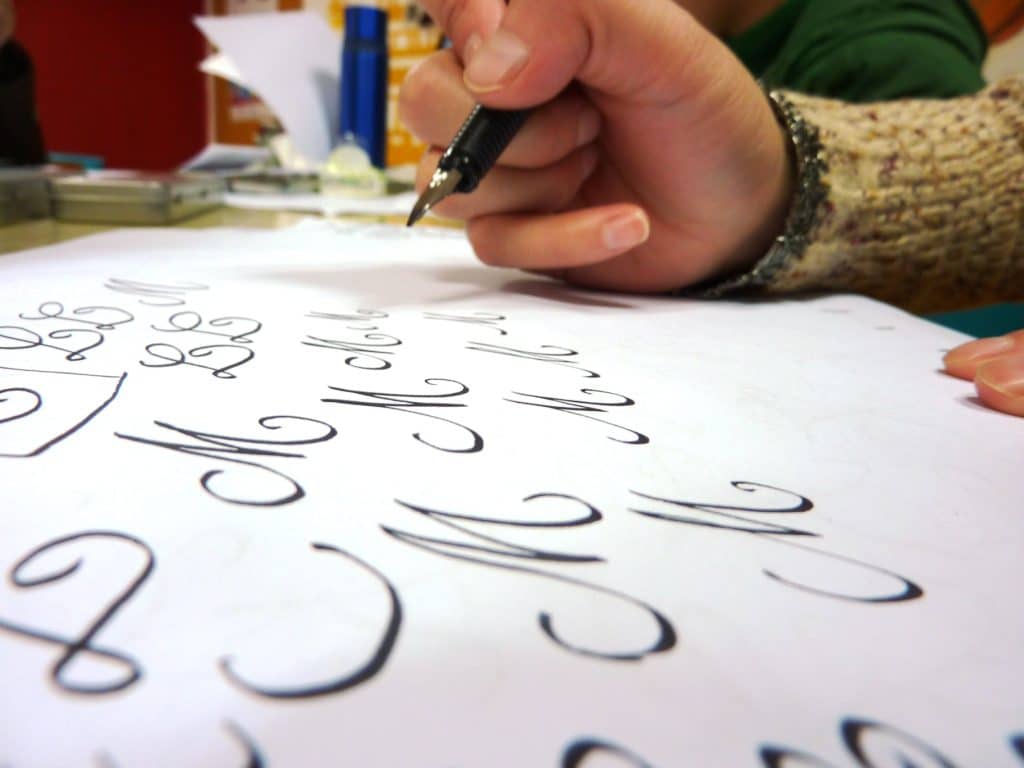
When asked to share advice for those interested in taking up digital calligraphy, Alves recommended starting with the fundamentals and being patient with the process: “Calligraphy takes time and practice, and progress comes gradually. Try different tools and styles, and also explore practicing on paper, since traditional and digital calligraphy complement each other. Most importantly, enjoy the act of writing. Consistency and curiosity are often more important than talent.”