At the 2026 Consumer Electronics Show (CES), Razer teased a new development for gaming hardware called Project AVA. Project AVA is an AI assistant, a “gaming wingman” in the form of a hologram. The 3D animated avatar that lives in a jar on your desk, interacting with you in a lifelike way.
While this technology is objectively impressive, the way Razer markets their product on their website raises a few alarm bells. Beyond just assisting general tasks, Razer calls Project AVA a “friend for life.” I think this illustrates a growing trend among AI products that we should find concerning, and that is the substitution of AI “companions” for human connection.
But first, what is project AVA?
When AVA was first introduced, the bot was confined to your computer screen and gave the user input that way. It has since evolved to a 5.5 inch-tall humanoid hologram with an array of different avatars to choose from. The ones currently in demo are Kira — an anime girl with cat ears and an outfit sporting Razer’s black and green colors — and Zane — her buff male alternative dressed in all black with snake tattoos.
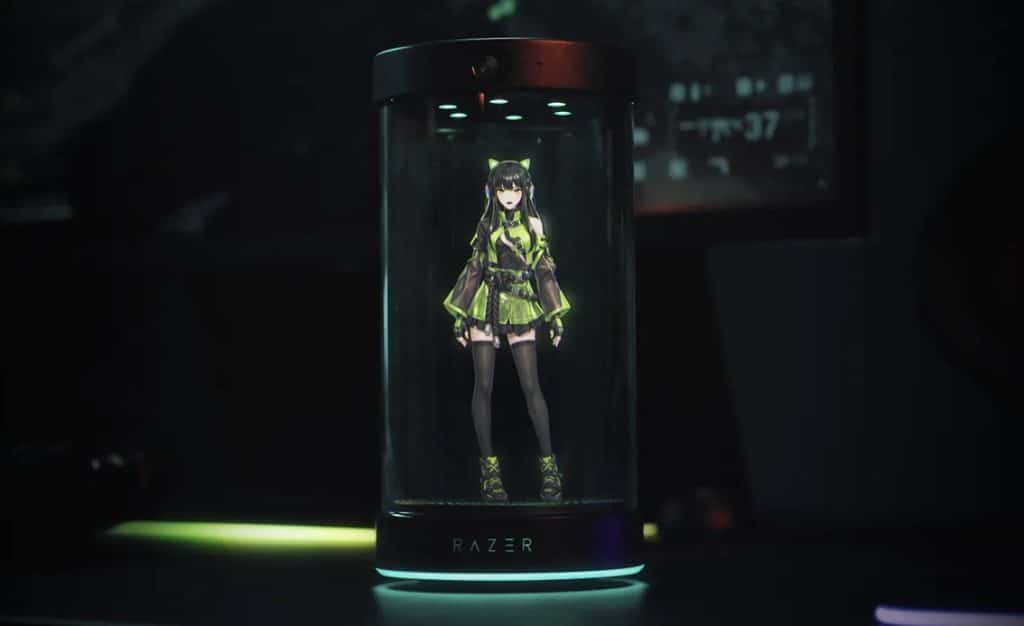
The animated avatars were developed in partnership with Animation Inc. and the bot is powered by xAI’s Grok engine in addition to Razer’s AI. But there are options to incorporate other AI engines into the chatbot feature as well.
Razer says that AVA “uses human-like vision and audio sensing for full contextual awareness,” with a “dynamic personality” that adapts as the AI learns your habits and behavior through interaction. Not only does Razer boast that AVA can organize your schedule and help with work-related tasks such as data summary, but additionally offers emotional support. Often, this is during the user’s gaming escapades where AVA offers strategies, celebrates the user’s victories, or consoles them after a loss.
But here is where things start to feel weird.
Project AVA as a “friend for life”
In Razer’s words, Project AVA is designed to “bridge the gap between virtual assistance and physical companionship” by providing a 24/7 digital companion to live right beside the user.
I do think there are times when AI is useful as a tool, but it starts to cause problems when a bot becomes a stand-in for friendship. Marketing AVA as a “friend for life” is a bit concerning, because it comes across as manipulative to people who are isolated or lonely. It implicitly suggests that AI is able to fulfill the profound emotional needs one seeks to fill in a friendship, which is untrue.

As more companies integrate AI into their interfaces and this technology becomes more mainstream, some people have shifted from using AI for practical usage and now use it for social interaction. Previous AI engines like ChatGPT and Character AI utilize a text-based interface or a disembodied voice that speaks to you on the phone. However, once we start to use a more immersive humanoid avatar like the one Razer made, the lines start to blur even more.
Machine interactions are not genuine friendships. AI does not have a consciousness or feelings. It doesn’t actually care about you, but instead simulates a friend who would.
When real human relationships challenge us and sometimes push us out of our comfort zones, AI companions are optimized to affirm their users no matter the circumstances. This can create a negative feedback loop which can prevent emotional growth and cause users to become dependent on the bot for social connection.
Razer lists precautions
David Ng, a director of product marketing at Razer, pushed back against the “lonely gamer” stereotype and the concern of becoming emotionally attached to AI chatbots. In an interview with Bloomberg, he said: “We’re not trying to foster a relationship, but we do acknowledge that people are using their AIs in a more personal way,” he said.
Instead, their target audience for Project AVA is tech-enthusiasts who enjoy customizing their desk set-ups. Ng sees AVA more as an aesthetic addition to daily life rather than a true friend.
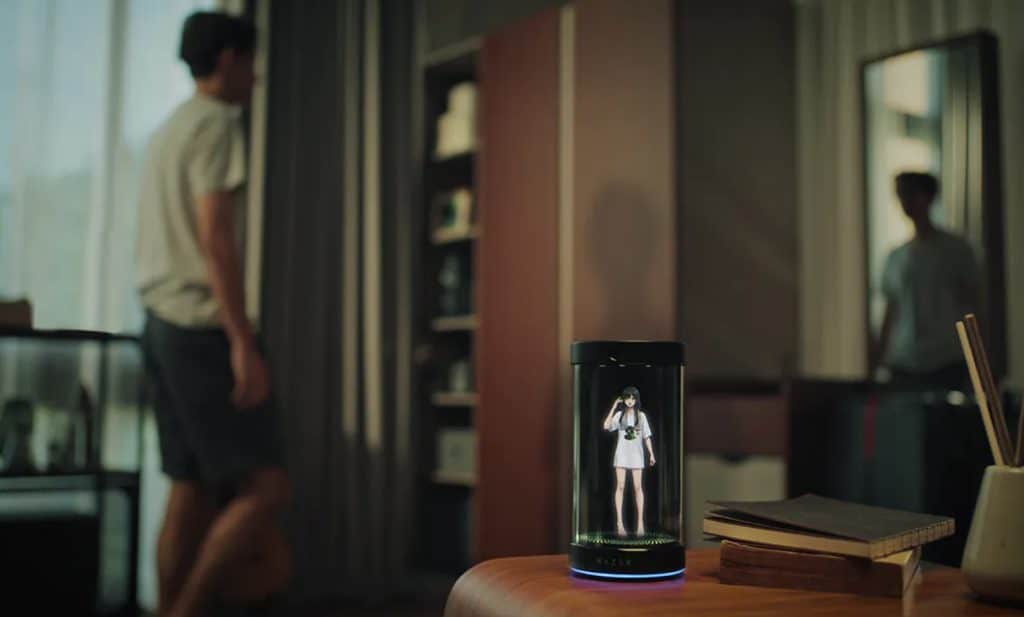
However, the companies intent does not always carry over to the way customers actually use their products. In this case, I think AVA’s design still runs the risk of being taken as a companion. The AI’s dialogue is tailored to always compliment you, and the avatars are designed to be conventionally attractive.
But ultimately, the user can choose what they get out of their digital companion, if they use it solely for practical tasks or for conversation.
The future of project AVA
As of now, the release date for Project AVA is not firm. Razer has only announced that it will be available in the second half of 2026. There is also no clear price point yet, but the bot is available for customers to reserve in advance for a deposit of twenty dollars.
While this product as significant potential in the gaming sphere, framing what is essentially a system of code as a “lifelong friend” is worth scrutinizing. AI cannot adequately fulfill the emotional depth encapsulated in a friendship.
We need to have more thoughtful discussions about ethical AI usage, for both producers and consumers of AI. For products in the future, we must create guardrails to ensure that AI doesn’t grow to replace the human bonds that give our lives meaning.