Thanksgiving is one of the most widely celebrated American holidays, yet it is strangely absent from the country’s cinematic imagination. Christmas has an entire film genre built around it, complete with magic, nostalgia, and ritualistic seasonal rewatches, even dedicated television channels. Halloween thrives on its spooky aesthetics and the billion-dollar horror genre that renews itself every year. Even Valentine’s Day has carved out its own smaller but recognizable cinematic space.
Thanksgiving, despite being embedded in American culture, has produced only a handful of films in 50 years. It is a major holiday with almost no cinematic impact. It is very obvious that Hollywood has never fully invested in it, and audiences have never truly established a stable rotation of classic Thanksgiving movies.
Thanksgiving is a tricky holiday for Hollywood. It brings families together, but that gathering often comes with tension, old history, and unspoken expectations. These moments are relatable, yet they are not easy to turn into cozy or uplifting holiday stories. Without Christmas magic or Halloween thrills, Thanksgiving ends up in a quieter space that studios rarely know how to work with.
To understand why Thanksgiving movies rarely stick, we would need to examine the cultural, emotional, and economic forces that make the holiday challenging to adapt into the media. And the best way to begin this discussion is by looking closely at the handful of Thanksgiving movies that do exist and why they failed to become classics that audiences return to each November.
Thanksgiving’s cultural position: a holiday of reality, not magic
Thanksgiving occupies a complicated emotional and historical space. Unlike Christmas, which is built around generosity, miracles, religious ceremonies, and decorative spectacle, Thanksgiving has no magical figures, no mythic story of transformation, and no supernatural component that can be easily fictionalized into film.
Its origin story has more recently been an increasingly uncomfortable origin tale for many Americans, who now view the traditional Pilgrim-and-Native narrative as oversimplified and very historically misleading. This discomfort may be why it has made it difficult for filmmakers to create a warm, escapist feeling around the holiday. Audiences expect emotional realism from Thanksgiving stories, not made-up fantasy.
Thanksgiving is centered on shared meals, family reunions, intergenerational conflict, and the complex dynamics that arise when people are culturally obligated to make nice with their families. It is a holiday of high emotion. These elements are rich in conflict and drama but do not lend themselves to the cozy, magical, and soft, sentimental tone that makes the vast majority of holiday films re-watchable.
Hollywood tends to gravitate toward holidays with stronger iconography and solid expectations. Christmas has lights, iconic music, trees, gift-giving, Santa, flying reindeer, and winter wonderland imagery. Halloween has horror, costumes, and spooky atmospheres. Meanwhile, Thanksgiving has food, football, family arguments, and dark origins. It is visually subtle and emotionally messy, which makes it difficult to romanticize.

The role of consumerism and Hollywood economics

One of the strongest explanations for Thanksgiving’s cinematic absence lies within markets and merchandise.
Christmas is an economic powerhouse. Movies, music, decorations, and strong retail presence provide a clear financial incentive for studios to produce holiday content as well as merchandise. Halloween is similarly profitable due to costumes, horror movie releases, themed events, and large annual marketing cycles.
Thanksgiving lacks this commercial pull that comes along with other holidays. There is no dedicated merchandise market beyond groceries and an uptick in turkey sales. No cultural figure comparable to Santa or magical animals like his reindeer. No magical lore that can build upon a consumer-driven industry.
Hollywood very obviously sees little financial reason to invest in Thanksgiving movies, especially when the holiday is sandwiched between other highly profitable ones. Releasing a Thanksgiving movie in November means competing almost directly with Christmas movies, which often begin rolling out as early as the first week of the month. Thanksgiving’s cultural moment is short and overshadowed before it even arrives.
Without strong commercial support, studios are very hesitant to produce Thanksgiving-centered movies, and we can find very few examples that have remained relevant long-term.
A few existing Thanksgiving movies (and why most are not considered classics)
These are not the only Thanksgiving movies ever made, but they are a few that are most culturally recognizable. Their limitations reveal the larger challenges the holiday presents on-screen.
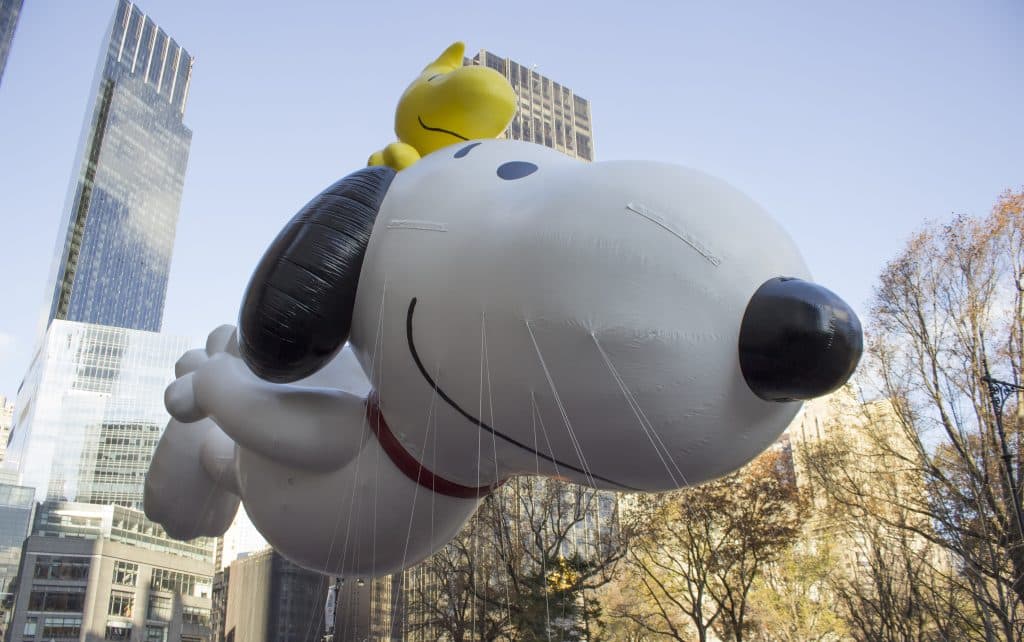
A Charlie Brown Thanksgiving (1973)
The original and most enduring Thanksgiving title is also the least like a traditional film. Clocking in at about 25 minutes, it is a nostalgic television special rather than a feature-length narrative. Despite its warmth and familiarity, it lacks the depth, iconography, and myth-making that helped A Charlie Brown Christmas become a feature-length holiday classic. It returns every year, but it’s not enough to fill the day or make a meaningful impact.
It was also widely accessible, airing free on national television and becoming a familiar viewing ritual for many American families. Yet accessibility alone was not enough to secure its cultural longevity. Its limited length and restrained narrative made it difficult for the special to develop the emotional resonance that defines true holiday classics. It has recently (2020) been acquired exclusively by AppleTV, causing public backlash as it is no longer free to all; now it is only free on chosen days, limiting its already waning cultural hold on the nation.
Planes, Trains, and Automobiles (1987)
Often treated as the Thanksgiving movie, this beloved comedy is only loosely tied to the holiday. Its emotional structure, frantic travel storyline, and sentimental ending resemble the architecture of a Christmas film. The premise could be moved to any other holiday deadline without changing the story.
Its place in cinematic history becomes even more complicated when compared to Home Alone (1990). Only three years later, Home Alone elevated the frantic travel plot that Planes, Trains, and Automobiles introduced. Perhaps this was initially meant to throw homage, yet Home Alone eclipsed PTA due to clearer emotional stakes, stronger holiday iconography, and a more defined identity. It can be said that with both films featuring John Candy in similar rescue-style roles, PTA was left in an ambiguous space, remembered fondly but never solidifying itself as a definitive Thanksgiving tradition. Home Alone refined the storyline and, according to most, did it better than the original.
Son In Law (1993)
Surprisingly, this Pauly Shore comedy may be my favorite of the bunch and the most Thanksgiving-centered of all four. It captures the discomfort of returning home, navigating identity shifts, and reconciling independence with family expectations. These themes align strongly with Thanksgiving itself. Yet the film never reached classic status. With a less star-powered cast, its early 90s comedic tone, and limited marketing, it never reached its full potential that the annual viewership of Christmas movies from the same era garnered.
Thanksgiving (2023)
A more recent attempt from Eli Roth came in the form of a slasher film that attempted to inject life into the holiday by creating a new horror subgenre. After a 30-year gap since the last notable Thanksgiving movie, it offered a fresh approach. Yet it leaned heavily into familiar slasher tropes (very Scream-esqe), playful one-liners, and meta references. While entertaining, it lacks the emotional grounding and cultural specificity needed to become a yearly classic. It is fun but unlikely to become a foundational holiday rewatch.
Major gaps define the landscape. No other American holiday has such a minimal cinematic presence. And even among these, only one movie is truly about Thanksgiving at its core.
This pattern raises an important question: Why has Hollywood ignored a national holiday that continues to define American family life?
A holiday waiting for its turn in the spotlight
Thanksgiving remains a cinematic orphan. It is too grounded for fantasy, too introspective for spectacle, and too complicated for the mass-produced traditional holiday film formula. Yet it is a mine full of rich emotional depth, family tension, cultural reflection, and narrative possibility. The absence of Thanksgiving movies reveals a deeper truth about American cinema and culture. Hollywood prefers comfort over complexity, simplicity over realism, and prioritises marketability over anything else.
But this gap also presents an enormous opportunity for filmmakers. Somewhere between the tension of returning home and the tenderness of shared meals is many a story waiting to be told. The filmmaker who can capture the honesty of Thanksgiving, its beauty and its discomfort, may finally give the holiday its first true classic.
Until then, Thanksgiving will remain what it has been for decades: A major American holiday with no impactful movies to call its own.