We’ve all heard of cryptocurrency, but how many of us have actually used it? How many of us even really know what it is beyond ‘monopoly money’ you can use like actual cash? (That, and it has made a very small number of people very very rich?) Not me until recently. I always thought it was one of those stupid ways for evil corporation owners to get richer off the books.
This is a short explanation about the potential utility of cryptocurrency for the average person. It is in no way financial advice, and should not be taken as such. All information presented in accurate as of this article’s release date.
What is crypto?
As it turns out, though, that doesn’t have to be all cryptocurrency is good for. Though it is used for that too…
Cryptocurrency (digital, encrypted currency) is money produced and guaranteed by independent entities in the public financial sector. No, really. The most important difference between crypto and government or bank-issued currency in the era of digital transactions is who produces and guarantees the currency’s value. This is the reason that there’s always news about bitcoin or some other altcoin jumping or dropping in value. Its worth, in contrast to a stable ‘hard’ currency, is instead based on the free market and how trustworthy people feel the currency is.
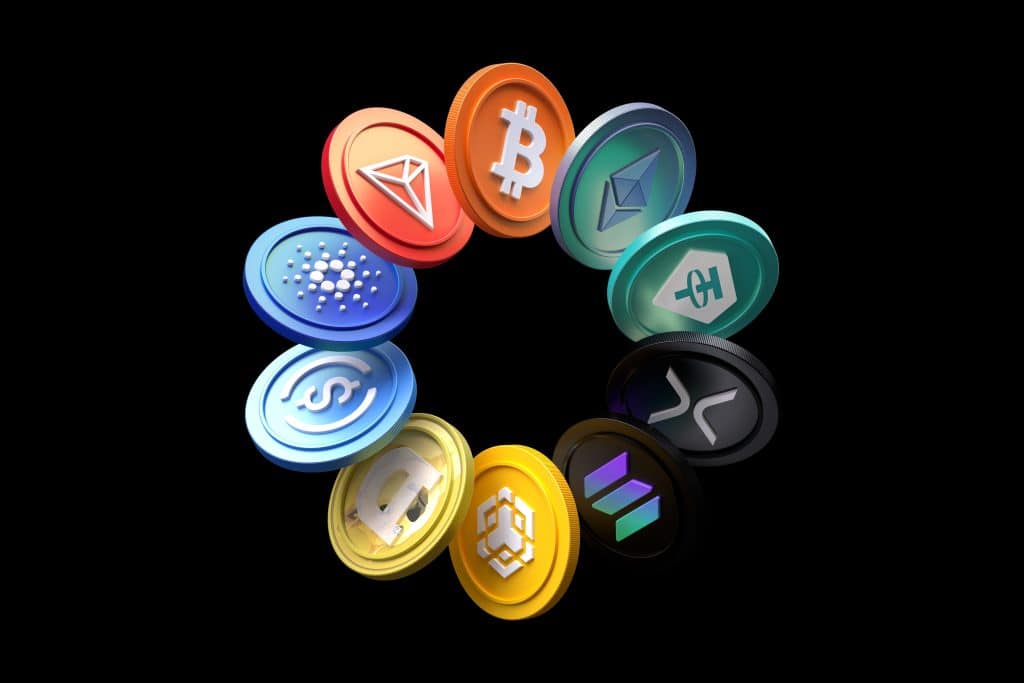
Because of this, cryptocurrency functions like a stock. As opposed to hard currency, which is guaranteed, legislated, and endorsed by governments or banks, and also has a convenient physical form. Crypto’s lack of a physical form does have its perks, though. For one, transactions are harder to track by government agencies, and money transfer is faster. In part because of an exclusion of the human element. The digital ledger crypto employs is managed by programs rather than people.
It works, and the ‘why’ isn’t really important
Here’s the thing. Most cryptocurrencies share some common traits in how they are generated, circulated, and maintained by their backers. But, there is no one universal way to go about it. There is no single definition of how cryptocurrency should work. The important bit to understand is that crypto is a kind of global currency that anyone can easily own and use, which can be converted into the currency of just about every nation that hasn’t outlawed it. It’s a kind of global financial environment that goes over government heads and lets every global citizen participate.

The world of crypto is a kind of wild west in terms of oversight. In that it grants a great deal of freedom to a purchaser. You can think of crypto like a real-world version of in-game purchase tokens. Or maybe like chips that you trade from money and bring to the table, in the case of stock traders. Regardless, the global community has agreed to the social contract of assigning value to it, meaning that it is real money.
The more important thing to understand is the platforms through which you can access and exchange cryptocurrency. One of the largest and most influential of these platforms is Binance. This platform is what we’ll be focusing on here, for convenience. Since understanding how it works will be far more useful to you, if you’re looking to actually use crypto or understand how other people do.

What is Binance: how does it work?
Binance Holdings Ltd. essentially functions as a bank for a variety of cryptocurrencies (including its native coin, BNB). Of course, it’s different from normal banks in a couple of different ways. Firstly, and most importantly, when you ‘have’ or access your crypto through a platform like Binance, that money is entirely yours. You don’t own it in credit. And you don’t have a claim to a certain value of the bank’s money that you can withdraw at any time. What Binance does is it keeps track of the ‘keys’ you need in order to open your own little pocket dimension of internet money. It’s faster, cheaper, and more widely accessible than a lot of major localized currencies. And it has much better privacy to boot.

However, perhaps most interestingly, Binance doesn’t act as the custodian of the value of your money. It’s essentially just standing guard over the literal (digital) money. It doesn’t touch or use your coin the way a bank does, unless you’ve taken a loan from them specifically. Unless you have the money and connections to influence public opinion and impact the currency stock’s value, then crypto has about as much chance of making you rich as a gambler does. Just because it does happen, and to a decent number of people, does not mean that it’s a one way ticket to wealth. Its just about being in the right time at the right place.
Economics & Politics
If I had to name one major downside to cryptocurrency, it would have to be how new it is. There isn’t any data available on how viable this technology is in the long term. And legislation hasn’t had a chance to catch up with the technology. This means that, as with innovative applications like Uber, the technology exists in a grey area where there is no clear precedent. This all means that the way cryptocurrency functions or its legality of it are subject to change in the future. Just because companies like Binance make themselves available to everyone does not mean that every country has embraced crypto.

Crypto is heavily impacted by public trust, and its value has proven consistently volatile; it has yet to find an equilibrium. Some countries, fearing a negative economic impact (or for political reasons), have outlawed the use of cryptocurrency as a result. Some countries (of which there is overlap with the previous set) have also taken the step of outlawing specific cryptocurrencies. As China has done with Bitcoin. This suggests that crypto still has a lot of growing to do as an economic system and a technology. This does not, however, invalidate its benefits.
Knocking on your door
Crypto might be a new technology, but it’s clearly here to stay; however it might evolve, going forward. Just because it has gaps ripe for exploitation by fraudsters and contraband traders does not mean that it is inherently dangerous or bad. If anything, it has immense potential for use by people like you and I. If you need access to fast round-the-clock transactions, need to move money over large distances, or live in a country with an unstable national currency, then a platform like Binance could prove invaluable to you!
And let’s not forget the people who need to be untraceable for the right reasons. Or who simply value their privacy. It could be used by protestors or civilian rebellions who are living under oppressive governments and can’t risk being caught. Or by people who object to their personal information being collected and used to market goods to them. And these are just the ways that I, a layperson with no economic background, can easily identify. Cryptocurrency is a new technology, and that means opportunity for those of you knowledgeable and inventive enough to take the possibilities that are knocking on our door.