The short answer is, maybe. Depending on your definition, and what you think it means to be neurodivergent. Is it a self-claimed label or a clinical term? Is it just another word for ‘mental difference’ or a rebranding of mental illness? Who gets to decide who is neurodivergent, and why? If you are interested in the answers to these questions, then read on!
What we mean by neurodivergent
Neurodivergence refers to the diversity of mental function within a population. In practice, this means the variety in how people’s brains work, and the kind of connections they can make. The term was originally coined in reference to Autism and how autistic brains differ from allistic ones. Specifically in how they interpret the world around them, and in how they grow or develop. It is a term that was cooperatively developed between the clinical model and actual neurodivergent individuals. Because of this, there is a lot of contention as to who exactly can claim this label.
What brains are neurodiverse and therefore ‘normal,’ and what brains are diseased or abnormal and defective, is a question that no one can seem to agree on an answer to. This discussion undermines the whole point of neurodiversity:
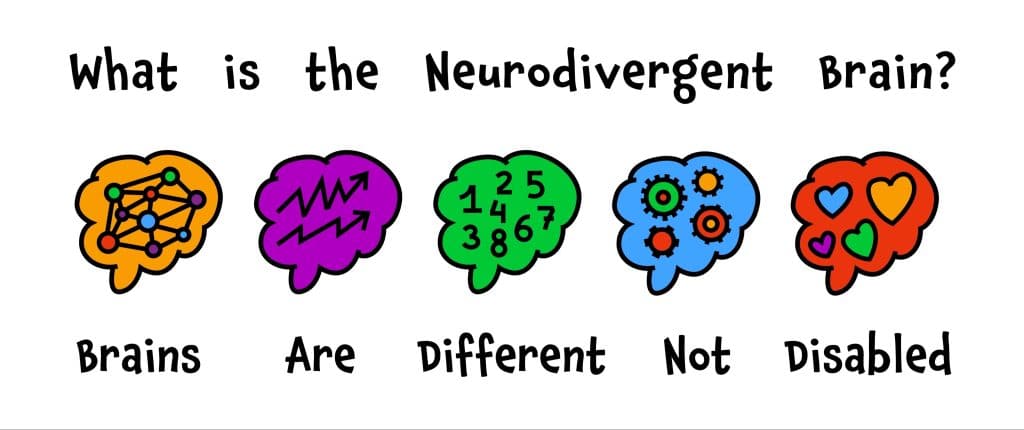
Since the term’s inception, its application has spread. It is now generally applied to any condition with a genetic component or cause that affects the brain (development, function, and/or information interpretation) and that is inherent from birth, while generally being observable from early childhood. In practice, it serves as an umbrella term under which clinical labels happily exist. Autism, ADHD, dyslexia, dyspraxia, and dyscalculia are the least controversial and generally agreed upon.
Conditions like Tourette’s, Cerebral Palsy, Schizophrenia, Depression, Bipolar,, BPD, ASPD (commonly called psychopathy) and Dementia also fall under this label. Depending on who you ask. Some people will argue that ‘personality’ and ‘mood’ disorders, as well as disorders which have mental alteration (or cognitive degeneration onset later in life) should count. Some will say they shouldn’t. Everyone intimately familiar with the label will insist that it is not just a rebranding of ‘mental illness’ even if they agree that there is some overlap.
Where is disability in this discussion?
Questions of ‘mental illness’ and ‘neurodiversity’ aside, it’s clear that there is a strong connection between neurodivergence and potential disability. Particularly is a school or work setting. This is the reason that some countries have special education plans for young students. And, why some mandate disability accommodations in the workplace. In light of this, it might be most accurate to say that the Neurodivergence movement is the attempt to normalize and naturalize the image of different mental makeups and capacities as fundamental to humanity, and thus, something that should obviously be taken into account.
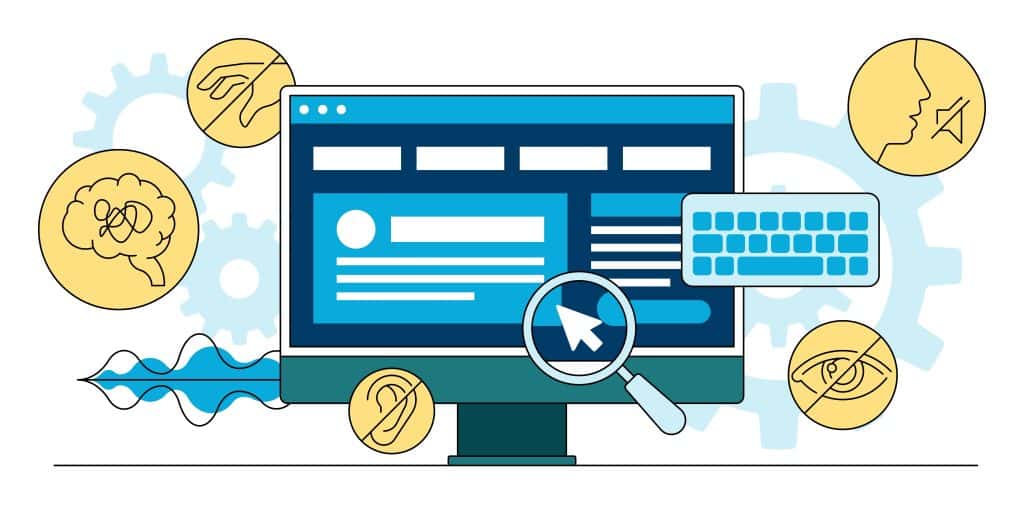
The idea of ‘Neurodiversity’ is that neurodivergent people should get equitable accommodation and assistance, in the same way that modern society provides for other inherent human realities such as childhood and old age. It’s a movement to destigmatize mental differences in the mainstream. As much as it is an identity that people can rally under or with, like with any marginalized or disadvantaged group of people.
Underrepresentation? Overrepresentation?
But when it comes to the actual incidence rate of neurodivergence, regardless of who you think should ‘count,’ it is virtually impossible to come up with accurate, verifiable data. Part of the problem is that we don’t even have any data to look at in the first place. Because of racial and gender stigma in the medical field, there is a disproportionate diagnosis of Caucasian boys from the West. This means people of colour, girls, and non-Western people often go undiagnosed. In large part because most official diagnostic criteria for conditions like Autism (ASD) were created solely from the study of Caucasian boys from the Western world. They don’t take into account how socialization impacts how people with these conditions might present. It is, for example, well known that children socialized as girls present with ASD very differently from their male counterparts, and are thus diagnosed much more infrequently.

Another issue is the constant shifting of criteria for the various ‘disorders’ that fall under ‘neurodiversity.’ Definitions have changed to become broader or incorporate more related sub-categories of a condition under a single label. More people have access to mental health care and evaluations, and there is less stigma surrounding the idea in much of the Western world today. But not all medical professionals check for neurodiversity. Some underdiagnose. And some will slap the label and related ‘disorder’ onto any child exhibiting unusual behaviour.
Changing criteria, changing populations
Add that to the fact that Gen-Z is, globally, a larger generation than the Millennials. It’s only natural that the number of neurodivergent people is growing, the same way that the number of left-handed or blue-eyed people in the world is. That there are more people and a better clinical understanding of the mind than ever before, allowing for more accurate diagnosis, also helps. Even if it is still very imperfect.
And that’s not taking into account the people who go undiagnosed, are misdiagnosed, or self-diagnose. The problem is that these groups form a Ven diagram of sorts, rather than a perfect circle. While every person with ASD is naturally neurodivergent, they don’t all claim the label. And there are genuinely neurodivergent people who claim the label without ever having received any sort of clinical diagnosis.
Not to mention the people who don’t present enough traits to be diagnosed in a clinical setting, but still consider themselves a part of the group. Or the people who have been misdiagnosed by a clinician and are not actually neurodivergent, but still share a strong sense of kinship with the community. But this diversity is not a deficit, it’s a strength!
Romanticization of Disability: I can be special too!
Then there are the people who have none of the required traits, but claim ‘neurodiversity’ to be pedantic. Or to feel special. Or to ‘get ahead’ by abusing the accommodation system. These are the sorts of people who say things like, ‘We’re all a little Autistic/ADHD/Dyslexic, etc.’
And therein lies the issue. Because if a large enough number of neurotypical people think that they are different, or special, and therefore neurodivergent, then no one will be. Think of it as a ‘boy who called wolf’ situation, where a need for accommodations is the wolf. Suppose teachers and employers most common experience of ‘neurodivergence’ is a false claim for attention or unnecessary assistance. In that case, they won’t take people who desperately need that assistance seriously. Cane does a good job explaining this in his article, “The self-diagnosis surge—over half of Gen Z claim neurodivergence”. I’d check it out if you find what I have to say interesting.
If teachers and employers always see ‘neurodivergent’ people fighting off the ‘wolves’ all on their own, then why would they go through the trouble of helping a neurodivergent person who complains that their wolves are closing in?
Just like Consumption was romanticized as the poet’s disease, and like the modern perception of the tortured artist, people idealize neurodivergent people’s experience. They ignore the ways neurodivergent people struggle in a world not designed for them. They elevate neurodivergent difference to a status of fantastic genius, akin to a superpower, like in the movie Rain Man.
Self-Identification
Of course, this isn’t to say that every self-diagnosed ‘neurodivergent’ person is not, in fact, neurodivergent. Even in places where the medical infrastructure and knowledge exist, it can be very expensive and time-consuming to get diagnosed by a medical professional. There are plenty of people who claim the word because it describes their personal lived experience. And because it is obviously the most logical explanation for their differences. I myself recognized I was Autistic well before I was clinically diagnosed with ASD. I was no less Autistic before a stranger handed me a thick pile of forms verifying my condition. It wasn’t the diagnosis that made me a part of the neurodivergent community; it was my lived experiences.
And I don’t blame the people who are not actually neurodivergent for claiming labels not meant for them, either. Despite how harmful it usually is to real neurodivergent people. I know what it’s like to feel different, and to want some kind of explanation for why. And that experience is not limited to neurodivergent people. I feel for them, because they are struggling. Even if what they are doing has prevented actual undiagnosed but clearly neurodivergent friends of mine from getting the support they need, because there is still a lot of bias within the medical field. Unfortunately, there are still doctors who will refuse to diagnose ASD because a neurodivergent person doesn’t ‘look’ disabled enough.
The Rat Race
I can even feel for the people who go through the trouble of getting accommodations for a neurodivergence they don’t actually have. In this economy, people need to do anything they can to get a leg up. And I can’t exactly hold wanting to put food on their table against them. Especially since they may legitimately need those accommodations for a different disability, but be unable to get diagnosed. However, I can hold it against our national and global economies. What kind of society do we live in, that people have so much trouble providing for themselves that they need to lie to succeed? Do we really live in a society where our workplaces are so toxic that accommodations are the only way a neurotypical person can succeed, let alone a neurodiverse one?
Accommodation and society
For neurodivergent people to get the accommodation they need, the way the workforce as a whole works will need to change. Those of us in the Neurodivergent community like to say that being neurodivergent doesn’t make us disabled; the way society is designed does. But if even neurotypical people require ‘accommodations’ meant for the disabled to have an honest chance, then I think it’s fair to say that today’s work culture isn’t healthy for anyone. The kinds of ‘accommodations’ that everyone needs are probably things that everyone should inherently have a right to.
I feel this is the only way to clearly identify (under whatever limits you think the term should encompass, clinical or social, limited or broad) how Neurodiverse Gen-Z, the newest generation of adults, is. That goes for Gen-Alpha, too, as the newest generation of teens (who are purportedly even more neurodiverse than Gen-Z). People won’t treat neurodivergence as trendy if there are no benefits to doing so. And a filtration or neurotypicals out from under the neurodiverse label will allow easier access to the types of assistance that they need.
What does this mean for you?
If you are a neurodiverse person with any familiarity with this discourse, then you were probably already aware of everything I said, to some degree. So, this message goes out to all you neurotypicals in the audience. The most valuable thing you can do is allyship. Advocate for changes in your schools and workplaces that will make life easier and more accessible for everyone. Don’t come in with preconceived notions about what neurodivergent people can or cannot do. And please, give anyone who claims the label the benefit of the doubt, to a reasonable degree. Let us speak for ourselves. Work with us rather than for or against us to build a more accessible tomorrow.
Looking to my past, looking to our next generation
Looking to the past, I see my (late and much beloved) maternal uncle and my paternal great-uncle (who I never had the pleasure of knowing) who were without a doubt, neurodivergent, but never diagnosed. My uncle was never able to complete high school, and was the only one of his four siblings not to go on to and graduate from university. And yet he was one of the most intelligent and funny people I have ever met.
I think of my own personal struggles with people, with school, with work, always feeling like I’m playing catch-up, while working off a different rulebook than everyone else. I think of my two (diagnosed) neurodivergent Gen Alpha siblings. And I am glad that the world they are growing up in is already so different from mine.
I look to our next generations. Mine, theirs, yours. And I think about Gen Beta in their first years of life, the first children of the majority of Gen-Z, and of Gen Gamma after them. And I hope. I hope for the success of the next generations. I hope that neurodiverse and neurotypical children alike will have an easier, more accessible life than I, my friends, and my elders have had.
Mundanity as a standard of excellence
There are more of us than ever before, more visibly than ever before, even if there aren’t as many of us as some spheres of social media might lead you to believe. And we want the same things you all want. A chance to experience the joys of mundane life. A chance to get an education, to get a job, to exist comfortably in public spaces, and to have a healthy social life. And you can help make sure we have as good a chance at that as you do. Please, chose to be the most neurodivergent-positive generation ever, and help us build that world together.